Thursday, August 31, 2006

Gastroscopy
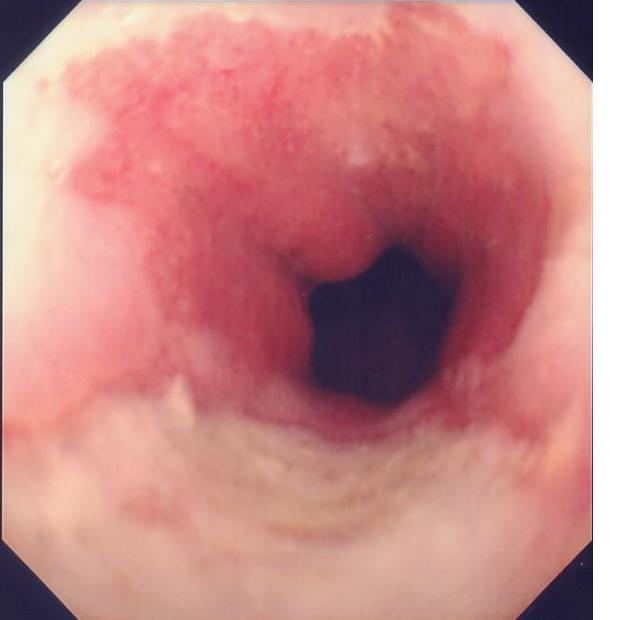
Gastroscopy today, carried out by Dr C. The scheduled time was 11.20 and I was there 15 minutes early as instructed, but the procedure was actually started at 11.55, continuing until about 12.20. The back of the throat is sprayed to numb it, and enable the patient to tolerate insertion of the tube without gagging. The gastroenterologist examines the oesophagus, stomach and intestine with the aid of a light and camera at the end of the tube, and can also insert a device that enables cuttings to be taken from any tissue that looks interesting.
Dr C said that the stomach was slightly tortuous, but that was no big deal. As a result of earlier acid reflux, the surface of the bottom of the oesophagus had changed to become similar to the stomach lining, a condition known as Barrett's oesophagus [see www.ucl.ac.uk/surgery/nmlc/Barrett.htm]. There was a small stricture above the Barrett's, and Dr C took two biopsies fromm the stricture and the Barrett's. He also wrote an order for a blood sample, which I had after a 20 minute wait at 12.45, then cycled home, arriving conveniently at 13.00, the time prescribed to start eating and drinking again.
For the last four days, taking Domperidome, there has been no reflux, but Dr C prescribed indefinite continuation of Omeprazole 40 mg, an antacid drug.
And by the way, I won the ping-pong yesterday 2-0, making the cumulative score 45-42.
Dr C said that the stomach was slightly tortuous, but that was no big deal. As a result of earlier acid reflux, the surface of the bottom of the oesophagus had changed to become similar to the stomach lining, a condition known as Barrett's oesophagus [see www.ucl.ac.uk/surgery/nmlc/Barrett.htm]. There was a small stricture above the Barrett's, and Dr C took two biopsies fromm the stricture and the Barrett's. He also wrote an order for a blood sample, which I had after a 20 minute wait at 12.45, then cycled home, arriving conveniently at 13.00, the time prescribed to start eating and drinking again.
For the last four days, taking Domperidome, there has been no reflux, but Dr C prescribed indefinite continuation of Omeprazole 40 mg, an antacid drug.
And by the way, I won the ping-pong yesterday 2-0, making the cumulative score 45-42.
Chagos Islands - letter to David Triesman
From Lord Avebury P0630081
Tel 020-7274 4617
Email ericavebury@gmail.com
August 30, 2006
Dear David,
I wrote to the Foreign Secretary on May 19, after a discussion with Mr Olivier Bancoult, expressing the hope that the Crown wouldn’t appeal against the decision of the Court of Appeal in the Chagos Islands case ([2006] EWHC 1038 (Admin), Case No: CO/4093/2004, between LOUIS OLIVIER BANCOULT and THE SECRETARY OF STATE FOR FOREIGN AND COMMONWEALTH AFFAIRS), and you replied on June 6 saying that you were then deciding how best to respond. You didn’t say that my representations would be taken into consideration, and I assume that when you finally decided to appeal, you made up your mind to ignore any opinions expressed by Parliament and Parliamentarians, a not uncommon experience.
In Bill Rammell’s written statement of June 15, 2006, he paraphrased the “general conclusion” of the Feasibility Study [‘FS’], delivered in July 2002, as follows:-
“in effect, therefore, anything other than short term resettlement on a purely subsistence basis would be highly precarious and would involve expensive underwriting by the UK Government for an open ended period – probably permanently. Accordingly, the Government considers that there would be no purpose in commissioning any further study into the feasibility of resettlement……..we have therefore decided to legislate to prevent (resettlement)”.
The FS was flawed, however, in two respects.
First, there were unrealistic restrictions on the scope of the consultants’ work. For example. they were forbidden, by Clause 12 from considering the circumstances of Diego Garcia, and thus were unable to compare them with the outer islands. The height above sea level, climatic conditions and water resources are the same in the whole of the archipelago. The US has recently spent several million dollars on protective hangers for Stealth bombers, as well as facilities for nuclear submarines, and accommodation for 4,500 people of whom 2,000 are civilians. Against this strong indication of confidence in the future of Diego Garcia, the generally negative comments about the outer islands are untenable.
Second, Clause. 6(1) confined the FS to underground water resources. It is well known that in general, small islands have little of a fresh water lens, but in the Chagos Islands, the population has for centuries drawn its water supply from the skies. These are amongst the wettest parts of the world, receiving about 4,500 mm of rain per year, a factor the consultants were not asked to consider
Although the Government’s decision was based largely on cost, consultants were precluded from considering costs and benefits of resettlement . There was no evidence, therefore, on which to base the conclusion which Ministers always misquote (eg in your letter to Glenys Kinnock MEP of August 17), that ‘the costs of maintaining long-term inhabitation [sic] are likely to be prohibitive’. The report does not say that ‘any long-term settlement would be precarious and costly’, a much firmer conclusion than the consultants drew. Among the “general conclusions” of the FS there is no reference to life being “precarious” for a resettled population, but that ‘natural events…. are likely to make life difficult for a resettled population’, as they would equally for civilians and service personnel on Diego Garcia.
I respectfully suggest that in letters to MPs, MEPs and peers, the report should be quoted verbatim, not paraphrased in a distorted way to support Government policy.
Clause 17 of the published terms of reference provide that:-
“A draft report will be produced for the FCO and the Government of the BIOT. On receiving comments on the draft report from the FCO and the Government of the BIOT, the consultant will finalise the report and provide the text in both paper and electronic form to the Government of the BIOT and the FCO”..
The drafts were delivered to BIOT several months before publication in July 2002, and this implies that there was extensive redrafting. Would you please lodge a copy of the original draft in the Library of the House of Commons (since that is where the final report was deposited), so that the extent of the changes can be seen? Will you also please explain why, notwithstanding the consultants’ recommendation, the Government decided not to consult.them on the conclusions of the FS.
The Lord Triesman,
Foreign & Commonwealth Office,
London SW1A 2AH.
Tel 020-7274 4617
Email ericavebury@gmail.com
August 30, 2006
Dear David,
I wrote to the Foreign Secretary on May 19, after a discussion with Mr Olivier Bancoult, expressing the hope that the Crown wouldn’t appeal against the decision of the Court of Appeal in the Chagos Islands case ([2006] EWHC 1038 (Admin), Case No: CO/4093/2004, between LOUIS OLIVIER BANCOULT and THE SECRETARY OF STATE FOR FOREIGN AND COMMONWEALTH AFFAIRS), and you replied on June 6 saying that you were then deciding how best to respond. You didn’t say that my representations would be taken into consideration, and I assume that when you finally decided to appeal, you made up your mind to ignore any opinions expressed by Parliament and Parliamentarians, a not uncommon experience.
In Bill Rammell’s written statement of June 15, 2006, he paraphrased the “general conclusion” of the Feasibility Study [‘FS’], delivered in July 2002, as follows:-
“in effect, therefore, anything other than short term resettlement on a purely subsistence basis would be highly precarious and would involve expensive underwriting by the UK Government for an open ended period – probably permanently. Accordingly, the Government considers that there would be no purpose in commissioning any further study into the feasibility of resettlement……..we have therefore decided to legislate to prevent (resettlement)”.
The FS was flawed, however, in two respects.
First, there were unrealistic restrictions on the scope of the consultants’ work. For example. they were forbidden, by Clause 12 from considering the circumstances of Diego Garcia, and thus were unable to compare them with the outer islands. The height above sea level, climatic conditions and water resources are the same in the whole of the archipelago. The US has recently spent several million dollars on protective hangers for Stealth bombers, as well as facilities for nuclear submarines, and accommodation for 4,500 people of whom 2,000 are civilians. Against this strong indication of confidence in the future of Diego Garcia, the generally negative comments about the outer islands are untenable.
Second, Clause. 6(1) confined the FS to underground water resources. It is well known that in general, small islands have little of a fresh water lens, but in the Chagos Islands, the population has for centuries drawn its water supply from the skies. These are amongst the wettest parts of the world, receiving about 4,500 mm of rain per year, a factor the consultants were not asked to consider
Although the Government’s decision was based largely on cost, consultants were precluded from considering costs and benefits of resettlement . There was no evidence, therefore, on which to base the conclusion which Ministers always misquote (eg in your letter to Glenys Kinnock MEP of August 17), that ‘the costs of maintaining long-term inhabitation [sic] are likely to be prohibitive’. The report does not say that ‘any long-term settlement would be precarious and costly’, a much firmer conclusion than the consultants drew. Among the “general conclusions” of the FS there is no reference to life being “precarious” for a resettled population, but that ‘natural events…. are likely to make life difficult for a resettled population’, as they would equally for civilians and service personnel on Diego Garcia.
I respectfully suggest that in letters to MPs, MEPs and peers, the report should be quoted verbatim, not paraphrased in a distorted way to support Government policy.
Clause 17 of the published terms of reference provide that:-
“A draft report will be produced for the FCO and the Government of the BIOT. On receiving comments on the draft report from the FCO and the Government of the BIOT, the consultant will finalise the report and provide the text in both paper and electronic form to the Government of the BIOT and the FCO”..
The drafts were delivered to BIOT several months before publication in July 2002, and this implies that there was extensive redrafting. Would you please lodge a copy of the original draft in the Library of the House of Commons (since that is where the final report was deposited), so that the extent of the changes can be seen? Will you also please explain why, notwithstanding the consultants’ recommendation, the Government decided not to consult.them on the conclusions of the FS.
The Lord Triesman,
Foreign & Commonwealth Office,
London SW1A 2AH.
Saturday, August 26, 2006

This pastel of my great-great grandmother Adelaide Kemble is posted by kind permission of the curator, Welbeck Abbey. The Duke of Portland is said to have proposed to her in December 1842, when she was already married to Edward Sartoris. But that didn't stop him from commissioning over 30 further pastels by John Hayter of Adelaide in various operatic roles including Norma and La Sonnambula,plus an enormous painting by Grant of her as Seniramis. Anna Jameson wrote detailed notes which have yet to be transcribed, on each of the scenes. But there are no letters between the Duke and Adelaide or the artists that we are aware of. Anna Jameson published several works, but if she had mentioned the Duke's infatuation in any of them, we would surely have known about it. Sne was an inveterate gossip and tole everybody about Adelaide's romance with Francis Thun
Adelaide left the stage immediately after her marriage, and her first child Greville was born in 1843, so there is a mystery as to whether she actually sat for Hayter, dressed up for the parts, when she was pregnant or dealing with a small baby. I think he must have executed all the portraits in 1842, because they are all scenes from the operas she did in her final season at Covent Garden.
Adelaide left the stage immediately after her marriage, and her first child Greville was born in 1843, so there is a mystery as to whether she actually sat for Hayter, dressed up for the parts, when she was pregnant or dealing with a small baby. I think he must have executed all the portraits in 1842, because they are all scenes from the operas she did in her final season at Covent Garden.
I managed to claw one game back from JW today, recovering to 2-1 after a first game which he won 21-9.
Barbara and Hattie Bluestone from Charlotteville arrived from Washington DC this morning having touched down at 06.30, and were determined to ignore jetlag. But they returned after visiting Tate Britain and walking to Parliament Square for a rest mid-afternoon.
Barbara and Hattie Bluestone from Charlotteville arrived from Washington DC this morning having touched down at 06.30, and were determined to ignore jetlag. But they returned after visiting Tate Britain and walking to Parliament Square for a rest mid-afternoon.
Merve Kavakci
www.bbc.co.uk/worldservice/programmes/heart_and_soul.shtml
Heart and Soul
Heart and Soul BBC World Service 07.32 Sunday
A Woman of Conviction: Merve Kavakci
Trevor Barnes continues his series of challenging conversations with women of conviction.
This week, he meets Merve Kavakci. As a young woman, she won a seat in the Turkish parliament - only to be jeered by her colleagues because she refused to take her seat without her Islamic headscarf in place.
That was in 1999. Her principled stance has condemned her years of virtual exile in America.
So how did she cope with the consequences of her actions?
What does her faith mean to her today?
And, as a campaigner for the right of women to wear Islamic dress, what does she say to those who think that in a post-9/11 world, this is a side issue?
A Woman of Conviction: Merve Kavakci
Trevor Barnes continues his series of challenging conversations with women of conviction.
This week, he meets Merve Kavakci. As a young woman, she won a seat in the Turkish parliament - only to be jeered by her colleagues because she refused to take her seat without her Islamic headscarf in place.
That was in 1999. Her principled stance has condemned her years of virtual exile in America.
So how did she cope with the consequences of her actions?
What does her faith mean to her today?
And, as a campaigner for the right of women to wear Islamic dress, what does she say to those who think that in a post-9/11 world, this is a side issue?
Heart and Soul
Heart and Soul BBC World Service 07.32 Sunday
A Woman of Conviction: Merve Kavakci
Trevor Barnes continues his series of challenging conversations with women of conviction.
This week, he meets Merve Kavakci. As a young woman, she won a seat in the Turkish parliament - only to be jeered by her colleagues because she refused to take her seat without her Islamic headscarf in place.
That was in 1999. Her principled stance has condemned her years of virtual exile in America.
So how did she cope with the consequences of her actions?
What does her faith mean to her today?
And, as a campaigner for the right of women to wear Islamic dress, what does she say to those who think that in a post-9/11 world, this is a side issue?
A Woman of Conviction: Merve Kavakci
Trevor Barnes continues his series of challenging conversations with women of conviction.
This week, he meets Merve Kavakci. As a young woman, she won a seat in the Turkish parliament - only to be jeered by her colleagues because she refused to take her seat without her Islamic headscarf in place.
That was in 1999. Her principled stance has condemned her years of virtual exile in America.
So how did she cope with the consequences of her actions?
What does her faith mean to her today?
And, as a campaigner for the right of women to wear Islamic dress, what does she say to those who think that in a post-9/11 world, this is a side issue?
Friday, August 25, 2006
Operation April 18
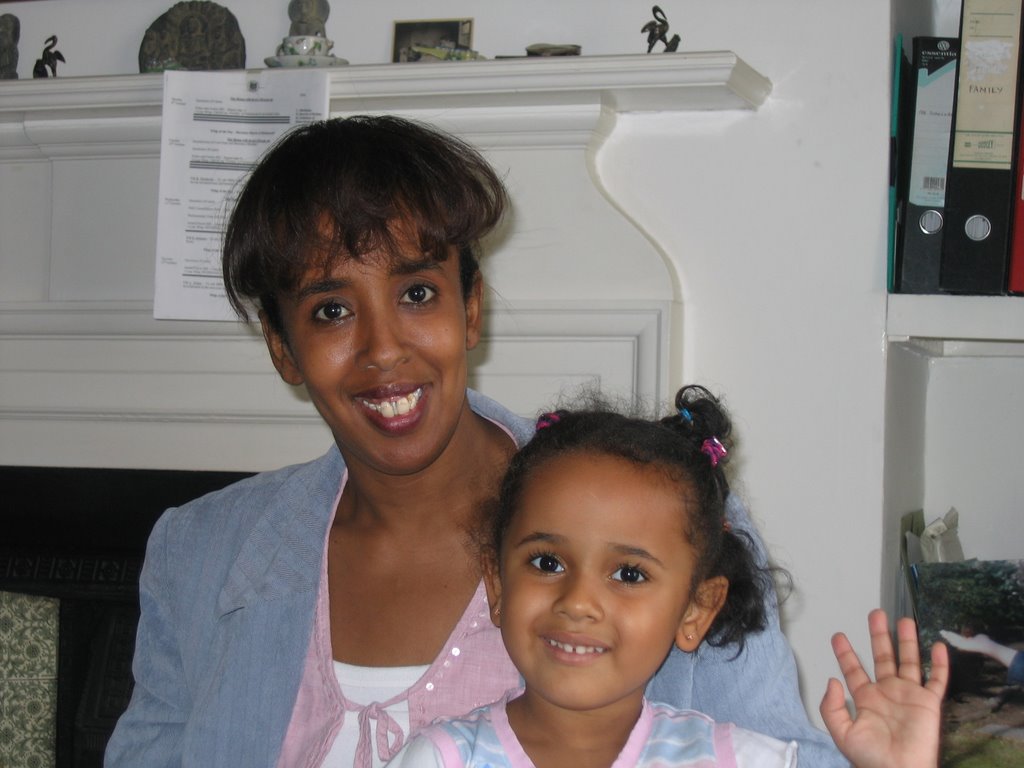
There follows a selection of photographs of the operation to remove a lymphoma from my right lung on April 18, not for the squeamish. To be precise, it was a right thoracotomy and wedge resection of a right upper lobe mass which proved to be a maltoma - a low-grade B-cell lymphoma.
I would like to be able to post a commentary on the pictures, of which this is a selection, but would need some expert advice to be able to say what stage in the operation each of them represents.
The postoperative course was massively complicated by a severe bleed, thought to be or gastro-intestinal origin, but a true bleeding point was never found. By May 9 the wound was well healed and chest x-ray was satisfactory.
Now I'm back to normal apart from reflux, but still have a gastroscopy on August 31.
I would like to be able to post a commentary on the pictures, of which this is a selection, but would need some expert advice to be able to say what stage in the operation each of them represents.
The postoperative course was massively complicated by a severe bleed, thought to be or gastro-intestinal origin, but a true bleeding point was never found. By May 9 the wound was well healed and chest x-ray was satisfactory.
Now I'm back to normal apart from reflux, but still have a gastroscopy on August 31.
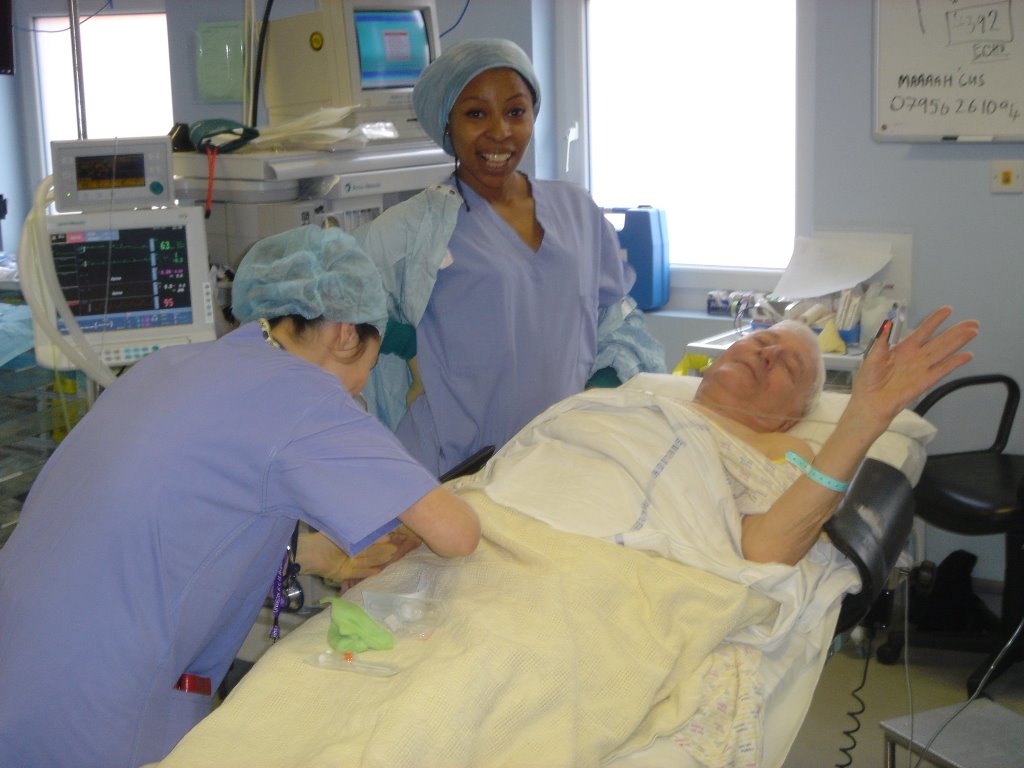
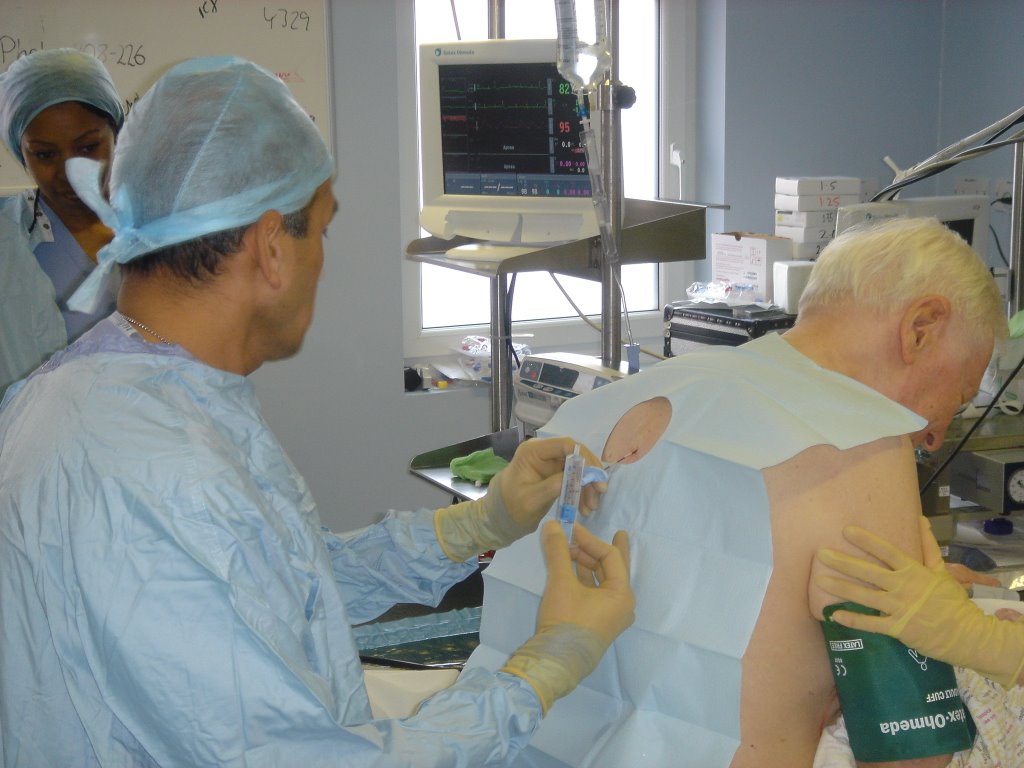
Work on the back
Quite a lot went on behind my back! No idea what was going in there, but perhaps it was to do with the anaesthesia. Must ask Dr Lanka.
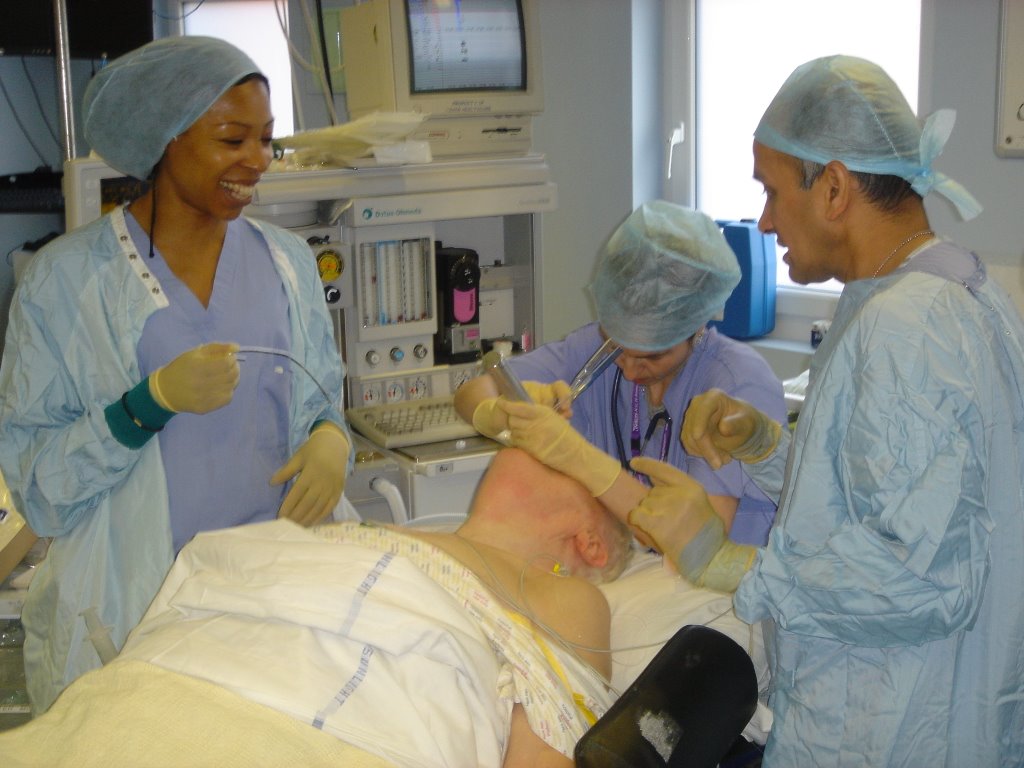
Next stop, I'm out for the count
Not sure exactly when I became unconscious, but it was certainly before oxygen was administered
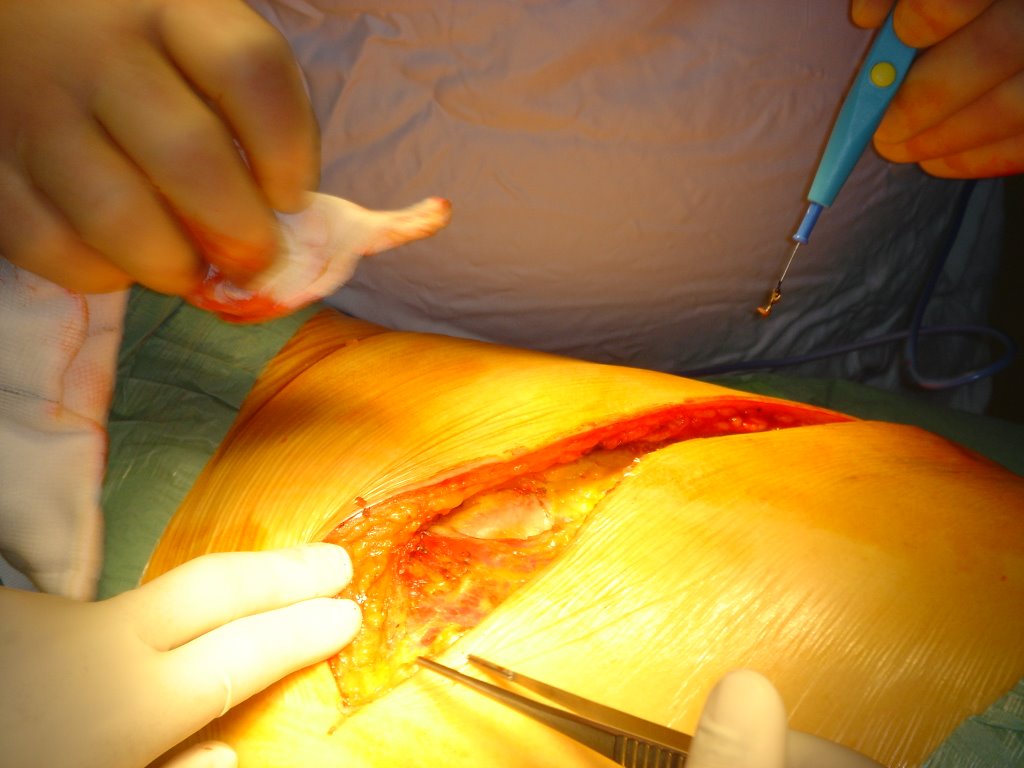
Where does it start
The length of the scar is 315 mm, stretching round the side and back. It must be very difficult to avoid cutting blood vessels, muscle and nerves with such a large incision

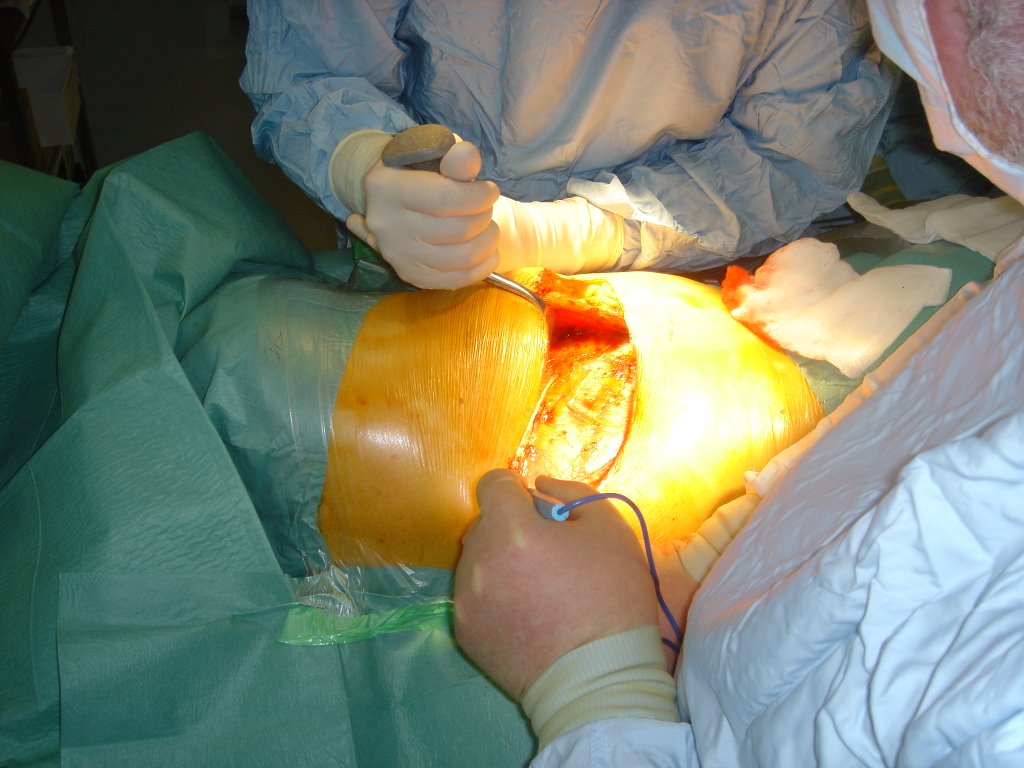
Digging
This next one is impressive, even if you can't see what is happening down there at the coal face.
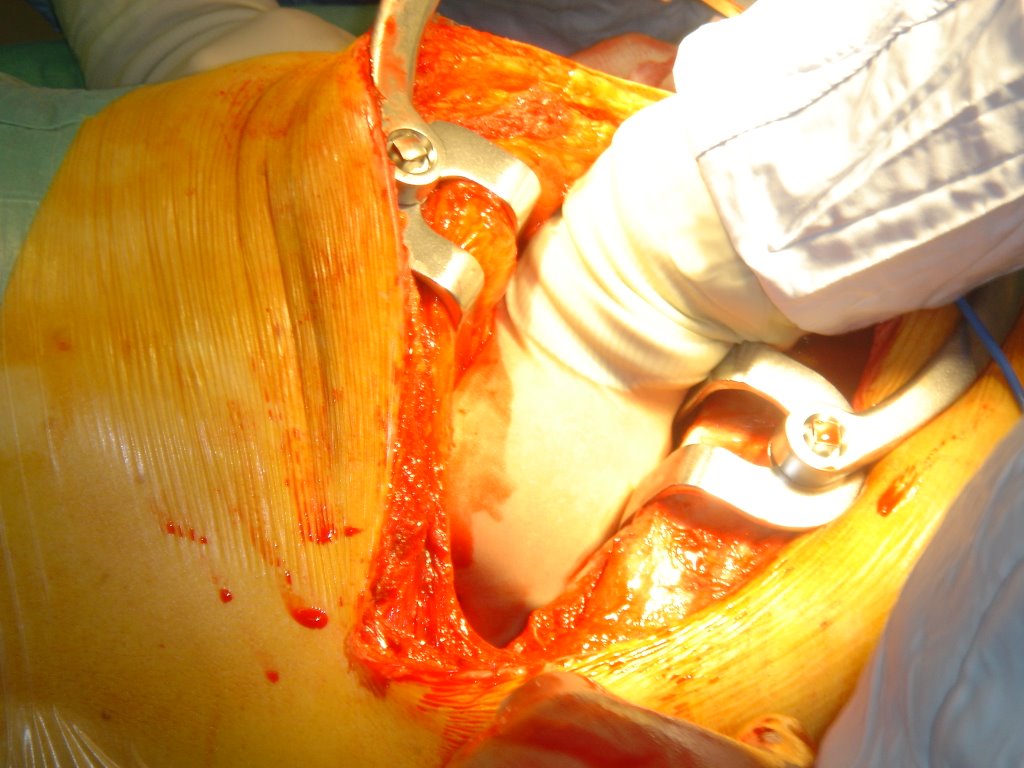
Getting to grips with it
This looks like the actual tumour. But there aren't any shots of the 'wedge resection'

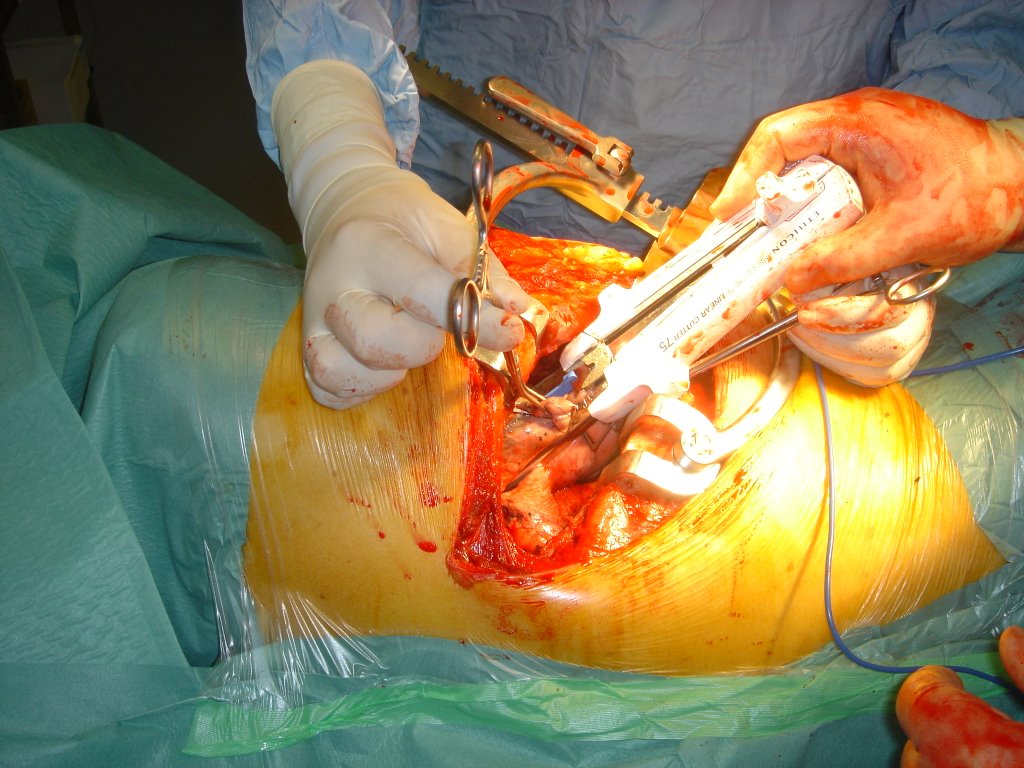

Wednesday, August 23, 2006
Opening remarks by Lord Avebury, vice-chair, Parliamentary Human Rights Group, at a seminar on Bahrain in No 2 Millbank Parliamentary Annexe, at 12.00
At the end of last year we were looking at five years of lost opportunities in
Unfortunately, the eight months since then have witnessed further departures from the norms of human rights, good governance and the rule of law, which this meeting has to address. A week ago a delegation of human rights activists from Bahrain presented a petition signed by 82,000 citizens, one in every 8 of the adult population, to the UN Secretary-General, asking the international body to aid them in determining their political future, and in particular in getting a constitution to replace the one foisted on them by the present ruler in a three-card trick. In May 2001 the people voted for the National Charter in a referendum, but were then given a different solution which allowed them to vote for an emasculated Parliament, a pale imitation of democracy, entrenching the powers of the ruler and his family.
Meanwhile, arbitrary arrests and detention continue, long sentences are passed on activists for political offences, and repressive laws are enacted. The office of the US-based National Democratic Institute was closed down in May and its director, Fawzi Julid was expelled. The Bahrain Centre for Human Rights was banned, although it continues to operate unofficially. The President of the Popular Committee for Martyrs and Torture Victims, Abdul Ra’oof al Shayeb, was arrested and ill-treated in April – and that Committee also exists outside the law. He has since been jailed for a year on trumped-up charges, following his attendance at the UN Human Rights Council in
Discrimination against the Shi’a majority has attracted adverse comment from the respected International Crisis Group in a report entitled Bahrain’s Sectarian Challenge, which called for an end to the manipulation of the country’s demographic makeup through political naturalisation of foreigners and extension of voting rights to citizens of Saudi Arabia, a matter on which evidence has been heard at our previous seminars. They called on the government of the US – and they should have extended this recommendation to the UK as well – to restore legislative authority to the elected branch of the parliament in accordance with the short-lived 1973 constitution, to end ant-Shi’a discrimination and to redraw electoral boundaries so as to fairly reflect the country’s population. The response of the prime minister of
Human Rights Watch has also weighed in recently with a letter to King Hamad about the draft law on public meetings and demonstrations, which they claimed would undermine the right of peaceful assembly contained in Article 21 of the ICCPR, said to be on the agenda for ratification by
Last week the trial of 19 young men who were arrested on March 10 after a demo outside the Dana Shopping Mall, including four minors, was further adjourned. Amongst the detainees is a speaker from our last seminar. The youngsters protested about the long delay, which looks like punishment before sentence, and were beaten up for their pains. Relatives have reported that they suffered various injuries, and are now on hunger strike. I asked Amnesty International on Monday why they hadn’t issued an Urgent Action on behalf of these detainees, and was told they were awaiting the court hearing. Since it has now been deferred without a new date being set, I hope they will now issue a statement.
Another young man who took part in a peaceful demonstration at the airport was sentenced to two years imprisonment in early May. So even without the new law, the treatment of activists and demonstrators would already be in breach of the Covenant if they had signed it. The FCO Minister who deals with
In my letter to the Minister, I had said that if there had been a functioning civil society in Bahrain, one would have expected the Law on Public Demonstrations discussed, and in particular for there to have been a lively debate in Parliament itself. His puzzling response was that civil society was strengthening, and that it would take time for
Meanwhile, the King arrived here for a private visit, and the Friday before last the
The British - and Americans too – ignore the fact that
I don’t expect them to make any public comment, either, on the Counter-Terrorism Bill, which passed through both Houses of the docile Parliament, apparently without criticism, and is awaiting final ratification by the King. This Bill defines terrorism even more broadly than our Act of 2000, including ‘threatening national unity’, and providing accommodation or subsistence to persons who are convicted later on charges of terrorism. It implies that any organisation opposed to the Bahraini constitution is terrorist, and allows the courts to impose the death penalty for acts of terrorism. This Bill has attracted criticism from the UN Rapporteur on the protection of human rights while countering terrorism, but not from the Foreign Office, which nevertheless claims that one of its priorities for 2006 is ‘ensuring that the fight against terrorism is taken forward in a way which is consistent with international human rights standards’.
One last point: we have discussed at previous seminars the attempts by the al-Khalifas to restrict critical websites, through control of the monopoly internet provider, Batelco. They have now denied local users access to Google Earth, a program that enables users to zoom in and see details of secret construction works in the territory such as berths for the yachts of the ruling family and their cronies. This may sound pretty trivial compared with the ruling family’s major defects that we’re here to discuss, but it shows how they treat the whole state as their personal property, yet at the same time they are terrified that the people will get to know what they’re doing. It must be the task of all friends of
Tuesday, August 22, 2006
Ping pong disaster, and weight
Just when I had narrowed the gap, JW beat me 2-0 yesterday and 2-1 today, making the score 44-39.
Calculated my body mass index (BMI) today - weight in kilograms (63.6) divided by height in metres (1.725) squared = 21.37. Normal is between 18.5 and 24.9 so I'm almost smack in themiddle of the safe range.
Why don't GPs routinely screen their patients by measuring their BMI, and hand them leaflets on the health risks of being overweight if necessary?
Since obesity is caused by excess use of certain ingredients in food like sugar, couldn't those ingredients be made subject to VAT?
Calculated my body mass index (BMI) today - weight in kilograms (63.6) divided by height in metres (1.725) squared = 21.37. Normal is between 18.5 and 24.9 so I'm almost smack in themiddle of the safe range.
Why don't GPs routinely screen their patients by measuring their BMI, and hand them leaflets on the health risks of being overweight if necessary?
Since obesity is caused by excess use of certain ingredients in food like sugar, couldn't those ingredients be made subject to VAT?
My great grandfather, Henry Evans Gordon, by Leighton
 By kind permission of the Leighton House Museum. They also have a fine portrait by Leighton of his wife May Sartoris.
.
Fuelling the Middle East conflict
From Lord Avebury P0622083
Tel 020-7274 467
Email ericavebury@gmail.com
August 22, 2006
Dear Mr Ingram,
Could you please explain why the Government are not only increasing arms sales to
According to The Guardian of April 6, 2006 (see attached article Huge jump in arms sales to Israel), military export licences for Israel almost doubled last year, and now it is revealed (see article from yesterday’s Times attached British Kit found in Hezbollah Bunkers) that at the same time we have been supplying equipment that is of crucial importance to Israel’s mortal enemies.
These policies are profoundly at variance with the aim of achieving a lasting peace in the Middle East, and in the case of
I hope the investigation of the sale of night vision equipment will be widened to cover all sales of military and dual use equipment to
Yours sincerely,
The Rt Hon Adam Ingram MP,
Floor 5, Main Building,Ministry ofDefence,
Whitehall,
London SW1A 2HB
Huge jump in arms sales to
· Military export licences to country almost double
· Government accused of arming repressive regimes
Richard Norton-Taylor
Thursday April 6, 2006
The Guardian
The number of arms export licences granted for countries the government accuses of human rights abuses increased significantly over the past year, the latest official figures show.
They also show that licences for weapons sales to
Licences for British arms sales to
Quarterly annual figures appear separately on the Foreign Office website and were collated by the Campaign Against the Arms Trade (Caat), which alerted the Guardian to them. They show that licences were also approved for sales of arms valued at more than £12.5m to
The sales cleared for
The increase in arms export licences to
The FO said last night that all exports were considered under the government's official criteria. "The bottom line is that no piece of kit is used for external aggression or internal repression," it said, adding that it believed the government's arms export licensing system was stringent and transparent.
"The government has committed itself to leading international negotiations on an arms trade treaty to stop global arms flows to war zones and repressive regimes," Mike Lewis of Caat said yesterday. "Yet in the last twelve months it has licensed weapons exports precisely to these regimes ... The government must stop arming the world's human rights abusers."
The Times August 21, 2006
AN URGENT investigation was launched last night after
The equipment was found by Israeli troops in Hezbollah command bunkers in southern
The Israelis made representations to the Foreign Office after it was revealed that
Foreign Office officials said early indications seemed to suggest that the night-vision equipment found by the Israelis was not part of the batch sold in 2003 to
The Iranians are the prime sponsor of Hezbollah, and the Israeli authorities are demanding to know whether the equipment sold to
A Department of Trade and Industry official said night-vision equipment of military specification required an export licence. The investigation will look into whether any British company might have breached export regulations.
The batch of 250 night-vision systems were given a special export licence in 2003 because they were intended to be used by Iranian police trying to stem the flow of heroin and opium from Afghanistan into Iran. Although there is what amounts to an arms embargo against
When the export was agreed, Mike O’Brien, then Junior Minister at the Foreign Office, told the Commons: “The goods are for the use on the Iran-Afghanistan border against heroin smugglers.” He said there was “no risk of these goods being diverted for use by the Iranian military”.
If any of the equipment has been diverted to Hezbollah, it would be a serious embarrassment for the Government. Hezbollah’s “external security”, the military wing of the militant organisation, is proscribed as a terrorist group. The Government has also made clear its support for
Liam Fox, the Shadow Defence Secretary, said: “If this turns out to be true, and
One set of the equipment was found by Israeli forces in the southern
One was described as a Thermo-vision 1000 LR system with a serial number 155010, part number 193960. Other equipment, including radios also thought to be British, and sophisticated recording and monitoring devices, were found.
Israeli commanders had complained that night-time operations in the border region had been hampered by the ability of Hezbollah fighters to observe and counter their moves. In more than six days of fighting around the village of Mis-a-Jebel, the Israelis lost six soldiers and 20 more were injured.
Lieutenant-Colonel Olivier Radowicz, an Israeli commander, said: “The night-vision unit was used to observe the movement of troops. You can also record what you are watching. Then it is connected to a computer. You can obtain a perfect intelligence picture in real time. It is then connected to firing systems.”

SaferWorld - For immediate release – 22 August 2006
Hezbollah night-vision allegations highlight loophole in
British military night-vision equipment, originally sold to
Under the UK Government's own arms export criteria, it is obliged to consider "the existence of a risk that the equipment will be diverted within the buyer country or re-exported under undesirable conditions"(2) when deciding on whether to license an export.
Yet, the UK Government does not have a formal system for checking what happens to arms exports after they have been licensed and left the
Saferworld is urging the Government to close this loophole and establish a formal system of end-use monitoring when it conducts its five-year review of the Export Control Act next year. In the interim, the Government should redouble efforts to ensure that it enforces existing regulations to prevent transfers of weapons or other strategic goods to unintended end users.
“This incident demonstrates that the
ENDS
For further information, please contact:
Sonia Rai, Advocacy and Policy Officer, Saferworld
Tel: + 44 (0) 207 324 4646;
Claire Hickson, Head of Advocacy and Communications, Saferworld
Tel: +44 (0)207 324 4646;
(1) British Kit found in Hezbollah Bunkers, The Times, 21 August 2006.
(2) Criterion 7
(3) For example, United States has the State Department “Blue Lantern programme” and the Department of Defence “Golden Sentry programme”, which operate on the principle that where a particular transfer trips a number of “red flags”, checks on end-use are carried out. In 2004, the State Department performed 530 Blue Lantern checks, with 93 ‘unfavourable determinations.
(4) Strategic Export Controls: Annual Report for 2004, Quarterly Reports for 2005, Licensing Policy and Parliamentary Scrutiny, August 2006, HC873
Ostriches and Alcohol - letter to the Prime Minister
From Lord Avebury P0618082
Tel 020-7274 4617
Email ericavebury@gmail.com
August 18, 2006
I wrote to the Home Secretary on June 25 and July 1 about alcohol harm, asking among other things why the Government is unwilling to produce an annual update of the Strategy Unit Alcohol Harm Reduction project’s Interim Analytical Report of September 2003 (IAR), so that the £20 billion cost to the nation[1] could be recalculated using the same methodology, and the effects of the Government’s Alcohol Harm Reduction Strategy thereby assessed. Vernon Coaker’s reply didn’t address that question, and it has been dodged also when I have put questions in Parliament.
Consumption of alcohol increased from 4,930 hectolitres of pure alcohol in 2001-02 (the year to which the £20 billion figure is assumed to relate) to 5,613 HLPA in 2004-05[2], and if this rate of increase has been maintained, it will reach 6,068 HLPA in the current year, 2006-07. If harm increases in proportion to consumption, as many experts believe[3], the increase in harm since the Cabinet Office estimate would be 10.8%, a staggering £4.62 billion.
The actual figure is likely to be even higher, because the extension of drinking hours arising from the Licensing Act is certain to have boosted consumption. As we said at the time, the operators of licensed premises are not so stupid as to open for longer hours unless they were reasonably certain of recouping the overheads incurred by higher sales. ACPO say it is too early to draw any conclusions about the effects on law and order of the Act, but in December 2005 and June 2006 there were major enforcement campaigns by the police, which limited disorder.
The Government decided not to tackle consumption through price and availability, the two main levers ‘traditionally cited.. as influencing levels of .. consumption and therefore reducing alcohol misuse’[4], on the spurious ground that other factors such as culture and advertising also have an effect. Therefore in addition to the phenomenon of binge drinking, which is facilitated by the proliferation of late night outlets and the relative cheapness of alcohol, drink-driving convictions are rising, and the Department of Transport says that drivers with blood alcohol levels of 50-80 mg/ml are a significant but largely hidden cause of accidents[5]
The Hospital Episode Statistics published by the DH show that in 2001-02, admissions to hospital with a primary diagnosis of mental and behavioural disorders due to the use of alcohol (classification F10) were 32,462, while in 2004-05 the number was 43,907[6]. Taking these figures as a proxy for the NHS cost of dealing with alcohol-related harm, that cost would be up by 35.3%.
I submit that these calculations demonstrate the necessity for the Government to take effective measures to reduce alcohol harm, in particular by raising the level of excise duties, and to assess the costs to the nation by updating the IAR estimates annually. Since any increase in alcohol duties could encourage smuggling, we should also encourage other EU member states to raise their taxation of alcohol towards ours, and to conduct audits of harm using the same methodology. Government Departments should set an example by reducing the amount they spend on alcohol, and eliminating alcohol altogether from daytime events.
The Rt Hon Tony Blair,
Prime Minister,
[1] Cabinet Office, Alcohol misuse: How much does it cost, September 2003, p 58 [www.strategy.gov.uk/downloads/files/SU%20interim_report2.pdf]
[2] HM Revenue & Customs, Annual Report 2004-05, Table F1, December 2005
[3] Thor Norstrom (ed) European Comparative Alcohol Study, ECAS 1, 2002, p 214 and Hakan Leifman, Esa Osterberg & Mats Ramstedt, Alcohol in Postwar Europe, ECAS II, 2002, para 8.1 (www.fhi.se/upload/PDF/English?ecas_2.pdf
[4] Cabinet Office, op cit, 152.
[5] Combating Drink Driving: Next Steps. A consultation paper, DETR, February 1998
[6] www.hesonline.nhs.uk/Ease/servlet/ContentServer?siteID=1937&categoryID=203
Monday, August 21, 2006
An unsolved murder?
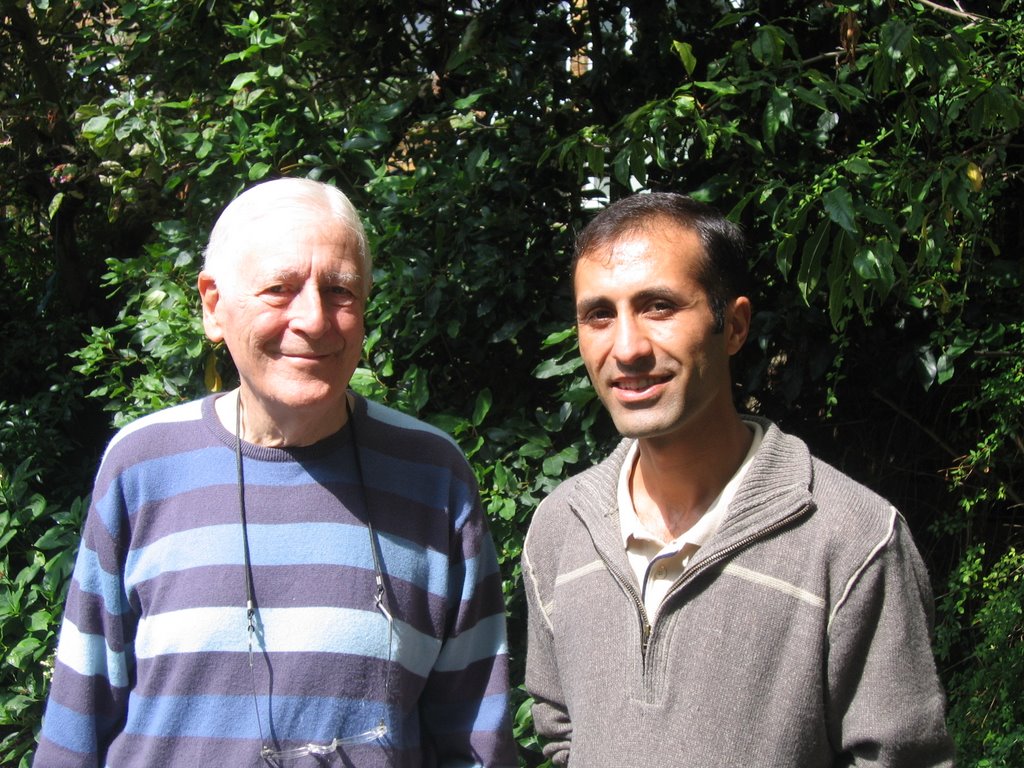
Today I had a visit from Serhat Tepe, younger brother of the late Ferhat Tepe, who was the Bitlis correspondent of the Kurdish newspaper Özgur Gündem. He was kidnapped in Bitlis by four men, one of whom had a walkie-talkie, at 19.00 on July 28, 1993 and found dead a few days later at the neighbouring town of
'Since Ferhat's body was found, the police continually put the family and people who offer us condolences under surveillance. Anonymous callers threaten us on the telephone. I gave a description of the kidnappers, but we all know it was the police themselves who murdered him. An hour before he was kidnapped the police came to my office and asked one of my colleagues for Ferhat. Later, the police told my colleague, Adnan Karsoglu, that if he said anything about them coming and asking about Ferhat, he would be killed himself. Adnan knew one of them by sight and would recognise him if he saw him'.
'There has been no official investigation of my son's death. When his body was found, they sent me to Elazig, totally the wrong direction. The head of security in Bitlis told me to collect the body by myself but, suspecting a trap, I took some friends with me. The police said his body had been found in water, suggesting that he had been drowned, but I saw the marks of torture on his body, including blood all over his sexual organs'.
This and other murders of journalists and political activists at the time were attributed to a shadowy organisation named Hizbollah, but there was plenty of circumstantial evidence pointing to state agents as the killers.
As a result of four visits I made to investigate the situation in the Kurdish region in the nineties, I was banned from entering the country from June 1996 onwards, and have still had no indication from the Turkish authorities that I am now free to go there without restrictions.
Friday, August 18, 2006
No regard for the UN Convention on the Rights of the Child
Breastfeeding mothers detained away from babies
Matt Weaver
Friday August 18, 2006
Guardian Unlimited
Breastfeeding mothers are being separated from their babies for several days in the government's drive to deport failed asylum seekers, Guardian Unlimited can reveal today.
Immigration officials have been accused of flouting several UN conventions by detaining mothers away from pre-weaned infants in at least two cases this spring.
In March this year a Vietnamese mother was seized from her
The woman, known only as Mrs N, was due to be sent back to
She was reunited with the baby after a last-minute reprieve allowing her to stay in the
Following complaints about the case the immigration minister, Liam Byrne, suggested it was an isolated incident. He said the correct procedures on the treatment of families had not been properly followed.
But it has now emerged that in April a second breastfeeding mother was also detained in Yarl's Wood without her child. This case involves Mrs P, a Turkish asylum seeker, who is married to a fellow Turk who has been granted refugee status.
She was taken to the detention centre after a routine weekly visit to sign on at an immigration centre in central
Doctors had advised Mrs P to continue breastfeeding the child because he had a kidney condition.
During interviews at the centre, immigration officials had remarked on the dampness of her clothing from her leaking breasts. She pointed out that her baby would not take formula milk from a bottle.
But she was told that she had no legal right to stay in the
In a statement to her lawyer, Mrs P said: "I have had terrible experiences in
In both cases the change of heart from the authorities came after the intervention of the veteran human rights campaigner and Liberal Democrat peer Lord Avebury.
He said: "It's reasonable to assume that these are not the only cases. It is shocking that the Home Office does not have a policy on the detention of breastfeeding mothers and the separation from their children. They ought to have one that absolutely forbids it."
In a letter to Lord Avebury about Mrs N's treatment, Mr Byrne said a review of the case had revealed that officials had mistakenly ignored Home Office procedure.
He said: "It is clear that the case was not satisfactorily handled. Prechecks had failed to reveal that Mrs N was part of a family unit. The staff involved in Mrs N's case have been reminded on the guidance in place about making decisions involving the separation of a family."
Last month Lord Avebury wrote to Mr Byrne seeking an explanation for Mrs P's treatment. He has also asked for the Home Office to look into how many similar cases there have been. He has yet to receive a reply.
Annette Elder, the solicitor for both women, pointed out that if the cases had involved criminal proceedings proper childcare arrangements would have been made before the children were separated from their mothers.
Patti Rundall, the policy director of the charity Baby Milk Action, said both cases "fly in the face of a number of UN resolutions and conventions".
She cited the Global Strategy on Infant and Young Child Feeding, the Innocenti Declaration on the Protection, Promotion and Support of Breastfeeding, and the Convention on the Rights of the Child, which all stress the importance of breastfeeding to the nutrition and welfare of children.
Ms Rundall added: "There seems to have been no regard for or understanding of the needs and rights of the child or mother."
Thursday, August 17, 2006
Abkhazia
From Lord Avebury P0617081
Tel 020-7274 4617
Email ericavebury@gmail.com
August 17, 2006
Dear Geoff,
I attach an English-language version of the Key to the Future, a document prepared by the Abkhaz authorities on the resolution of their constitutional status. The Georgians have also produced a road map, and while neither of these documents provide a basis for compromise, being more a reiteration of their previously held positions, there should be a concerted attempt by the international community to get them together to see if discussion of the documents can lead to some reduction of tension and progress on the methodology of finding a permanent solution,
The Russian Foreign Minister has said that the introduction of Georgian armed forces into the upper part of the Kodori gorge was a gross violation of the 1994 Moscow Accords, and that the presence of the so-called government in exile there was a change for the worse. The UNOMIG military condemned the incursion immediately, though not their political colleagues, who may have been mindful of the need to preserve their relationship with
There may be some leverage over the Georgians because they are expecting to progress their membership action plan at the NATO Summit to be held in
The Rt Hon Geoff Hoon,
Foreign & Commonwealth Office,
The Key to the Future
The aim of this plan is a final political, comprehensive settlement of the Georgian-Abkhaz conflict and the development of cardinally new, good-neighbourly relations between once-hostile states. The processes of economic integration in the
The basis of the plan consists of measures for restoring trust, which is why the demonstration of good will by both sides will be the key to a future stable peace. The strengthening of trust will be achieved only by ending military rhetoric and by augmenting peace initiatives, which must move from theory to implementation.
Historical prerequisites
Taking into account the specific nature of Georgian-Abkhaz relations, which largely stems from the Stalin era, there is a need to first and foremost renounce the ambitions and stereotypes of that period. The political acts that were carried out by
During the rule of the Georgian Mensheviks (1918-1921), a military dictatorship was established in Abkhazia, which is confirmed by many sources stored in various archives worldwide. In 1925, Shalva Eliava, a Georgian political leader, admitted: “Throughout the entire period of rule of Menshevik government in Georgia there were systematic violations of the rights of the Abkhaz people and attempts by the ‘democratic’ Georgian government to turn Abkhazia into an object of exploitation, rule it directly, dispose of the republic’s entire assets - land, forests, and valuable real estate – for the purposes of the policy of settling there themselves.”
The Georgian leadership’s purposeful, consistent policy of assimilating ethnic Abkhaz was to result in them losing their ethnic identity altogether.
After Stalin’s death in 1953, the Central Committee of the Georgian Communist Party also denounced the policy which the Georgian leadership implemented towards the ethnic Abkhaz at its August 1956 plenary session.
The preliminary investigative materials form the
Georgian leader Eduard Shevardnadze said at the 11th plenary session of the Georgian Communist Party Central Committee on 27 June 1978: “it has to be said straight out that, in the past, during the period which we all know, a policy was being implemented towards the Abkhaz people that may effectively be described as chauvinist. Let us call things by their names. That policy, in its very essence, came into conflict with the interests of both the Georgian and Abkhaz people.”
It follows from that statement that, clearly, the capability for internal self-revision and admission of one’s own mistakes has always existed in
It has to be noted that the key factor in Abkhazia’s right to independence is not only the universal right of nations to self-determination, but also a number of concomitant events and internal state documents and agreements that in their entirety form the legal basis for Abkhazia’s independence from
Despite this, the armed conflict between Georgia and Abkhazia was preceded by a number of events which, if they had been addressed properly, would have made it possible to avoid the armed conflict. In particular, the Declaration of the
On 3 April 1991, the Supreme Soviet of the Soviet Union passed the law “On the Regulation of the Question of and Rules for the Secession of the
State legal relations between Abkhazia and Georgia that were created and regulated under Soviet law were also severed according to Soviet law.
Unfortunately, in the transitional period a basis for dealing with conflict situations democratically had not yet taken shape in
We will once again draw the attention of the international community to the need to recognize the results of the 1999 referendum in which 90 percent of the Abkhaz population affirmed their desire to build a democratic state. Despite the fact that the vast majority of ethnic Georgian refugees did not take part in it, the refusal to take into account the opinion of the majority that freely expressed their opinion that they should live in an independent state is a direct violation of the nation’s right to self-determination.
It follows from the aforementioned facts that Abkhazia is ready to hold civilized negotiations on all issues except that of the status of the
BASIS FOR A NEW PHASE OF SETTLEMENT Reassessment
The level of trust between the sides will increase substantially if Abkhaz society can see that, along with democratic reforms, a reassessment of past mistakes has begun in
Blockade
Renouncing political and economic pressure on Abkhazia, in particular, lifting the economic and information blockade on Abkhazia, should be the first step in the new phase of settling the conflict.
The measures that have been implemented as part of the recent process of rebuilding trust have indeed yielded positive results, but the ratio between the work that was done and its effectiveness, as well as its accompanying prostration [as published; frustration], which is caused by the absence of considerable progress, has clearly demonstrated that rebuilding trust cannot be based solely on declarations.
As time has passed, the unproductive and inhumane nature of the blockade has become obvious. The results of the blockade have first and foremost affected the peaceful population of Abkhazia, for which all those countries that took part in reaching the decision on imposing a blockade on Abkhazia should share responsibility.
The isolation restricts the Abkhaz public’s participation in global processes of economic integration, which has an effect not only on the economic and social prosperity of the Abkhaz people, but also on all of its neighbours. The blockade deprives the Abkhaz people of a substantial part of their income, which might otherwise be spent on implementing more important and more comprehensive social and humanitarian programmes. The Abkhaz people’s right to development free economic activities is being indirectly violated. Taking advantage of the information blockade against
SECOND PHASE – SECURITY “Practical steps to strengthen trust-building measures”
At the current stage in Georgian-Abkhaz relations, when the Abkhaz side has justified concerns about
Notice has to be taken of the counterproductive nature of
The international community should ensure that the situation in
The Abkhaz and Georgian sides should make unambiguous statements on their mutual aspiration to cooperate in combating crime in the coastal zone.
The United Nations should help provide technical equipment and promote cooperation between Abkhaz and Georgian law-enforcement agencies to combat organized crime.
Political process
There is a need for us to take the process of the peaceful settlement of the conflict to an absolutely new and productive phase. The reference point marking the start of that phase should be the first direct meeting between the Abkhaz and Georgian leaders at which the sides will openly state their commitment to a solely peaceful settlement of the conflict and sign, on condition that international guarantees are provided, an agreement in which they will reject the threat of using force or any other methods of political and economic pressure.
It is especially important to underscore that the desire of both sides to ensure peace at sea, on land, and in the air should also be stated in the peace agreement to be signed by both leaders.
All the countries that are involved in the region’s economic activities, namely, Abkhazia, Georgia, Armenia, Russia, Turkey, South Ossetia, Nagornyy-Karabakh, Azerbaijan, and the EU – which is a facilitator of economic processes in the Black Sea and Caucasus regions – should become parties to a broad agreement on future economic cooperation.
The development of European models of economic cooperation will facilitate the strengthening and growth of mutually advantageous, partner-like and mutually interdependent ties, which will eventually form a solid base for lasting and stable peace. The international community, in particular, the UN Security Council, should become an independent arbiter and help implement the international security guarantees between Georgia and Abkhazia and carry out measures to prevent the resumption of the conflict. The conditions and responsibility for keeping the peace between the sides should be clearly formulated in UN documents and act as a mechanism that will prevent the sides from [entering into] armed confrontation.
The next important step on the road to rapprochement should be holding preliminary consultations between the presidents of the two countries on conditions for the future peaceful coexistence of the two states. In this case,
It is obvious that, once this step is taken, the sides’ positions on regional cooperation will converge tangibly, which will have a direct effect on the level of security in the region, stability and economic prosperity, and will also bring stability to our neighbours.
Return of refugees
Abkhazia has expressed its readiness to follow the long-term plan [UNHCR Country Operations Plan] which was suggested by the UN High Commissioner for Refugees Office [UNHCR]. In connection with this, the process of verification [of the identity] of Georgian refugees, which is under way within the framework of UNHCR activities, should get greater support from all the participants in the peace process as soon as an independent assessment of the situation makes it possible to form a real picture of the humanitarian action to be carried out.
The Abkhaz side is ready to fully promote and strengthen the process of the return of refugees to Abkhazia’s Gali District because it was the initiator of this in March 1999.
The process of the return of the refugees requires a more attentive and measured approach. The international participants in the regulation process too should share the negative aspects of this action [sentence as published].
Economic cooperation
Abkhazia reasserts its readiness to carry out trust-building measures set out in the 2003
For the transport and energy infrastructure development projects to function effectively there is a need to end the politicization of many purely economic issues. In connection with the project to restore the railway,
Given the great importance of the issue of strategic partnership in the energy sector and in the struggle against external threats, the stability of the entire
There can be no doubt that ignoring Abkhazia’s role as an integral element in cooperation between the EU,
Recognition of Abkhazia would resolve specific problems of security and stability in the entire region and would form a foundation for social, economic, and cultural cooperation between the states.
For more that 13 year now, Abkhazia has been independently developing a democratic political system, a market economy, a legal framework, an independent court system, a civil society and human rights according to international standards. Modern-day Abkhazia is a state with strong development indicators.
Abkhazia is capable of shouldering responsibility and playing the role of a full-fledged connecting link between all countries. The absence of political recognition for Abkhazia hinders stability and the development of a beneficial climate between North and
Abkhazia is a factor in the stabilization of the region, a link in the process of restoring communications in the Caucasus, which is not only in Abkhazia’s interests, but also in the interests of
If
Unfortunately, in discussing its own role in Black Sea regional economic cooperation,
Negotiating process and participants
The UN Security Council could also facilitate talks at a more or less unbiased level. Taking into account the fact that Abkhazia is a party to the conflict and a direct participant in the negotiating process, the Abkhaz side once again asks the United Nations, the Russian Federation as the facilitating side, and the UN Secretary General’s Group of Friends on Georgia to discuss the issue of the presence of an Abkhaz representative at the scheduled sessions of the UN Security Council so that members of the Security Council will have the opportunity to listen to one of the parties to the conflict and receive more objective information on current developments.
Appeal to International Organizations and Diplomatic Representatives in
- OSCE
- United Nations Representatives;
- International Committee of the Red Cross Representatives;
- Special Representative of the Secretary-General of the Council of
- Diplomatic Embassies in
The Human Rights Information and Documentation Centre expresses its concern about recent events occurring in the Kodori Gorge. According to our information, the ‘successful operation’ in Kodori has resulted in a total violation of the basic fundamental rights of the Gorge’s population. The Gorge is isolated from the view of observers from local and international organizations.
Our sources inform us that the peaceful population of this area is being searched illegally. During the course of recent events, no search warrants have been produced.
Innocent people are being detained and beaten in the Gorge; primarily the family members and relatives of people wanted by the authorities.
Members ‘Monadire Unit’ are not being given any kind of documentation to prove that they have handed in their arms.
Transportation along the only road (the Sakeni-Chuberi highway) linking the area to the rest of
The information received shows that there were three or four occasions where peaceful civilians were beaten by military personnel operating in the Gorge.
The planting of guns on people has also been witnessed.
According to various sources, 14 to17 people have been detained. Only 1 or 2 of these people were actually wanted earlier, the rest are family members or relatives of the wanted men, who have guns planted on them.
It is notable, that only 1 or 2 people of those detained had been wanted for having committed the crimes in the past, such as murder, robbery or other serious offences. The available information shows that almost every person who is actually wanted for past offences escaped. The only ones detained are those who committed no crime in the past, had no previous problems with the police and who remained in their homes.
Our information shows that the authorities have detained relatives of the wanted men on the basis of a proviso: “Let your brother, (father, son, etc.) turn himself in and you will be released”.
There have also been occasions when the detention (and the planting of a gun on someone) takes place as a result of some private quarrel; a local policeman, offended by somebody, for some reason or other in the past, gives false information to high-ranking police officials, and special operations are subsequently held against that person.
During these detentions, those who are arrested are not told the reason for their detention nor are they explained their rights.
The
It is notable that between 1993 and 1995, during the hostilities against Basaev, Bagramian’s units, Kazaks and other militants, no Kodori villages were bombed by the air force. The houses of the Gorge’s inhabitants were also not bombed in 2001, when Ruslan Gelaev’s militants were threatening the Abkhazians.
One of the most worrying incidents was the switching off of the ‘Magticom’ cellular network masts in the Kodori Gorge for 3-4 days. The shutting down of the towers was done under Government orders that had no legal basis. As far as society was aware, emergency powers were not announced by the government, raising further concerns about the illegality of these events.
In response to the above incidents, international monitoring of the human rights situation in the Kodori Gorge must commence immediately and by all possible means. International organizations are requested to take part in the monitoring process together with Georgian NGOs and representatives of the diplomatic missions within
Groups responsible for defending human rights must have a continuous presence in the Gorge, to prevent further violations of the human rights of the local population. International and other human rights organizations must also be informed about the human rights situation in the Kodori Gorge.
Subscribe to:
Posts (Atom)