Friday, May 19, 2006


Letter to the Foreign Secretary on the Chagos Islands case
From Lord Avebury P0619051
Tel 020-7274 4617
Email ericavebury@gmail.com
Dear Mrs Beckett,
I have read the judgement in the Chagos Islands case, EWHC 1038, and I also met Mr Olivier Bancoult for a discussion on the issue on Wednesday.
Clearly, your predecessors knew exactly what they were doing in hiding the fact that there was a civilian population on the islands, as the note of November 15, 1965 by an official quoted in paragraph 27 recognised, and the Commissioner was even more frank in his minute of June 1966, also quoted by Laws LJ in the previous case, “Bancoult 1” and repeated later in Para 27. We deliberately misled the Decolonisation Committee about the status of the islanders, a shabby piece of work intended to clear the way for us to exile them compulsorily from their homeland. It is also clear that we acted unlawfully in making the Order in Council which reversed Bancoult 1. As the judge said in para 142,
‘the suggestion that a minister can, through an Order in Council, exile a whole population from a British Overseas Territory and claim that he is doing so for the “peace, order and good government” of the territory is, to us, repugnant’.
As to the question of whether or not the removal of the islanders was challengeable, the bottom line is that ’the decision was in reality that of the Secretary of State, not of Her Mejesty, and is subject to judicial review in the ordinary way’ (para 163).
Sir Sydney Kentridge QC rightly described the treatment of the Chagossians as "outrageous, unlawful and a breach of accepted moral standards". He said there was no known precedent "for the lawful use of prerogative powers to remove or exclude an entire population of British subjects from their homes and place of birth".
In Gordon Brown’s keynote speech to the Fabian Future of Britishness conference on January he used the word ‘fairness’ repeatedly, citing a 2005 YouGov survey which showed that as many as 90 per cent of British people thought that fairness and fair play were very important or fairly important in defining Britishness. The behaviour of the Government towards the Chagossians has been monstrously unfair, and I hope you will not compound the wrong done to this small and powerless group by appealing against the High Court’s ruling in their favour.
Yours sincerely,
The Rt Hon Mrs Margaret Beckett MP,
Foreign & Commonwealth Office,
London SW1A 2AH.
Tel 020-7274 4617
Email ericavebury@gmail.com
May 19, 2006
Dear Mrs Beckett,
I have read the judgement in the Chagos Islands case, EWHC 1038, and I also met Mr Olivier Bancoult for a discussion on the issue on Wednesday.
Clearly, your predecessors knew exactly what they were doing in hiding the fact that there was a civilian population on the islands, as the note of November 15, 1965 by an official quoted in paragraph 27 recognised, and the Commissioner was even more frank in his minute of June 1966, also quoted by Laws LJ in the previous case, “Bancoult 1” and repeated later in Para 27. We deliberately misled the Decolonisation Committee about the status of the islanders, a shabby piece of work intended to clear the way for us to exile them compulsorily from their homeland. It is also clear that we acted unlawfully in making the Order in Council which reversed Bancoult 1. As the judge said in para 142,
‘the suggestion that a minister can, through an Order in Council, exile a whole population from a British Overseas Territory and claim that he is doing so for the “peace, order and good government” of the territory is, to us, repugnant’.
As to the question of whether or not the removal of the islanders was challengeable, the bottom line is that ’the decision was in reality that of the Secretary of State, not of Her Mejesty, and is subject to judicial review in the ordinary way’ (para 163).
Sir Sydney Kentridge QC rightly described the treatment of the Chagossians as "outrageous, unlawful and a breach of accepted moral standards". He said there was no known precedent "for the lawful use of prerogative powers to remove or exclude an entire population of British subjects from their homes and place of birth".
In Gordon Brown’s keynote speech to the Fabian Future of Britishness conference on January he used the word ‘fairness’ repeatedly, citing a 2005 YouGov survey which showed that as many as 90 per cent of British people thought that fairness and fair play were very important or fairly important in defining Britishness. The behaviour of the Government towards the Chagossians has been monstrously unfair, and I hope you will not compound the wrong done to this small and powerless group by appealing against the High Court’s ruling in their favour.
Yours sincerely,
The Rt Hon Mrs Margaret Beckett MP,
Foreign & Commonwealth Office,
London SW1A 2AH.
Wednesday, May 17, 2006
Still here
Today I had an email asking why my blog postings were becoming so infrequent. I had to admit that with no news about my health except to say I'm gradually becoming stronger, and a rather uneventful daily round at home, there wasn't a huge amount to say.
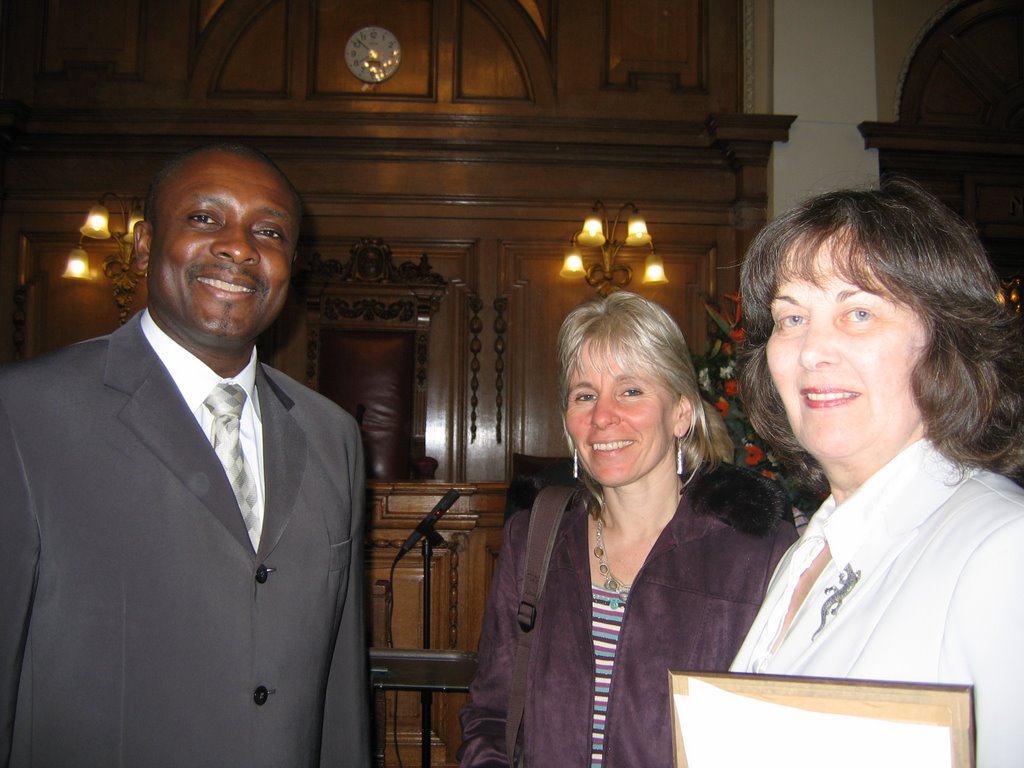
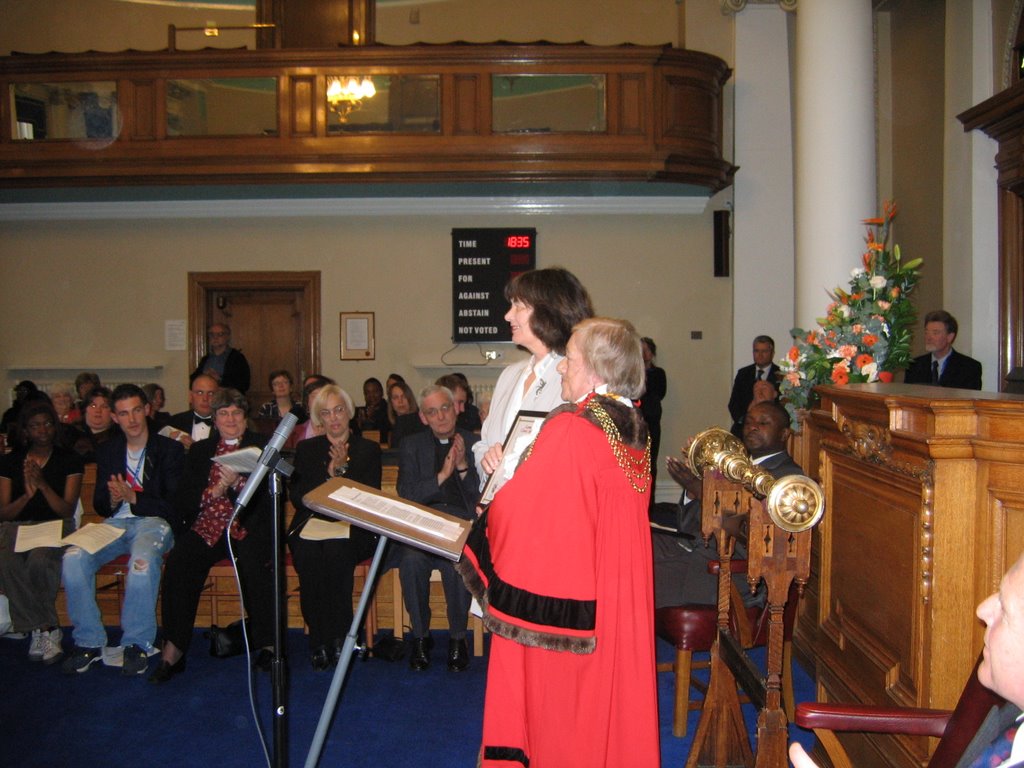
But a big event yesterday evening was the Lambeth Civic Awards at the Town Hall, where Lindsay received an award for her work on the Myatt's Fields Project Group. They are working towards a big regeneration of the Park, with the help of the Heritage Lottery Fund and Lambeth Council, in consultation with local people.
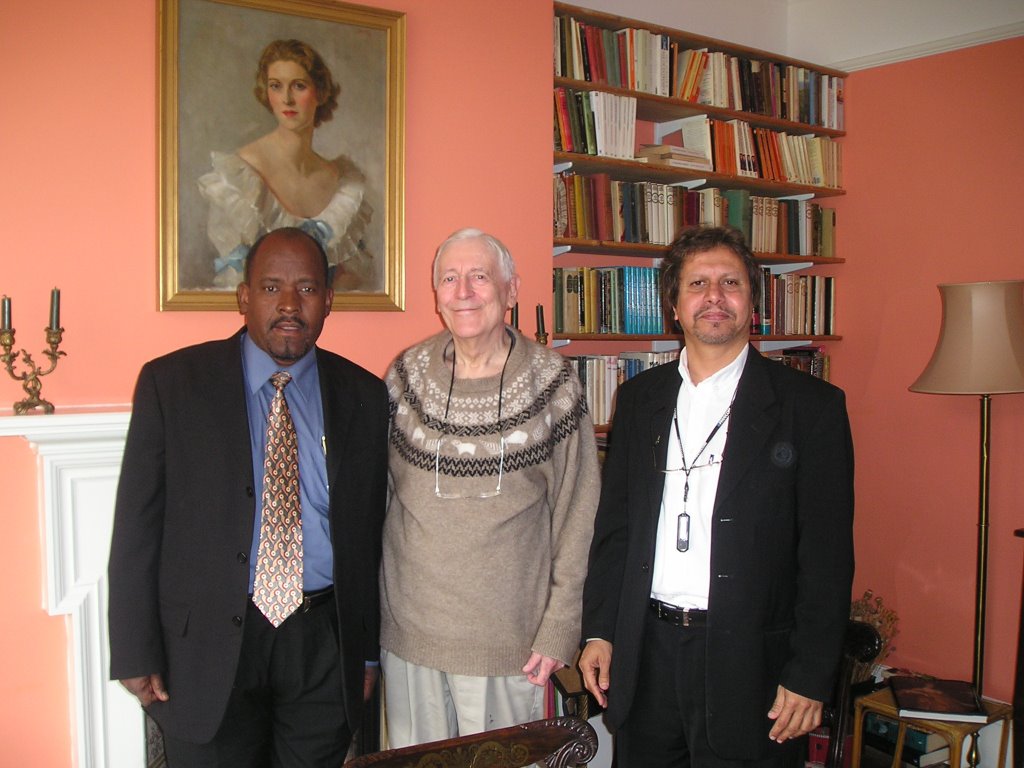
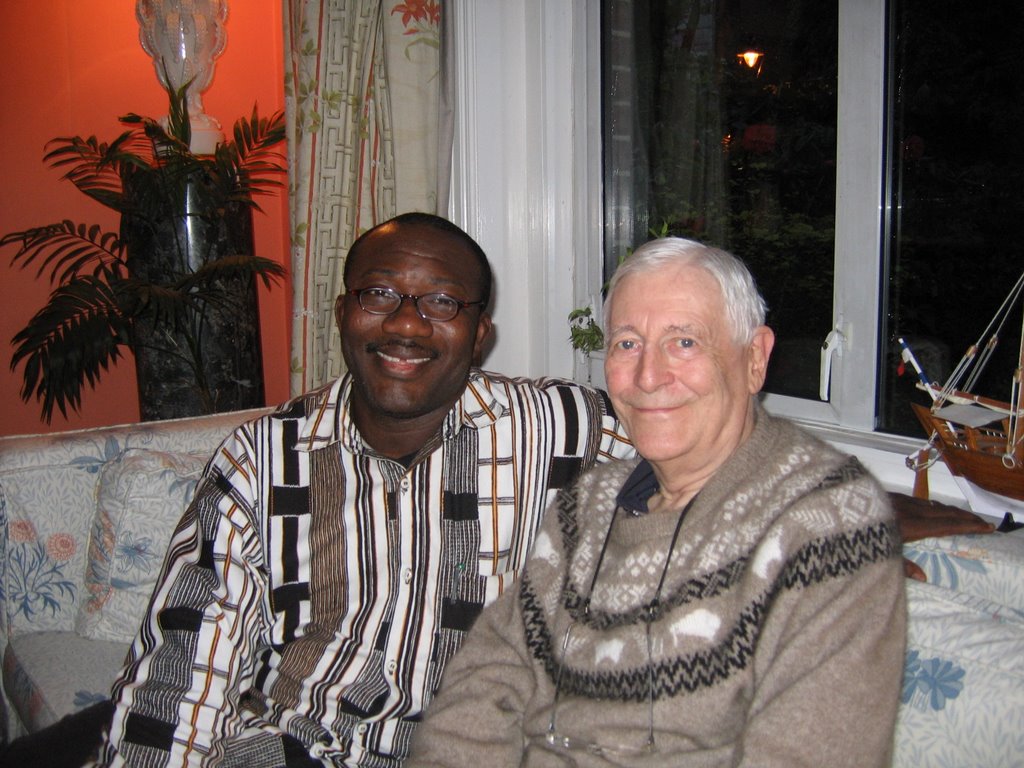
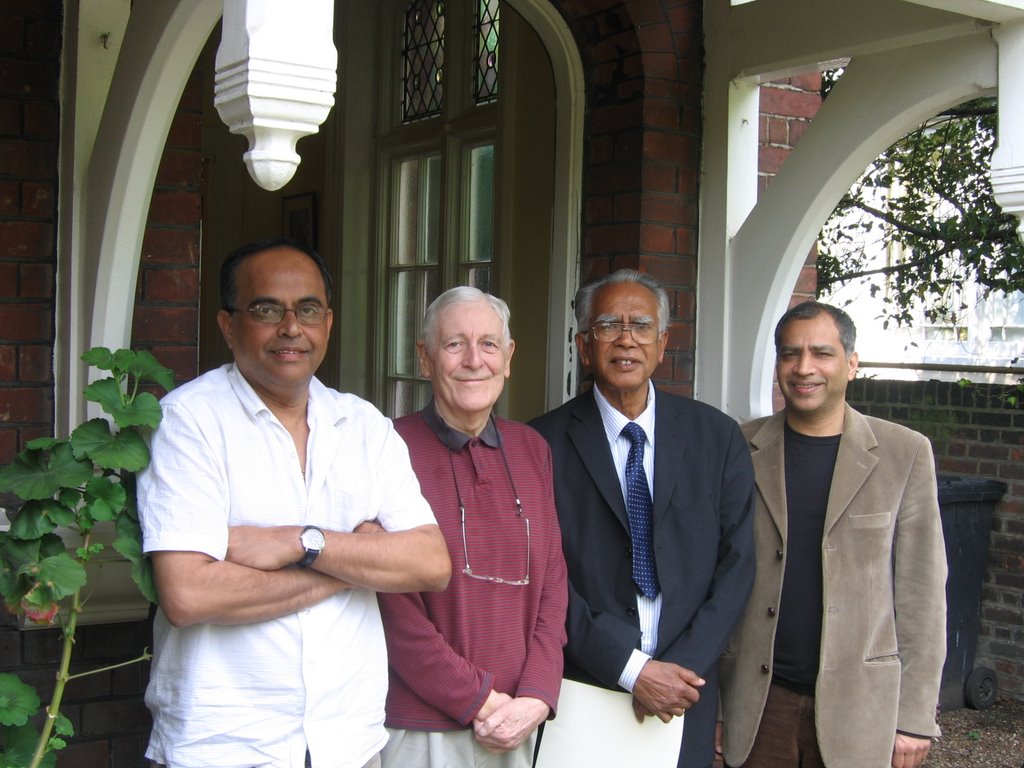
This morning I had a visit from my old friend Bashir Khan and the Leader of the Chagos Islanders, Olivier Bancoult, who has just won a case against the Government in the High Court which paves the way for the islanders to return, 40 years after they were unlawfully exiled by Harold Wilson's Government to make way for a US naval base on Diego Garcia. Wilson falsely pretended that there were no permanent inhabitants on the islands, so that it was unnecessary to consult them in accordance with the rules of the UN Committee in Decolonisation. Now this Government has 28 days to decide whether to appeal against the High Court's ruling that there predecessors' action was illegal.
Then this evening I had a visit from Kayode Fayemi, who flew in from Abuja this morning, with the latest news of the Nigerian Parliament's decision to reject the proposed change in the constitution which would have allowed President Obasanjo to stand for a third term. Kayode is standing for Governor of Ekiti State, and was on his way to the US to address a congress of Ekitians there, and to have talks at the State Department.
But a big event yesterday evening was the Lambeth Civic Awards at the Town Hall, where Lindsay received an award for her work on the Myatt's Fields Project Group. They are working towards a big regeneration of the Park, with the help of the Heritage Lottery Fund and Lambeth Council, in consultation with local people.
This morning I had a visit from my old friend Bashir Khan and the Leader of the Chagos Islanders, Olivier Bancoult, who has just won a case against the Government in the High Court which paves the way for the islanders to return, 40 years after they were unlawfully exiled by Harold Wilson's Government to make way for a US naval base on Diego Garcia. Wilson falsely pretended that there were no permanent inhabitants on the islands, so that it was unnecessary to consult them in accordance with the rules of the UN Committee in Decolonisation. Now this Government has 28 days to decide whether to appeal against the High Court's ruling that there predecessors' action was illegal.
Then this evening I had a visit from Kayode Fayemi, who flew in from Abuja this morning, with the latest news of the Nigerian Parliament's decision to reject the proposed change in the constitution which would have allowed President Obasanjo to stand for a third term. Kayode is standing for Governor of Ekiti State, and was on his way to the US to address a congress of Ekitians there, and to have talks at the State Department.
Friday, May 12, 2006
Haematology, and Assisted Dying
The haematology consultant says I don’t need further treatment, and the stomach biopsy didn’t find any H pylori (you don’t want to know, but there’s plenty of stuff about it on the web)
Readings from latest blood sample:
Haemoglobin 10.6
White cell 3.6
Platelet 426
This afternoon I’m going to the House to vote for Joel Joffe’s Assisted Dying for the Terminally Ill Bill. I wasn’t intending to make the effort, but have been provoked by the blizzard of letters, obviously prompted by Christian groups, from people who haven’t read the Bill and make the most extraordinary assertions about its likely use by grasping relatives to kill off rich aunt Mildred, so that her estate isn’t squandered on nursing home charges. The Bill is a slippery slope, many say, which can lead to euthanasia on demand. This is total rubbish.
What the opponents of the Bill ignore is that an estimated 900 lives are ended each year in the UK by illegal voluntary euthanasia, and a further 2,000 lives are ended by doctors without an explicit request by the patient. Joel Joffe’s Bill puts the patient firmly in the driving seat, as in Oregon where a similar law, but with less stringent safeguards, has been in force since 1997, without any of the consequences, particularly for vulnerable groups, that are predicted here.
Under this Bill, the patient has to make a request in writing for assistance in dying. Two independent doctors then have to examine the patient and confirm that s(he) is suffering from a terminal illness. They must also verify thar the patient’s request is well-informed, persistent and voluntary, and that s(he) has the necessary capacity.
The doctors than have to inform the patient of the alternatives, including palliative and hospice care, and an independent palliative care specialist has to attend the patient to explore this option.
If there is any doubt about the patient’s capacity in the mind of either of the two doctors, they must call in an independent consultant psychiatrist or clinical psychologist
If all these tests are passed, the patient then has to make a written declaration of his or her wish to receive assistance in dying, to be witnessed by two independent persons, neither of whom can be a relative or involved in the patient’s care. One of the witnesses must be a solicitor, who has to be satisfied that the patient is of sound mind, understands the implications of the declaration, and is making it voluntarily.
The patient can revoke the declaration at any time, regardless of capacity, and 14 days must elapse between the declaration and the assisted dying.
The opponents of the Bill want to kill it off this afternoon, not even being prepared to allow it to be debated in detail in Committee of the whole House. That process would enable the House to review all the safeguards, and strengthen them if necessary. It would also reserve the right of the House to reject the Bill at Third Reading, if a majority still considered that it was unsatisfactory after lengthy debate and amendment.
The opponents say that if the Bill were given an unopposed Second Reading, it would be taken as approval of the principle, but in their same letter they acknowledge that the previous version of Lord Joffe’s Bill, which contained fewer safeguards, was given an unopposed Second Reading. So also was every single Private Member’s Bill introduced between the Session of 1997-98 and today, 91 Bills without a single division! Surely not every Member is to be taken as having approved all those Bills in principle? What they did was to make it possible for the 91 Bills to be discussed, so why silence debate on this particular Bill?
In 1995, my Blasphemy (Abolition) Bill was voted down on Second Reading, and although the Religious Offences Bill, incorporating the abolition of blasphemy, got a Second Reading and was sent to a Select Committee which reported on June 10, 2003, same people, including the Government, continue to maintain that the proposal hasn’t been sufficiently discussed.
In that case, as with Lord Joffe’s Bill, the Christian minority think they know what’s best for the rest of us. Nobody is going to compel a Christian suffering from an agonising terminal illness to ask for medical help in ending his life, but they want to impose their ‘principle’ on the whole population.
I’m in favour of improvements in palliative care, but anybody who has spent time in high dependency wards can tell you that medical science cannot always prevent unbearable suffering. Where that suffering is associated with a terminal illness, the patient should have the right to ask for medical help in bringing his life to an end here, rather than have to undertake a traumatic and expensive journey to Switzerland for the purpose.
Assisted dying for the rich is here to stay. For the rest, it does exist, outside the law and without safeguards. To accept this situation is inhuman and callous.
Readings from latest blood sample:
Haemoglobin 10.6
White cell 3.6
Platelet 426
This afternoon I’m going to the House to vote for Joel Joffe’s Assisted Dying for the Terminally Ill Bill. I wasn’t intending to make the effort, but have been provoked by the blizzard of letters, obviously prompted by Christian groups, from people who haven’t read the Bill and make the most extraordinary assertions about its likely use by grasping relatives to kill off rich aunt Mildred, so that her estate isn’t squandered on nursing home charges. The Bill is a slippery slope, many say, which can lead to euthanasia on demand. This is total rubbish.
What the opponents of the Bill ignore is that an estimated 900 lives are ended each year in the UK by illegal voluntary euthanasia, and a further 2,000 lives are ended by doctors without an explicit request by the patient. Joel Joffe’s Bill puts the patient firmly in the driving seat, as in Oregon where a similar law, but with less stringent safeguards, has been in force since 1997, without any of the consequences, particularly for vulnerable groups, that are predicted here.
Under this Bill, the patient has to make a request in writing for assistance in dying. Two independent doctors then have to examine the patient and confirm that s(he) is suffering from a terminal illness. They must also verify thar the patient’s request is well-informed, persistent and voluntary, and that s(he) has the necessary capacity.
The doctors than have to inform the patient of the alternatives, including palliative and hospice care, and an independent palliative care specialist has to attend the patient to explore this option.
If there is any doubt about the patient’s capacity in the mind of either of the two doctors, they must call in an independent consultant psychiatrist or clinical psychologist
If all these tests are passed, the patient then has to make a written declaration of his or her wish to receive assistance in dying, to be witnessed by two independent persons, neither of whom can be a relative or involved in the patient’s care. One of the witnesses must be a solicitor, who has to be satisfied that the patient is of sound mind, understands the implications of the declaration, and is making it voluntarily.
The patient can revoke the declaration at any time, regardless of capacity, and 14 days must elapse between the declaration and the assisted dying.
The opponents of the Bill want to kill it off this afternoon, not even being prepared to allow it to be debated in detail in Committee of the whole House. That process would enable the House to review all the safeguards, and strengthen them if necessary. It would also reserve the right of the House to reject the Bill at Third Reading, if a majority still considered that it was unsatisfactory after lengthy debate and amendment.
The opponents say that if the Bill were given an unopposed Second Reading, it would be taken as approval of the principle, but in their same letter they acknowledge that the previous version of Lord Joffe’s Bill, which contained fewer safeguards, was given an unopposed Second Reading. So also was every single Private Member’s Bill introduced between the Session of 1997-98 and today, 91 Bills without a single division! Surely not every Member is to be taken as having approved all those Bills in principle? What they did was to make it possible for the 91 Bills to be discussed, so why silence debate on this particular Bill?
In 1995, my Blasphemy (Abolition) Bill was voted down on Second Reading, and although the Religious Offences Bill, incorporating the abolition of blasphemy, got a Second Reading and was sent to a Select Committee which reported on June 10, 2003, same people, including the Government, continue to maintain that the proposal hasn’t been sufficiently discussed.
In that case, as with Lord Joffe’s Bill, the Christian minority think they know what’s best for the rest of us. Nobody is going to compel a Christian suffering from an agonising terminal illness to ask for medical help in ending his life, but they want to impose their ‘principle’ on the whole population.
I’m in favour of improvements in palliative care, but anybody who has spent time in high dependency wards can tell you that medical science cannot always prevent unbearable suffering. Where that suffering is associated with a terminal illness, the patient should have the right to ask for medical help in bringing his life to an end here, rather than have to undertake a traumatic and expensive journey to Switzerland for the purpose.
Assisted dying for the rich is here to stay. For the rest, it does exist, outside the law and without safeguards. To accept this situation is inhuman and callous.
Tuesday, May 09, 2006
Scar
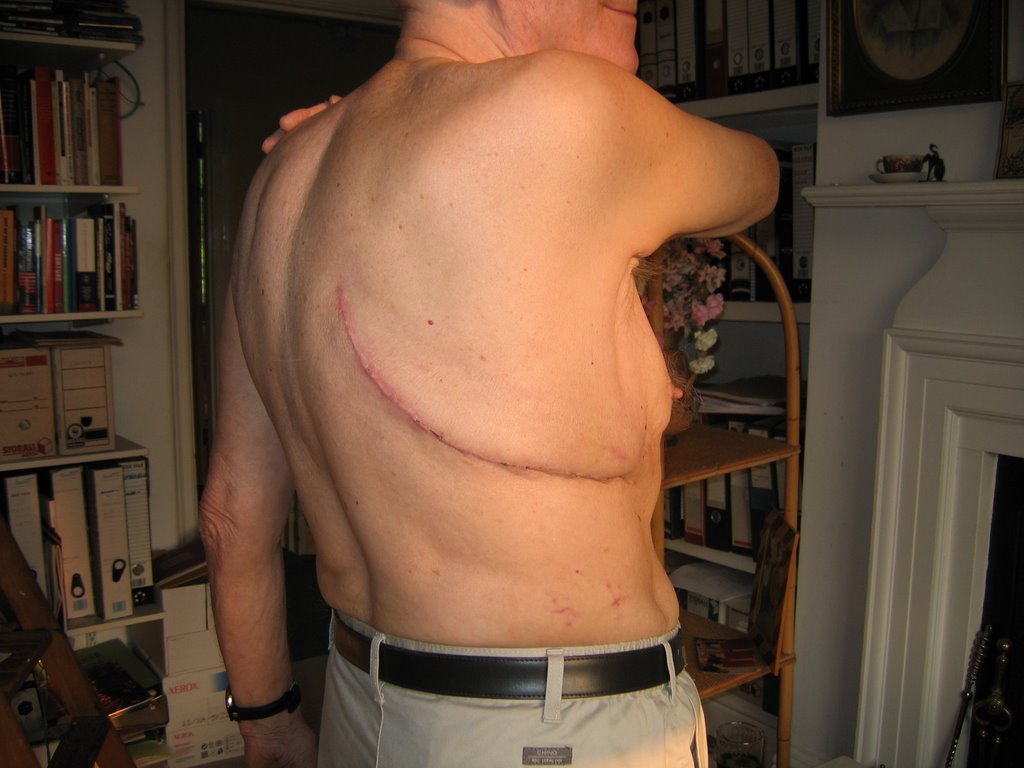
My scar today - bigger than either the CABG or the colostomy. If they were all on the same side you could play noughts and crosses on them.
Meeting with the surgeon
Saw Mr M today, who said he was pleased with progress. Why I lost a lot of blood four days after the operation and where it came from remain a mystery, but does it matter (my comment, not his)? The chunk that was removed measured 85 x 50 x 30 mm, and the tumour itself was an irregular ellipsoid, the major axis of which was 33 mm. Generally these lymphomas are more symmetrical. Mr M showed us the photographs taken during the operation, and has kindly promised to email them to me or send a CD. He said that the bacteria helicobacter pylori had been shown to cause MALT in the digestive system in a majority of cases, and it was unusual to find it in the lung.
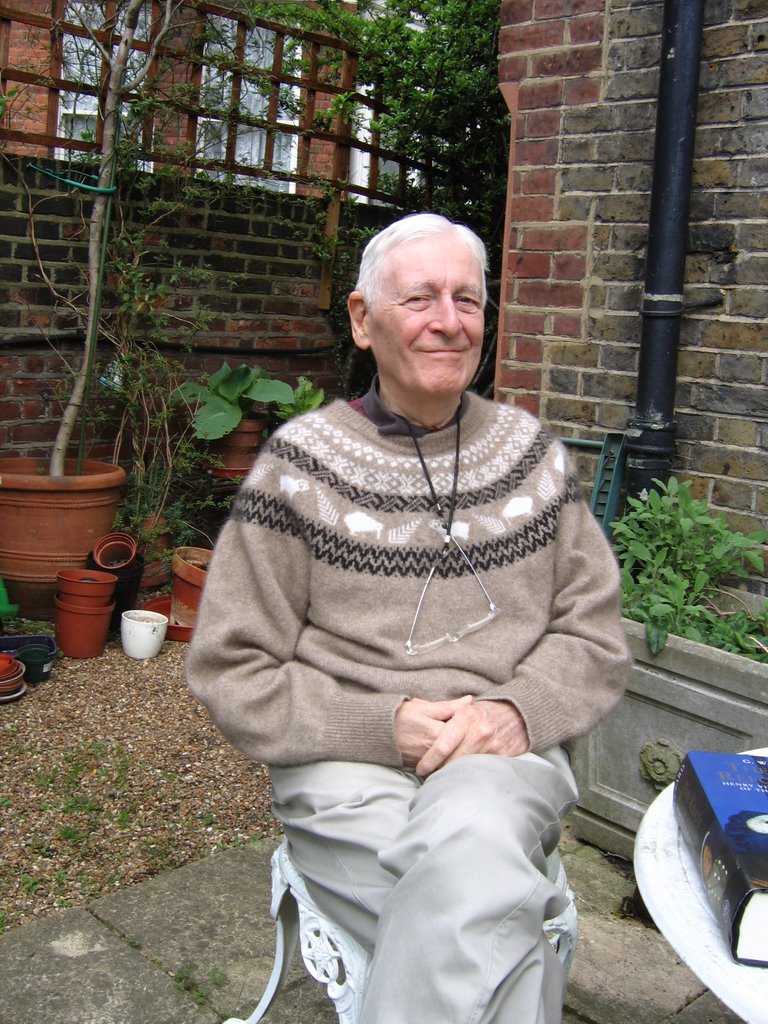

Sunday, May 07, 2006
Half way there
This is my first blog post since the day before the operation. Many thanks to Lindsay for keeping it up so effectively over the last two and a half weeks. A big thank you also to Mr M and his colleagues at King's for looking after me so well, and to the many friends who sent get well messages, enough flowers to stock a funeral parlour for a year, assorted fruit and other goodies. I'm getting up for a few hours every day, and gradually regaining strength, though still feeling a bit weak, and weight down to 65 kg.
Thursday, May 04, 2006
3rd May 06 Eric Update

Eric has a visit from the Ven. Khemadhammo Mahathera, Head of the Buddhist Prison Chaplaincy, Angulimala, of which Eric is Patron.
Posted by Lindsay, 4 May 06
Monday, May 01, 2006
Lindsay with Eric, at home, 1st May 2006
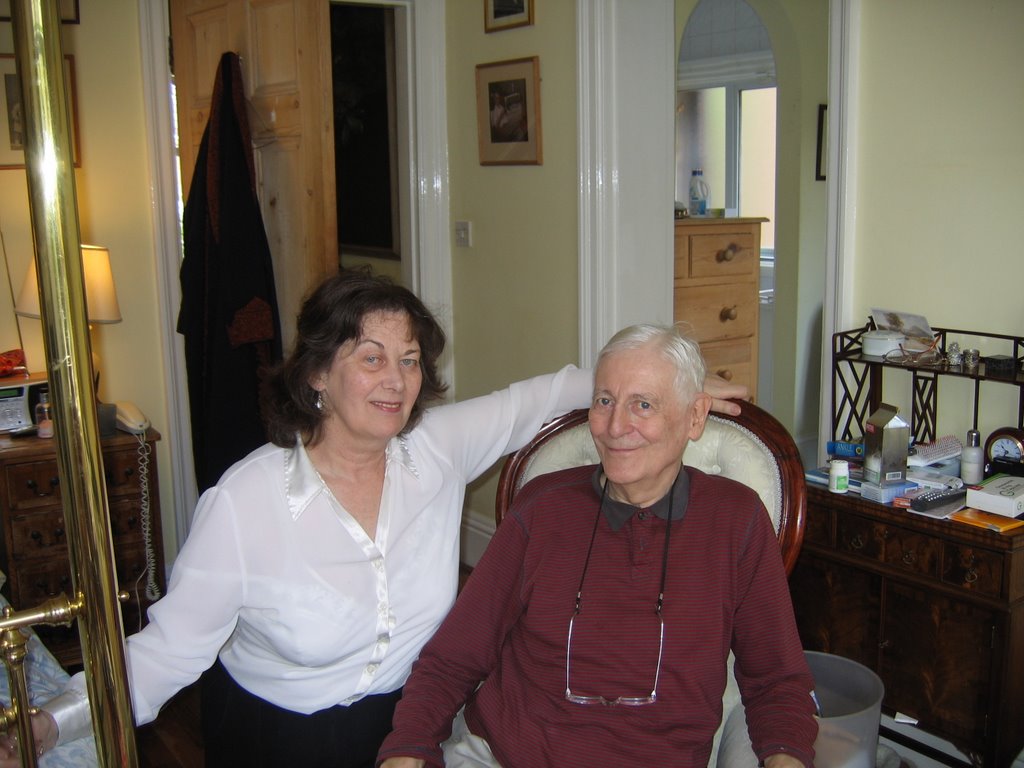
Lindsay at home with Eric, on Bank Holiday Monday, 2006. A reminder to you all that Eric's grandfather, Sir John Lubbock, invented Bank Holidays in 1871, so be thankful!
Posted by Lindsay 01.5.06
Jan Webster, 1.5.06

Jan Webster with Eric, 1st May. Jan flew in from Malaga yesterday to visit Eric, and returns tomorrow.
Update on Eric: May Day 2006
Eric's 2nd day home. Still very tired but so glad to be home. Visits on Sunday from Barbara Stapleton from Kabul, Jan Webster from Malaga and Dr and Mrs Salim Malik from the Ahmadiyya Muslims. On Monday, Jan visited again (see photo) before her return to Spain, and also Edwina Epstein, cousin and local resident.
Subscribe to:
Posts (Atom)