

Saturday, November 18, 2006


Wednesday, November 15, 2006
Armenian Genocide
Lord Avebury, Vice-Chair of the Parliamentary Human Rights Group, said today:
I very much regret the failure of every one of the 550 MPs of the Turkish Grand National Assembly (TGNA) to reply to an invitation to discuss the events of 1915-16, in which a million and a half Armenian subjects of the Ottoman Empire lost their lives.
Following a Letter from the TGNA to the British Parliament challenging the veracity of the evidence published by the British Government in 1916 in the Blue Book ‘The Treatment of Armenians in the Ottoman Empire 1915-16’, a group of MPs and peers wrote proposing a dialogue between British and Turkish MPs, with academic experts on both sides, to examine the authenticity of that evidence.
When no reply was received, I wrote to every Turkish MP individually, asking if they would be willing to participate in such a dialogue. Not a single one replied.
Since neither the TGNA collectively, nor any of its Members, was ready to defend their position in an open and critical forum, it obviously would not stand up to an intellectually rigorous examination. I believe the original Letter was an attempt to stimulate wider Turkish denialism, rather than to establish communication between Turkish and UK Parliamentarians which might have clarified interpretation of the events of 1915-16. But the invitation remains open, and I hope that by publishing this statement, I may yet prompt some Turkish MPs with the courage to engage in dialogue.
I very much regret the failure of every one of the 550 MPs of the Turkish Grand National Assembly (TGNA) to reply to an invitation to discuss the events of 1915-16, in which a million and a half Armenian subjects of the Ottoman Empire lost their lives.
Following a Letter from the TGNA to the British Parliament challenging the veracity of the evidence published by the British Government in 1916 in the Blue Book ‘The Treatment of Armenians in the Ottoman Empire 1915-16’, a group of MPs and peers wrote proposing a dialogue between British and Turkish MPs, with academic experts on both sides, to examine the authenticity of that evidence.
When no reply was received, I wrote to every Turkish MP individually, asking if they would be willing to participate in such a dialogue. Not a single one replied.
Since neither the TGNA collectively, nor any of its Members, was ready to defend their position in an open and critical forum, it obviously would not stand up to an intellectually rigorous examination. I believe the original Letter was an attempt to stimulate wider Turkish denialism, rather than to establish communication between Turkish and UK Parliamentarians which might have clarified interpretation of the events of 1915-16. But the invitation remains open, and I hope that by publishing this statement, I may yet prompt some Turkish MPs with the courage to engage in dialogue.
Daily Star, Dhaka report on the conference
The Daily Star
Committed to PEOPLE'S RIGHT TO KNOW
Vol. 5 Num 878 Thu. November 16, 2006
Metropolitan
Uphold democratic spirit and human rights
Speakers tell int'l confce in London
Staff Correspondent
Speakers at an international conference in London have expressed concern over recent political developments in Bangladesh and stressed the need to uphold the country's democratic spirit and fundamental human rights.
Policy Exchange, London, in association with the US-based Hudson Institute, The New Statesman and the International Bangladesh Foundation organised the conference on Tuesday, according to a press release received in Dhaka.
Dean Godson of Policy Exchange and Maneeza Hossain of Hudson Institute jointly opened the conference.
Representatives of the three main UK political parties, Awami League leader Saber Hossain Chowdury and former law minister Moudud Ahmed of BNP attended the conference where the speakers urged the UK government to listen to the concerns being expressed by the Bengali population in the UK about the forthcoming elections in Bangladesh.
Mahfuz Anam, editor and publisher of The Daily Star, delivered the keynote address while Lord Avebury, Dean Godson and former British high commissioner to Bangladesh Peter Fowler chaired the sessions.
Nicholas Boles, director of the Policy Exchange, said: "Whether the BNP or the Awami League forms the next government is, in a sense, not the point: Bangladeshi democracy must be the winner."
"Not least because the UK has a large population with Bangladeshi roots, the British government has an interest in promoting fair elections in Bangladesh. If the British government were to privilege hardline Islamist opinion above that of secularists -- as was alleged by several speakers today -- that would be in neither the UK's nor Bangladesh's interests," he added.
Shamsuddin Choudhury Manik, a former justice, and Mohidur Rahman, international coordinator of the UK BNP, Dr Reza Kibria and MA Malik, UK BNP secretary, took part in the discussion.
In the session on UK policy towards Bangladesh, Martin Bright of The New Statesman, Cllr Ayub Korom Ali, Munira Mirza of Policy Exchange and Ansar Ahmed Ullah of International Bangladesh Foundation spoke about Islamists and their network.
Chris Blackburn, an intelligence analyst, and Hussain Haqqani of Hudson Institute gave their presentations at the session on terrorism and security.
In the final session, Abbas Faiz of Amnesty International, Shahriar Kabir, acting president of Forum for Secular Bangladesh, Ahmed Ziauddin of Centre for Genocide Studies, and Brad Adams of Human Rights Watch raised their concerns about human rights violations.
Representatives from the Foreign Office, Home office, ODA and diplomats also attended the conference.
Committed to PEOPLE'S RIGHT TO KNOW
Vol. 5 Num 878 Thu. November 16, 2006
Metropolitan
Uphold democratic spirit and human rights
Speakers tell int'l confce in London
Staff Correspondent
Speakers at an international conference in London have expressed concern over recent political developments in Bangladesh and stressed the need to uphold the country's democratic spirit and fundamental human rights.
Policy Exchange, London, in association with the US-based Hudson Institute, The New Statesman and the International Bangladesh Foundation organised the conference on Tuesday, according to a press release received in Dhaka.
Dean Godson of Policy Exchange and Maneeza Hossain of Hudson Institute jointly opened the conference.
Representatives of the three main UK political parties, Awami League leader Saber Hossain Chowdury and former law minister Moudud Ahmed of BNP attended the conference where the speakers urged the UK government to listen to the concerns being expressed by the Bengali population in the UK about the forthcoming elections in Bangladesh.
Mahfuz Anam, editor and publisher of The Daily Star, delivered the keynote address while Lord Avebury, Dean Godson and former British high commissioner to Bangladesh Peter Fowler chaired the sessions.
Nicholas Boles, director of the Policy Exchange, said: "Whether the BNP or the Awami League forms the next government is, in a sense, not the point: Bangladeshi democracy must be the winner."
"Not least because the UK has a large population with Bangladeshi roots, the British government has an interest in promoting fair elections in Bangladesh. If the British government were to privilege hardline Islamist opinion above that of secularists -- as was alleged by several speakers today -- that would be in neither the UK's nor Bangladesh's interests," he added.
Shamsuddin Choudhury Manik, a former justice, and Mohidur Rahman, international coordinator of the UK BNP, Dr Reza Kibria and MA Malik, UK BNP secretary, took part in the discussion.
In the session on UK policy towards Bangladesh, Martin Bright of The New Statesman, Cllr Ayub Korom Ali, Munira Mirza of Policy Exchange and Ansar Ahmed Ullah of International Bangladesh Foundation spoke about Islamists and their network.
Chris Blackburn, an intelligence analyst, and Hussain Haqqani of Hudson Institute gave their presentations at the session on terrorism and security.
In the final session, Abbas Faiz of Amnesty International, Shahriar Kabir, acting president of Forum for Secular Bangladesh, Ahmed Ziauddin of Centre for Genocide Studies, and Brad Adams of Human Rights Watch raised their concerns about human rights violations.
Representatives from the Foreign Office, Home office, ODA and diplomats also attended the conference.
Bangladesh
Lord Avebury, co-chairing a conference on RISE OF POLITICAL ISLAM IN BANGLADESH? WHAT'S AT STAKE IN THE 2007 ELECTIONS, organised by Policy Exchange, 'Think Tank of the year 2006/7', at The Ideas Forum, 10 Storey's Gate, London SW1, at 10.00 on November 14, said
This is a critical moment in the affairs of Bangladesh, which is likely to determine whether the political parties can agree on the steps that are to be taken to ensure free and fair elections, or, in the absence of any agreement, the people are denied the right to choose their next government.
The 14-party opposition alliance opposition has tabled a series of demands which they say are essential to secure a level playing field. They want the Election Commission to be reconstituted; the voter list to be revised, and 300 local election officials who they say were political appointees to be replaced, and have taken to the streets in an effort to force the caretaker administration to act.
Meanwhile Begum Khaleda Zia, BNP Chairperson, says she wants a free, fair and transparent general election in time according to the Constitution. But can this happen without some changes?
What can be done to secure a level playing field within the limited powers available to the caretaker administration, and does this depend on getting the agreement of the main political parties? How can violence be avoided, when already there has been one death and a number of injuries in the blockade, in spite of the restraint shown by the BNP? How can the terrorists whose murders of judges and politicians, and attacks on prominent figures including the leader of the opposition and the British High Commissioner be prevented from taking advantage of the uncertainties of the next two months in the run-up to polling day? What are the prospects for isolating the political extremists from whose ranks the terrorists are recruited? How can the rights of minorities and women to participate in the election be maintained? Is it possible to rectify the voters’ list, with its 11 million phantom voters according to the NDI calculations, in the few weeks that remain? Would there be a chance of at least some improvement with a different Chief Election Commissioner and other members of the Commission, or is it already too late?
These are some of the issues no doubt being explored by the four caretaker advisers under Dr Akbar Ali Khan who are now consulting the political parties and with whom rests the best hope of resolving the present impasse. With the country paralysed, it is absolutely vital to find a way out through dialogue rather than confrontation.
The European Union and the Commonwealth have already sent delegations to Bangladesh to pre-assess the prospects for free and fair elections, and the NDI not only sent a mission but published a report two months ago containing useful recommendations. Richard Boucher, US Under-Secretary of State, has been in Dhaka for the last few days talking to political leaders. The strength of the concern by the international community for the success of the Bangladesh elections is also indicated by the large number of observers who will be there, and by your attendance here today, in the presence of a distinguished galaxy of speakers, you underline the importance we attach to the preservation of Bangladeshi democracy here in the UK.
This is a critical moment in the affairs of Bangladesh, which is likely to determine whether the political parties can agree on the steps that are to be taken to ensure free and fair elections, or, in the absence of any agreement, the people are denied the right to choose their next government.
The 14-party opposition alliance opposition has tabled a series of demands which they say are essential to secure a level playing field. They want the Election Commission to be reconstituted; the voter list to be revised, and 300 local election officials who they say were political appointees to be replaced, and have taken to the streets in an effort to force the caretaker administration to act.
Meanwhile Begum Khaleda Zia, BNP Chairperson, says she wants a free, fair and transparent general election in time according to the Constitution. But can this happen without some changes?
What can be done to secure a level playing field within the limited powers available to the caretaker administration, and does this depend on getting the agreement of the main political parties? How can violence be avoided, when already there has been one death and a number of injuries in the blockade, in spite of the restraint shown by the BNP? How can the terrorists whose murders of judges and politicians, and attacks on prominent figures including the leader of the opposition and the British High Commissioner be prevented from taking advantage of the uncertainties of the next two months in the run-up to polling day? What are the prospects for isolating the political extremists from whose ranks the terrorists are recruited? How can the rights of minorities and women to participate in the election be maintained? Is it possible to rectify the voters’ list, with its 11 million phantom voters according to the NDI calculations, in the few weeks that remain? Would there be a chance of at least some improvement with a different Chief Election Commissioner and other members of the Commission, or is it already too late?
These are some of the issues no doubt being explored by the four caretaker advisers under Dr Akbar Ali Khan who are now consulting the political parties and with whom rests the best hope of resolving the present impasse. With the country paralysed, it is absolutely vital to find a way out through dialogue rather than confrontation.
The European Union and the Commonwealth have already sent delegations to Bangladesh to pre-assess the prospects for free and fair elections, and the NDI not only sent a mission but published a report two months ago containing useful recommendations. Richard Boucher, US Under-Secretary of State, has been in Dhaka for the last few days talking to political leaders. The strength of the concern by the international community for the success of the Bangladesh elections is also indicated by the large number of observers who will be there, and by your attendance here today, in the presence of a distinguished galaxy of speakers, you underline the importance we attach to the preservation of Bangladeshi democracy here in the UK.
Saturday, November 11, 2006
End of the week
Other events Thursday to Friday:
Thursday 09.00 telephone conference with Counsel, the Information Commissioner and the Information Tribunal, to agree Directions in the matter of an appeal to the Information Tribunal under S 57 of the Freedom of Information Act 2000, Appeal No EA/2006/0054, between myself and the Information Commissioner. We were given leave to amend our Notice of Appeal, and the amended Notice, together with an Amended Peply by the Commissioner, are to be sent to the Tribunal ny November 30. The Cabinet Office is to be joined as a party to the Appeal, and they also have to serve a reply on the Tribunal by the same date. The bundle of documens to be used by the Tribunal is to be prepared by December 21, and the Commissioner and the Cabinet Office then have until January 4 to notify us whether they wish any additional documents to be added to the bundle and if so, to supply copies forthwith. The parties have until January 18 to agree the contents of the bundle, and we have to serve copies on the parties by January 25. Witness statements then have to be exchanged and served on the Tribunal by February 15, and by February 22, the parties have to inform the Tribunal whether they want any of the witnesses to attend the hearing for cross-examination. The Tribunal announces the name of those required to attend by March 1. So it looks as if, assuming that all goes yo plan, the hearing will be in March.
At 12.00 on Thursday, to Abbey Gardens to chair this Press Conference:
Lord Avebury, the Vice-Chairman of the Parliamentary Human Rights Group
Cordially invites you to a debate on
The security imperatives and national reconciliation in Iraq
Guest Speaker: Mr Hadi Al Aamery
Member of Iraq’s Parliament and senior member of the Supreme Council of Political Security,
whose membership includes Iraq’s President, Prime Minister, Parliament President,
Commander of Allied Forces and leaders of political groups
Time: 12.00 am, Thursday 9th November 2006
Place: 1 Abbey Gardens (Annexe to the House of Lords), London SW1
For further information please contact: Lord Avebury on 020 7274 4617, email: ericavebury@gmail.com
Or Mohammad Hussain on: 07958692005, moesa4@hotmail.com
Mr al Aamery wants the coalition forces to withdraw to barracks, and only to engage in military operations at the request of the Prime Minister of Iraq. This would certainly provide a test of the capacity of the Iraqi army and police. He said that 12 of the 18 regions of Iraq were peaceful, and in the remaining 6, there was sectarian violence in two, while the others, all Sunni, were the scene of conflict between local people and the Saddamists and Taqfiris. The Taqfiris were not only dangerous in Iraq, but a cancer infecting the whole world.
In Baghdad particularly, organised crime was flourishing, partly due to the release of 40,000 criminal prisoners by Saddam.
Thursday evening Lindsay and I went to Heathrow to pick up Tordie, who arrived from Toronto at about 22.00.
Friday I chaired the Traveller Law Reform Unit Advisory Committee. The members expressed concern over the variable quality of the Gypsy and Traveller Accommodation Neds Assessments, which I now have to convey to the Minister, Meg Munn. They also discussed the question of whether more planning appeals were successful as a result of Circular 1/06, and we are going to see what statistical information the Planning Inspectorate can provide on this.
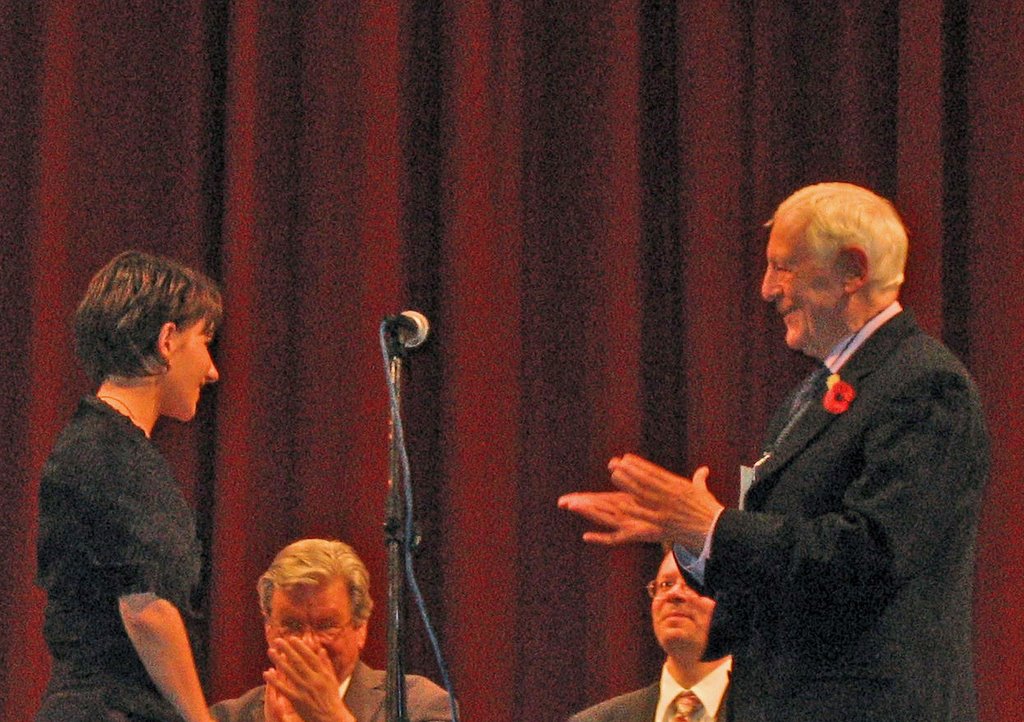
In the evening we went, with Tordie and Kina, to the 1st London Bach Society's Bach Prize final and presentation. The wonner, Elodie Kimmel, who graduated with distinction at the Royal College of Music in June, sang an aria from the Coffee Cantata, a recitative and aria from BWV209, and the very splendid aria from BWV51 Jauchzet Gott in allen Landen.
Thursday 09.00 telephone conference with Counsel, the Information Commissioner and the Information Tribunal, to agree Directions in the matter of an appeal to the Information Tribunal under S 57 of the Freedom of Information Act 2000, Appeal No EA/2006/0054, between myself and the Information Commissioner. We were given leave to amend our Notice of Appeal, and the amended Notice, together with an Amended Peply by the Commissioner, are to be sent to the Tribunal ny November 30. The Cabinet Office is to be joined as a party to the Appeal, and they also have to serve a reply on the Tribunal by the same date. The bundle of documens to be used by the Tribunal is to be prepared by December 21, and the Commissioner and the Cabinet Office then have until January 4 to notify us whether they wish any additional documents to be added to the bundle and if so, to supply copies forthwith. The parties have until January 18 to agree the contents of the bundle, and we have to serve copies on the parties by January 25. Witness statements then have to be exchanged and served on the Tribunal by February 15, and by February 22, the parties have to inform the Tribunal whether they want any of the witnesses to attend the hearing for cross-examination. The Tribunal announces the name of those required to attend by March 1. So it looks as if, assuming that all goes yo plan, the hearing will be in March.
At 12.00 on Thursday, to Abbey Gardens to chair this Press Conference:
Lord Avebury, the Vice-Chairman of the Parliamentary Human Rights Group
Cordially invites you to a debate on
The security imperatives and national reconciliation in Iraq
Guest Speaker: Mr Hadi Al Aamery
Member of Iraq’s Parliament and senior member of the Supreme Council of Political Security,
whose membership includes Iraq’s President, Prime Minister, Parliament President,
Commander of Allied Forces and leaders of political groups
Time: 12.00 am, Thursday 9th November 2006
Place: 1 Abbey Gardens (Annexe to the House of Lords), London SW1
For further information please contact: Lord Avebury on 020 7274 4617, email: ericavebury@gmail.com
Or Mohammad Hussain on: 07958692005, moesa4@hotmail.com
Mr al Aamery wants the coalition forces to withdraw to barracks, and only to engage in military operations at the request of the Prime Minister of Iraq. This would certainly provide a test of the capacity of the Iraqi army and police. He said that 12 of the 18 regions of Iraq were peaceful, and in the remaining 6, there was sectarian violence in two, while the others, all Sunni, were the scene of conflict between local people and the Saddamists and Taqfiris. The Taqfiris were not only dangerous in Iraq, but a cancer infecting the whole world.
In Baghdad particularly, organised crime was flourishing, partly due to the release of 40,000 criminal prisoners by Saddam.
Thursday evening Lindsay and I went to Heathrow to pick up Tordie, who arrived from Toronto at about 22.00.
Friday I chaired the Traveller Law Reform Unit Advisory Committee. The members expressed concern over the variable quality of the Gypsy and Traveller Accommodation Neds Assessments, which I now have to convey to the Minister, Meg Munn. They also discussed the question of whether more planning appeals were successful as a result of Circular 1/06, and we are going to see what statistical information the Planning Inspectorate can provide on this.
In the evening we went, with Tordie and Kina, to the 1st London Bach Society's Bach Prize final and presentation. The wonner, Elodie Kimmel, who graduated with distinction at the Royal College of Music in June, sang an aria from the Coffee Cantata, a recitative and aria from BWV209, and the very splendid aria from BWV51 Jauchzet Gott in allen Landen.
Wednesday, November 08, 2006
Letter to David Triesman about the Peruvian NGO law
I write to you as the President of the Peru Support Group and supported by a number of organisations who work and have partner NGOs in Peru.
We are very concerned about the amendments by the Peruvian Congress of the law which created the Peruvian Agency for International Cooperation (Law nr. 27692) (APCI). The changes proposed include increased control by APCI over the internal workings of NGOs, including intrusive financial oversight, and will make it compulsory for NGOs to subscribe to the APCI register. Under the amended law, if the APCI considers that the activities of a particular NGO do not adhere to the Government’s National Development Plan, the NGO’s APCI registration may be cancelled without any preliminary warning, and without any right of appeal.
This change in the law will contravene a number of fundamental rights protected by the Peruvian constitution and by international human rights agreements to which Peru is party, including freedom of association and freedom of employment.
Transparency is vital to democracy, but the obligatory registration and governmental control over the activities and finances of NGOs are inimical to the development of a strong and dynamic civil society.
This threat to the autonomy of NGOs follows recent criticisms by government spokespersons of the activities of a number of highly regarded human rights organisations, in particular the Instituto de Defensa Legal (IDL). In fact here is a history of attacks by government on their human rights critics in Peru, and the new legislation will undermine the freedom of NGOs to criticise governments and their policies.
The amendments in question were approved last week by the Peruvian Congress, but are yet to be ratified by President Alan García.
Please will you ask our Ambassador in Lima to relay our concern for the protection of the freedom of civil society in Peru, and particularly for the organisations with which we work.
Eric Avebury
President Peru Support Group
We are very concerned about the amendments by the Peruvian Congress of the law which created the Peruvian Agency for International Cooperation (Law nr. 27692) (APCI). The changes proposed include increased control by APCI over the internal workings of NGOs, including intrusive financial oversight, and will make it compulsory for NGOs to subscribe to the APCI register. Under the amended law, if the APCI considers that the activities of a particular NGO do not adhere to the Government’s National Development Plan, the NGO’s APCI registration may be cancelled without any preliminary warning, and without any right of appeal.
This change in the law will contravene a number of fundamental rights protected by the Peruvian constitution and by international human rights agreements to which Peru is party, including freedom of association and freedom of employment.
Transparency is vital to democracy, but the obligatory registration and governmental control over the activities and finances of NGOs are inimical to the development of a strong and dynamic civil society.
This threat to the autonomy of NGOs follows recent criticisms by government spokespersons of the activities of a number of highly regarded human rights organisations, in particular the Instituto de Defensa Legal (IDL). In fact here is a history of attacks by government on their human rights critics in Peru, and the new legislation will undermine the freedom of NGOs to criticise governments and their policies.
The amendments in question were approved last week by the Peruvian Congress, but are yet to be ratified by President Alan García.
Please will you ask our Ambassador in Lima to relay our concern for the protection of the freedom of civil society in Peru, and particularly for the organisations with which we work.
Eric Avebury
President Peru Support Group
Exports of military equipment
http://www.publications.parliament.uk/pa/ld199900/ldhansrd/
pdvn/lds06/text/61106-0002.htm#0611064000009
pdvn/lds06/text/61106-0002.htm#0611064000009
Sunday, November 05, 2006

Saturday, November 04, 2006
Probation Boards
Lord Avebury: My Lords, this is the second time within a week that proposals have been put before us that have been introduced with minimal consultation that is far short of what is required by the Cabinet Office code of practice on consultation.
The National Probation Directorate said in its response to the Merits Committee’s questions on the subject that it did not think that a formal public consultation was required, but it consulted informally a number of boards and board members. It does not appear to have consulted the Probation Boards’ Association, the Magistrates’ Association, the Local Government Association, NACRO and any other major organisation that is concerned with probation and its future. The Probation Boards’ Association has said that the regulations,
“will weaken local involvement in criminal justice, begin the process of centralising probation governance on Whitehall and remove the critical local partners on whom effective work with offenders depends”.
When the Government know that proposals they are going to introduce are controversial, it is only too easy for them to avoid criticism by picking a few consultees who can be cajoled into giving the right answers, while ignoring the leading players. I therefore suggest that there should be Cabinet Office guidance on these pseudo-consultations to ensure that the department at least asks for the official views of the organisations representing the persons or bodies principally concerned. I would be grateful if that suggestion could be referred to the Cabinet Office for its consideration and advice.
As a result of the useful work done by the Merits Committee, we now see more clearly what the real purpose of this exercise is. The Government pretend that they are offering greater flexibility, but this isin fact a preparatory step towards forthcoming
3 Nov 2006 : Column 551
legislation—the “nightmare on Marshall Street” legislation, which the noble Baroness, Lady Anelay, mentioned—under which boards are to be compelled to contract out 10 per cent of their services in 2007-08 and an increasing proportion in later years. Ultimately, programmes for the rehabilitation of offenders, including drug rehabilitation but not, apparently, alcohol rehabilitation, amounting to£250 million a year—about a third of their total expenditure—will all be farmed out, leaving the boards with direct responsibility for managing high-risk offenders in the community.
Mr Harry Fletcher pointed out to me this morning that the distinction between high, medium and low-risk offenders is artificial because, although 35,000 out of the 50,000 offenders under supervision at any time are classified as low-risk, this low-risk group accounts for about 80 per cent of repeat offenders. I was reminded of the work of Professor Jean Floud many years ago on dangerousness, in which she found that there was no reliable scientific method of predicting the propensity to commit serious offences. Giving the easy cases to the private contractors and leaving a core probation service to deal with the hard ones simply will not work, because so many of the offenders will need constantly to be transferred between one category and another.
The argument behind the order is that the boards will need expertise primarily in commissioning and contracting out the services, and that they will not need to have much of a clue about how to deal with low-risk offenders. However, they will still need to cope with the 1,500 high-risk offenders, and—perhaps the Minister can confirm this—with the 13,000 offenders who are classified as medium-risk. Presumably, whenever a low-risk client commits a serious offence, his case will be taken from the private contractor and given back to the probation service. However these matters are to be dealt with, it is hard to see how the boards will discharge their functions if they are composed entirely of businessmen—I take it that they will be mostly men—without experience of the criminal justice system or, indeed, of the mental health or local authority services. Nor is it clear from the response to the Merits Committee who, under the new system, will have responsibility for rehabilitation of offenders with alcohol problems, and it would be helpful if the Minister could say something about that when he replies.
We are not against the proposition that requiring four members of the board to be magistrates may be too prescriptive, but we note the Government’s apology for saying in the explanatory memorandum that there was substantial evidence that many magistrates and local authority members did not possess business skills. That is entirely in order because there was no evidence for this lack of skills among magistrates. I certainly hope that, as a result of this order, boards will not lose all knowledge of the criminal justice system now available to them from their magistrate members. That point has been made forcefully by NACRO, which is also among the bodies with which the Government did not bother to consult.
3 Nov 2006 : Column 552
Eliminating the requirement that two members should be local councillors is opposed by practically everyone I can think of, including the Probation Boards’ Association and the LGA. They point out that partnerships with the local authority and the police are at the heart of modern probation practice and are necessary for close liaison, joint funding and joint planning through local area agreements. NACRO says that the probation service needs to be closely linked with housing and education, since they are both crucial to the resettlement of offenders and the reduction of reoffending. The direct input from local authority representatives on the boards is a valuable way to ensure that these connections are strong and productive, and that probation services complement and reinforce the activities of local authorities in reducing crime. Napo has been told that it will no longer be necessary even for a member to live within the probation area, let alone be a member of the local authority.
We view with apprehension the upheaval which will ultimately sweep away the National Probation Service with the introduction of commissioning and contestability at regional level, of which this order is a precursor. We agree with the noble Baroness,Lady Anelay, that separating consideration of the composition of the probation boards from the foreshadowed primary legislation is wrong in principle. It deprives Parliament of its right to amend the proposals to reverse the damaging loss of the ties between the boards on the one hand, and the magistracy and local authorities on the other, while approving the greater flexibility of appointment periods and a reduction perhaps of the quorum, although I noted that the noble Baroness was not in favour of that either.
We agree also with Napo that moving towards a regional or national model will undermine the public protection work undertaken with partners in the courts, the police, health services, particularly mental health, sentencers and the voluntary sectors. We have not been able to identify a single organisation which is in favour of the upheaval that the Government are planning to inflict on the probation service, apart from the incumbent of No. 10, who will be leaving shortly—we hope. Is it too much to hope that with a regime change in the offing, there could be a moratorium on the harmful changes coming down the track for the probation service and that, as a sign of hope for the future, this order will now be withdrawn?
www.publications.parliament.uk/pa/ld199900/ldhansrd/
pdvn/lds06/text/61103-0005.htm
The National Probation Directorate said in its response to the Merits Committee’s questions on the subject that it did not think that a formal public consultation was required, but it consulted informally a number of boards and board members. It does not appear to have consulted the Probation Boards’ Association, the Magistrates’ Association, the Local Government Association, NACRO and any other major organisation that is concerned with probation and its future. The Probation Boards’ Association has said that the regulations,
“will weaken local involvement in criminal justice, begin the process of centralising probation governance on Whitehall and remove the critical local partners on whom effective work with offenders depends”.
When the Government know that proposals they are going to introduce are controversial, it is only too easy for them to avoid criticism by picking a few consultees who can be cajoled into giving the right answers, while ignoring the leading players. I therefore suggest that there should be Cabinet Office guidance on these pseudo-consultations to ensure that the department at least asks for the official views of the organisations representing the persons or bodies principally concerned. I would be grateful if that suggestion could be referred to the Cabinet Office for its consideration and advice.
As a result of the useful work done by the Merits Committee, we now see more clearly what the real purpose of this exercise is. The Government pretend that they are offering greater flexibility, but this isin fact a preparatory step towards forthcoming
3 Nov 2006 : Column 551
legislation—the “nightmare on Marshall Street” legislation, which the noble Baroness, Lady Anelay, mentioned—under which boards are to be compelled to contract out 10 per cent of their services in 2007-08 and an increasing proportion in later years. Ultimately, programmes for the rehabilitation of offenders, including drug rehabilitation but not, apparently, alcohol rehabilitation, amounting to£250 million a year—about a third of their total expenditure—will all be farmed out, leaving the boards with direct responsibility for managing high-risk offenders in the community.
Mr Harry Fletcher pointed out to me this morning that the distinction between high, medium and low-risk offenders is artificial because, although 35,000 out of the 50,000 offenders under supervision at any time are classified as low-risk, this low-risk group accounts for about 80 per cent of repeat offenders. I was reminded of the work of Professor Jean Floud many years ago on dangerousness, in which she found that there was no reliable scientific method of predicting the propensity to commit serious offences. Giving the easy cases to the private contractors and leaving a core probation service to deal with the hard ones simply will not work, because so many of the offenders will need constantly to be transferred between one category and another.
The argument behind the order is that the boards will need expertise primarily in commissioning and contracting out the services, and that they will not need to have much of a clue about how to deal with low-risk offenders. However, they will still need to cope with the 1,500 high-risk offenders, and—perhaps the Minister can confirm this—with the 13,000 offenders who are classified as medium-risk. Presumably, whenever a low-risk client commits a serious offence, his case will be taken from the private contractor and given back to the probation service. However these matters are to be dealt with, it is hard to see how the boards will discharge their functions if they are composed entirely of businessmen—I take it that they will be mostly men—without experience of the criminal justice system or, indeed, of the mental health or local authority services. Nor is it clear from the response to the Merits Committee who, under the new system, will have responsibility for rehabilitation of offenders with alcohol problems, and it would be helpful if the Minister could say something about that when he replies.
We are not against the proposition that requiring four members of the board to be magistrates may be too prescriptive, but we note the Government’s apology for saying in the explanatory memorandum that there was substantial evidence that many magistrates and local authority members did not possess business skills. That is entirely in order because there was no evidence for this lack of skills among magistrates. I certainly hope that, as a result of this order, boards will not lose all knowledge of the criminal justice system now available to them from their magistrate members. That point has been made forcefully by NACRO, which is also among the bodies with which the Government did not bother to consult.
3 Nov 2006 : Column 552
Eliminating the requirement that two members should be local councillors is opposed by practically everyone I can think of, including the Probation Boards’ Association and the LGA. They point out that partnerships with the local authority and the police are at the heart of modern probation practice and are necessary for close liaison, joint funding and joint planning through local area agreements. NACRO says that the probation service needs to be closely linked with housing and education, since they are both crucial to the resettlement of offenders and the reduction of reoffending. The direct input from local authority representatives on the boards is a valuable way to ensure that these connections are strong and productive, and that probation services complement and reinforce the activities of local authorities in reducing crime. Napo has been told that it will no longer be necessary even for a member to live within the probation area, let alone be a member of the local authority.
We view with apprehension the upheaval which will ultimately sweep away the National Probation Service with the introduction of commissioning and contestability at regional level, of which this order is a precursor. We agree with the noble Baroness,Lady Anelay, that separating consideration of the composition of the probation boards from the foreshadowed primary legislation is wrong in principle. It deprives Parliament of its right to amend the proposals to reverse the damaging loss of the ties between the boards on the one hand, and the magistracy and local authorities on the other, while approving the greater flexibility of appointment periods and a reduction perhaps of the quorum, although I noted that the noble Baroness was not in favour of that either.
We agree also with Napo that moving towards a regional or national model will undermine the public protection work undertaken with partners in the courts, the police, health services, particularly mental health, sentencers and the voluntary sectors. We have not been able to identify a single organisation which is in favour of the upheaval that the Government are planning to inflict on the probation service, apart from the incumbent of No. 10, who will be leaving shortly—we hope. Is it too much to hope that with a regime change in the offing, there could be a moratorium on the harmful changes coming down the track for the probation service and that, as a sign of hope for the future, this order will now be withdrawn?
www.publications.parliament.uk/pa/ld199900/ldhansrd/
pdvn/lds06/text/61103-0005.htm
Social landlords and Travellers
Social Landlords (Permissible Additional Purposes) (England) Order 2006
12.56 pm
Lord Avebury rose to move, That an humble Address be presented to Her Majesty praying that the order, laid before the House on 26 July, be annulled (S.I. 2006/1968).
The noble Lord said: My Lords, I want to make it absolutely clear that I am not opposing the order, but simply using the device of praying against it to discuss some of the problems of enlisting social landlords in the provision and management of Gypsy sites. This is not a simple matter, as one can see from the fact that it was two and a half years ago when the then Minister, Yvette Cooper, said in another place that she would amend the purposes for which the Housing Corporation could provide funding to include the construction, maintenance and management of these sites. We agree with that policy, which we advocated under the heading “Enlisting Social Landlords”, in a document that the Liberal Democrats published in 2002, although we do not claim any particular monopoly of the idea, which was widely canvassed at the time.
At a meeting last week with the Minister, Gypsy and Traveller organisation representatives expressed disappointment that it was taking so long to get in place the new system of site provision, of which this order is an essential component. The delay in bringing forward the order was occasioned by the need to consult on the definition of Gypsies and Travellers. As your Lordships’ Merits of Statutory Instruments Select Committee explained in its useful memorandum on the subject, we now have two definitions, for reasons which are comprehensible but which may lead to some confusion. The one used here is based on nomadism rather than ethnicity, but it is extended to include those who are no longer nomadic because of illness or old age, and travelling showmen, who I am glad are included because frequently in the past they have been left out of these discussions. It includes people who are not Romany Gypsies or Irish Travellers but who follow a cultural tradition of nomadism or living in caravans. For the purposes of the Housing Act, under which local authorities are required to assess the accommodation needs of Gypsies and Travellers in their areas, a broader definition was needed to encompass ethnic Gypsies and Irish Travellers, many of whom are permanently settled either voluntarily or because of the huge difficulty of following a nomadic way of life now that it is unlawful to stop anywhere except on transit sites, which are few and far between.
The first thing to say about the order is that social landlords are not expected to make provision for ethnic Gypsies who may be tempted to resume living in a caravan because of the greater availability of land for Gypsy sites as a result of the permissions that will be granted following the implementation of the Planning and Compulsory Purchase Act. Yet there may be cases where extended families, some of whose members are in bricks and mortar and others on caravan sites, would like to be reunited on a site
3 Nov 2006 : Column 541
provided by a social landlord. Is the order flexible enough to cope with that kind of demand, when some people may come from bricks and mortar and others from substandard sites or sites that are to be eliminated?
Secondly, at the recent meeting between the All-Party Group on Gypsy and Traveller Law Reform and Meg Munn MP, it was made clear that the priority for social landlords would be to cater for those among the 3,000 families living on unauthorised sites who will be unable to buy landto develop sites for themselves when the landfinally becomes available following the completion of the needs assessments and the incorporation of the numbers resulting from those assessments in the regional spatial strategies. It will be many years before Travellers who are living on some of the grossly unsatisfactory sites provided under the 1968 Act—some of which are next to sewage works or under motorways—can be rehoused. As far as I can see, there is nothing in the order to prevent schemes to rehouse people from sink sites. If they are identified as needing to be rehoused in the needs assessments, social landlords might well have a role to play. I hope that the Minister will say something about that.
In some areas, local authority sites are being closed without alternative provision for the residents being made. In London, there has been a sharp decline in the number of pitches: 76 were lost in the 10 years to 2004, according to the London Gypsy and Traveller group and sites in Newham and Hackney on land needed for the Olympic Games are threatened with imminent closure, with no agreement on how they are to be relocated. It would be ironic if the Olympic Games, which were touted as a means of reducing social deprivation in London, were to decrease further the supply of accommodation for the most deprived community of all. I hope that Ministers will knock heads together, particularly in the LDA, to see that that does not happen.
I mentioned that case to indicate that the longer it takes to mobilise social landlords, the bigger the task confronting them will be. They cannot really get going until the local authority has been through the needs assessment and has produced the development plan document identifying the land needed for the purpose. In the mean while, they might occasionally be able to use Circular 1/06, as described in the Planning Inspectorate letter of 24 July, to get planning permission on suitable land that has not yet been designated in the DPD. However, as with private individuals, that approach means additional trouble and expense and might sour relationships between social landlords and local authorities.
That brings me to the question of whether RSLs are going to come forward in sufficient numbers and with sufficient resources to match the need. During the passage of the Housing Bill, the Government rejected a proposal to give local authorities a reserve power to develop sites in areas where the need for rented pitches was not being met, so RSLs are assumed to be capable of rising to the challenge and providing rented sites throughout the country. At the meeting of the all-party group, we were told that there
3 Nov 2006 : Column 542
were new entrants—until recently, Novas has had the field to itself. Who are those new entrants, in what areas of the country are they operating and what sites have they provided or are in the course of providing? What efforts is the DCLG making to enlist new providers?
At that meeting, we raised the problem of rising land prices, which are likely to create problems for RSLs as well as for private developers of sites. Once the land has been identified in a DPD, its value is likely to be considerably higher than it would be for agricultural land, which would have to be reflected in the rent charged by the RSL. In the case of county council and RSL-owned sites, which have been brought under a procrustean system of regulation so that the amount of housing benefit payable is less than the economic rent, many existing sites are now loss-making, and there is no incentive for social landlords to develop new sites where the rents would need to be higher if they cannot recover the amounts from tenants who are on benefit. Research carried out for the DWP led to a recommendation that the allowable rent for benefit purposes on all Gypsy sites should be increased by £15 per pitch to reflect the cost of management on the site, depending on its attainment of quality standards for maintenance and health and safety. Families who need a lot of support will not be well catered for under these arrangements and the assumption that all Gypsy sites require the same amount of management resources is manifestly untrue. RSLs would naturally tend to offer places on their sites to Gypsies who they think will not give rise to major problems, leaving difficult families who need a lot of support to fend for themselves. The arrangements recommended by Spark are not flexible enough to cope with the wide range of situations, and it would be preferable to abolish rent controls for social and local authority landlords, who may be expected to act responsibly without that incentive.
I welcome the extension of funding for Gypsy and Traveller sites to RSLs as well as local authorities—£28 million will be available in 2006-07 and £35 million will be available in the following year in order to provide new sites or refurbish existing ones. The extent to which RSLs were involved inthe bids for the current year and their expressionsof interest for 2006-07, which had to be in by30 September, would be an indication of their likely interest in the Housing Corporation funding resulting from this order. I would be grateful if the Minister could give us the figures. It would also be useful to know how many RSLs have constitutions that allow them to take on the provision of Gypsy and Traveller sites or have applied for consent to the necessary changes to their constitutions under paragraphs 9 to 11 of Schedule 1 to the Housing Act 1996.
When we meet Gypsies and Travellers, as in the meeting with the Minister last week, they are naturally sceptical about the ultimate success of the strategy for ensuring that members of their communities have a place to live. Inevitably, residents in the neighbourhood of unauthorised encampments are dissatisfied with the rate of progress that is being made. It is important that the Government should
3 Nov 2006 : Column 543
keep both sets of people informed of what is being done, and this order is one essential piece of the jigsaw.
Moved, That an humble Address be presented to Her Majesty praying that the order, laid before the House on 26 July, be annulled (S.I. 2006/1968).—(Lord Avebury.)
www.publications.parliament.uk/pa/ld199900/ldhansrd/
pdvn/lds06/text/61103-0005.htm
12.56 pm
Lord Avebury rose to move, That an humble Address be presented to Her Majesty praying that the order, laid before the House on 26 July, be annulled (S.I. 2006/1968).
The noble Lord said: My Lords, I want to make it absolutely clear that I am not opposing the order, but simply using the device of praying against it to discuss some of the problems of enlisting social landlords in the provision and management of Gypsy sites. This is not a simple matter, as one can see from the fact that it was two and a half years ago when the then Minister, Yvette Cooper, said in another place that she would amend the purposes for which the Housing Corporation could provide funding to include the construction, maintenance and management of these sites. We agree with that policy, which we advocated under the heading “Enlisting Social Landlords”, in a document that the Liberal Democrats published in 2002, although we do not claim any particular monopoly of the idea, which was widely canvassed at the time.
At a meeting last week with the Minister, Gypsy and Traveller organisation representatives expressed disappointment that it was taking so long to get in place the new system of site provision, of which this order is an essential component. The delay in bringing forward the order was occasioned by the need to consult on the definition of Gypsies and Travellers. As your Lordships’ Merits of Statutory Instruments Select Committee explained in its useful memorandum on the subject, we now have two definitions, for reasons which are comprehensible but which may lead to some confusion. The one used here is based on nomadism rather than ethnicity, but it is extended to include those who are no longer nomadic because of illness or old age, and travelling showmen, who I am glad are included because frequently in the past they have been left out of these discussions. It includes people who are not Romany Gypsies or Irish Travellers but who follow a cultural tradition of nomadism or living in caravans. For the purposes of the Housing Act, under which local authorities are required to assess the accommodation needs of Gypsies and Travellers in their areas, a broader definition was needed to encompass ethnic Gypsies and Irish Travellers, many of whom are permanently settled either voluntarily or because of the huge difficulty of following a nomadic way of life now that it is unlawful to stop anywhere except on transit sites, which are few and far between.
The first thing to say about the order is that social landlords are not expected to make provision for ethnic Gypsies who may be tempted to resume living in a caravan because of the greater availability of land for Gypsy sites as a result of the permissions that will be granted following the implementation of the Planning and Compulsory Purchase Act. Yet there may be cases where extended families, some of whose members are in bricks and mortar and others on caravan sites, would like to be reunited on a site
3 Nov 2006 : Column 541
provided by a social landlord. Is the order flexible enough to cope with that kind of demand, when some people may come from bricks and mortar and others from substandard sites or sites that are to be eliminated?
Secondly, at the recent meeting between the All-Party Group on Gypsy and Traveller Law Reform and Meg Munn MP, it was made clear that the priority for social landlords would be to cater for those among the 3,000 families living on unauthorised sites who will be unable to buy landto develop sites for themselves when the landfinally becomes available following the completion of the needs assessments and the incorporation of the numbers resulting from those assessments in the regional spatial strategies. It will be many years before Travellers who are living on some of the grossly unsatisfactory sites provided under the 1968 Act—some of which are next to sewage works or under motorways—can be rehoused. As far as I can see, there is nothing in the order to prevent schemes to rehouse people from sink sites. If they are identified as needing to be rehoused in the needs assessments, social landlords might well have a role to play. I hope that the Minister will say something about that.
In some areas, local authority sites are being closed without alternative provision for the residents being made. In London, there has been a sharp decline in the number of pitches: 76 were lost in the 10 years to 2004, according to the London Gypsy and Traveller group and sites in Newham and Hackney on land needed for the Olympic Games are threatened with imminent closure, with no agreement on how they are to be relocated. It would be ironic if the Olympic Games, which were touted as a means of reducing social deprivation in London, were to decrease further the supply of accommodation for the most deprived community of all. I hope that Ministers will knock heads together, particularly in the LDA, to see that that does not happen.
I mentioned that case to indicate that the longer it takes to mobilise social landlords, the bigger the task confronting them will be. They cannot really get going until the local authority has been through the needs assessment and has produced the development plan document identifying the land needed for the purpose. In the mean while, they might occasionally be able to use Circular 1/06, as described in the Planning Inspectorate letter of 24 July, to get planning permission on suitable land that has not yet been designated in the DPD. However, as with private individuals, that approach means additional trouble and expense and might sour relationships between social landlords and local authorities.
That brings me to the question of whether RSLs are going to come forward in sufficient numbers and with sufficient resources to match the need. During the passage of the Housing Bill, the Government rejected a proposal to give local authorities a reserve power to develop sites in areas where the need for rented pitches was not being met, so RSLs are assumed to be capable of rising to the challenge and providing rented sites throughout the country. At the meeting of the all-party group, we were told that there
3 Nov 2006 : Column 542
were new entrants—until recently, Novas has had the field to itself. Who are those new entrants, in what areas of the country are they operating and what sites have they provided or are in the course of providing? What efforts is the DCLG making to enlist new providers?
At that meeting, we raised the problem of rising land prices, which are likely to create problems for RSLs as well as for private developers of sites. Once the land has been identified in a DPD, its value is likely to be considerably higher than it would be for agricultural land, which would have to be reflected in the rent charged by the RSL. In the case of county council and RSL-owned sites, which have been brought under a procrustean system of regulation so that the amount of housing benefit payable is less than the economic rent, many existing sites are now loss-making, and there is no incentive for social landlords to develop new sites where the rents would need to be higher if they cannot recover the amounts from tenants who are on benefit. Research carried out for the DWP led to a recommendation that the allowable rent for benefit purposes on all Gypsy sites should be increased by £15 per pitch to reflect the cost of management on the site, depending on its attainment of quality standards for maintenance and health and safety. Families who need a lot of support will not be well catered for under these arrangements and the assumption that all Gypsy sites require the same amount of management resources is manifestly untrue. RSLs would naturally tend to offer places on their sites to Gypsies who they think will not give rise to major problems, leaving difficult families who need a lot of support to fend for themselves. The arrangements recommended by Spark are not flexible enough to cope with the wide range of situations, and it would be preferable to abolish rent controls for social and local authority landlords, who may be expected to act responsibly without that incentive.
I welcome the extension of funding for Gypsy and Traveller sites to RSLs as well as local authorities—£28 million will be available in 2006-07 and £35 million will be available in the following year in order to provide new sites or refurbish existing ones. The extent to which RSLs were involved inthe bids for the current year and their expressionsof interest for 2006-07, which had to be in by30 September, would be an indication of their likely interest in the Housing Corporation funding resulting from this order. I would be grateful if the Minister could give us the figures. It would also be useful to know how many RSLs have constitutions that allow them to take on the provision of Gypsy and Traveller sites or have applied for consent to the necessary changes to their constitutions under paragraphs 9 to 11 of Schedule 1 to the Housing Act 1996.
When we meet Gypsies and Travellers, as in the meeting with the Minister last week, they are naturally sceptical about the ultimate success of the strategy for ensuring that members of their communities have a place to live. Inevitably, residents in the neighbourhood of unauthorised encampments are dissatisfied with the rate of progress that is being made. It is important that the Government should
3 Nov 2006 : Column 543
keep both sets of people informed of what is being done, and this order is one essential piece of the jigsaw.
Moved, That an humble Address be presented to Her Majesty praying that the order, laid before the House on 26 July, be annulled (S.I. 2006/1968).—(Lord Avebury.)
www.publications.parliament.uk/pa/ld199900/ldhansrd/
pdvn/lds06/text/61103-0005.htm
Friday, November 03, 2006
People trafficking, November 2
http://www.publications.parliament.uk/pa/ld199900/ldhansrd/
pdvn/lds06/text/61102-0001.htm#06110288000008
Also yesterday:
Parliamentary Human Rights Group, officers' meeting
Meeting with the Speaker of the Somaliland House of Representatives, Abdirahman M Abdillahi and colleagues
pdvn/lds06/text/61102-0001.htm#06110288000008
Also yesterday:
Parliamentary Human Rights Group, officers' meeting
Meeting with the Speaker of the Somaliland House of Representatives, Abdirahman M Abdillahi and colleagues
Further to Andrew Adonis's unintentionally misleading statements about 'consultation'
From Lord Avebury P0631104
Tel 020-7274 4617
ericavebury@gmail.com
November 1, 2006
In Monday’s debate on Muriel Turner’s amendment you said that the trade unions concerned had been ‘thoroughly consulted’ about the proposals in question, although the General Secretary of the GMB, Paul Kenny, said in a press release issued last Monday and repeated in the next day’s Guardian:
"The amendment on school support staff should either be withdrawn or voted down. …It is a recipe for religious intolerance”.
"The amendments has (sic) been introduced with no consultation whatsoever with the trade unions representing the school support staff. Matters relating to faith schools raise complex and sensitive issues, and as a matter of principle no new legislation should be introduced until there has been widespread consultation and agreement."
I also hold a transcript of recording of a telephone call made to the House just before the debate from the General Secretary of the NAHT, another union deeply involved in this issue, expressing surprise about the amendment and irritation bordering on contempt for it.
Please could you let me know
1. whether you or any Minister has written on this matter to the General Secretaries concerned about this issue, and if not, the reasons for not doing so.
2. what documentation you had sent to the unions ‘previously’; on what date; and how each of the unions indicated to you that they were ‘supportive of the changes that we were making’.
3. whether you will have copies of any papers that were tabled at last Thursday’s meeting placed in the Library of the House
4. whether the union officials who attended last Thursday’s meeting had a mandate to agree with your amendments.
5. whether you consider that getting the agreement of “workforce agreement monitoring group”(Col 60) is an adequate way of consulting unions about proposals that may affect the life prospects of thousands of their members?
6. whether you will provide the names and positions of those constituting the “all” in your assertion that
“all [members of the workforce agreement monitoring group] recognise that these were minor amendments that were a sensible response to ensuring remodelling took place in VA schools, and that VC and religious foundation schools were not unnecessarily hamstrung as to what role their head could play”.
7 whether you consulted the NAHT, the specialist union whose members are affected by the head teacher amendment, and if so how;
8. whether, in describing the consultation as “thorough”, you will say how that description fits with the Cabinet Office Code of Practice on Consultation, and whether it was subject to any of the six consultation criteria described in the Regulatory Impact Unit document of January 2004.
The Lord Adonis,
Department for Education & Skills,
PS to Private Secretary:
Since writing to Lord Adonis at lunchtime, I have seen a copy of the
press release issued by UNISON yesterday,
www.unison.org.uk/asppresspack/pressrelease_view.asp?id=881, and also
of the letter from Steve Sinnott of the NUT to the Secretary of State,
copy attached.
Please will you see that this additional evidence is placed before the
Minister so that he can take in into consideration in replying to my
letter.
Regards,
Eric Avebury
Tel 020-7274 4617
ericavebury@gmail.com
November 1, 2006
In Monday’s debate on Muriel Turner’s amendment you said that the trade unions concerned had been ‘thoroughly consulted’ about the proposals in question, although the General Secretary of the GMB, Paul Kenny, said in a press release issued last Monday and repeated in the next day’s Guardian:
"The amendment on school support staff should either be withdrawn or voted down. …It is a recipe for religious intolerance”.
"The amendments has (sic) been introduced with no consultation whatsoever with the trade unions representing the school support staff. Matters relating to faith schools raise complex and sensitive issues, and as a matter of principle no new legislation should be introduced until there has been widespread consultation and agreement."
I also hold a transcript of recording of a telephone call made to the House just before the debate from the General Secretary of the NAHT, another union deeply involved in this issue, expressing surprise about the amendment and irritation bordering on contempt for it.
Please could you let me know
1. whether you or any Minister has written on this matter to the General Secretaries concerned about this issue, and if not, the reasons for not doing so.
2. what documentation you had sent to the unions ‘previously’; on what date; and how each of the unions indicated to you that they were ‘supportive of the changes that we were making’.
3. whether you will have copies of any papers that were tabled at last Thursday’s meeting placed in the Library of the House
4. whether the union officials who attended last Thursday’s meeting had a mandate to agree with your amendments.
5. whether you consider that getting the agreement of “workforce agreement monitoring group”(Col 60) is an adequate way of consulting unions about proposals that may affect the life prospects of thousands of their members?
6. whether you will provide the names and positions of those constituting the “all” in your assertion that
“all [members of the workforce agreement monitoring group] recognise that these were minor amendments that were a sensible response to ensuring remodelling took place in VA schools, and that VC and religious foundation schools were not unnecessarily hamstrung as to what role their head could play”.
7 whether you consulted the NAHT, the specialist union whose members are affected by the head teacher amendment, and if so how;
8. whether, in describing the consultation as “thorough”, you will say how that description fits with the Cabinet Office Code of Practice on Consultation, and whether it was subject to any of the six consultation criteria described in the Regulatory Impact Unit document of January 2004.
The Lord Adonis,
Department for Education & Skills,
PS to Private Secretary:
Since writing to Lord Adonis at lunchtime, I have seen a copy of the
press release issued by UNISON yesterday,
www.unison.org.uk/asppresspack/pressrelease_view.asp?id=881
of the letter from Steve Sinnott of the NUT to the Secretary of State,
copy attached.
Please will you see that this additional evidence is placed before the
Minister so that he can take in into consideration in replying to my
letter.
Regards,
Eric Avebury
Wednesday, November 01, 2006
Tuesday in the House
Children: Speech and Language Professionals, Tuesday, Col 155:
http://www.publications.parliament.uk/pa/ld199900/ldhansrd/
pdvn/lds06/text/61031-0001.htm#06103159000009
http://www.publications.parliament.uk/pa/ld199900/ldhansrd/
pdvn/lds06/text/61031-0001.htm#06103159000009
Monday in the House
Discrimination against teachers of the wrong religion in faith schools, Monday Col 53:
www.publications.parliament.uk/pa/ld199900/ldhansrd/
pdvn/lds06/text/61030-0002.htm#06103018000002
Employment of private contractors to arrest, detain and search people, including children, at juxtaposed controls in Channel ports, Monday Col GC17:
www.publications.parliament.uk/pa/ld199900/ldhansrd/
pdvn/lds06/text/61030-gc0002.htm#06103047000006
www.publications.parliament.uk/pa/ld199900/ldhansrd/
pdvn/lds06/text/61030-0002.htm#06103018000002
Employment of private contractors to arrest, detain and search people, including children, at juxtaposed controls in Channel ports, Monday Col GC17:
www.publications.parliament.uk/pa/ld199900/ldhansrd/
pdvn/lds06/text/61030-gc0002.htm#06103047000006
Subscribe to:
Posts (Atom)