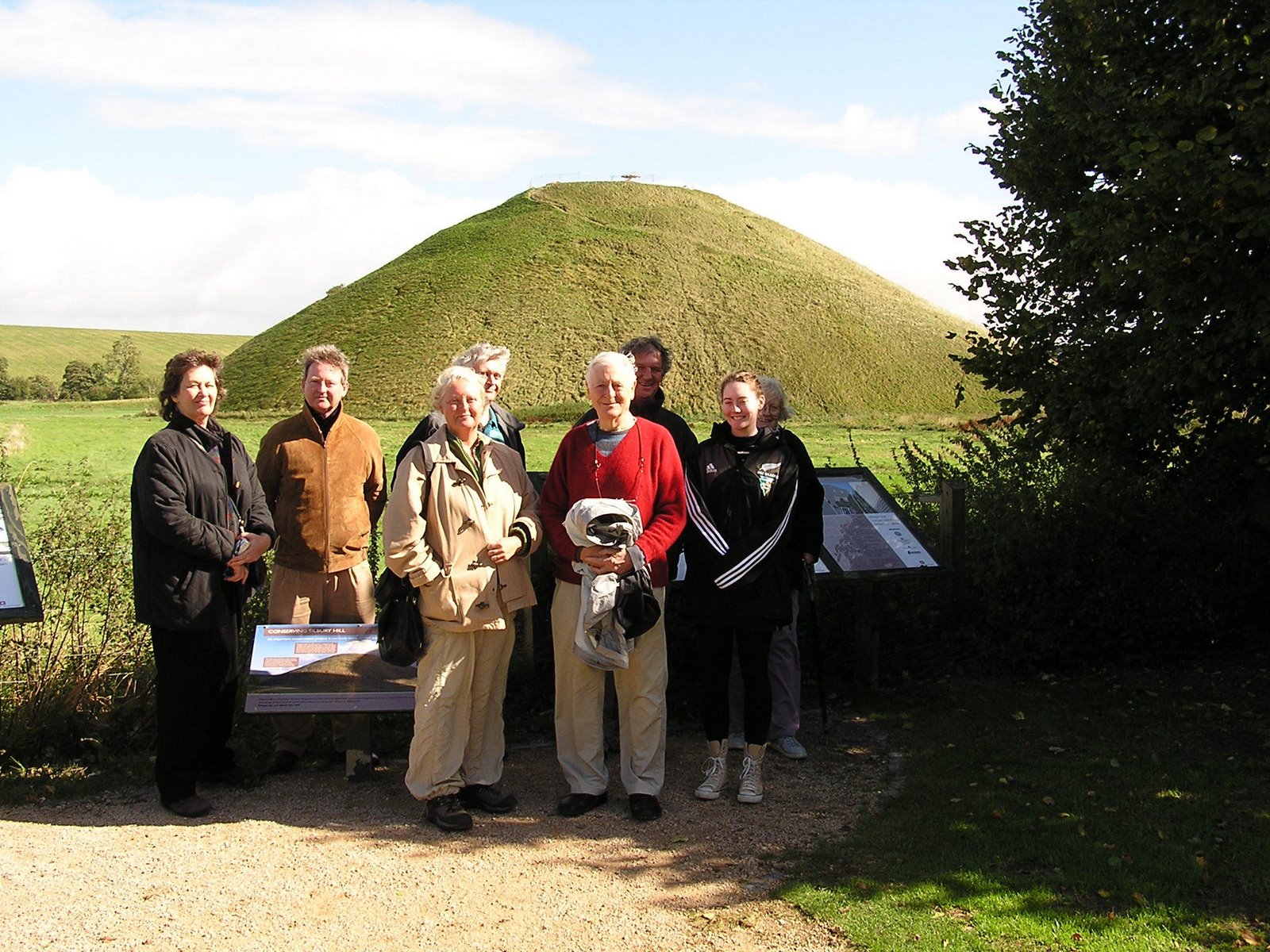

Monday, May 29, 2006

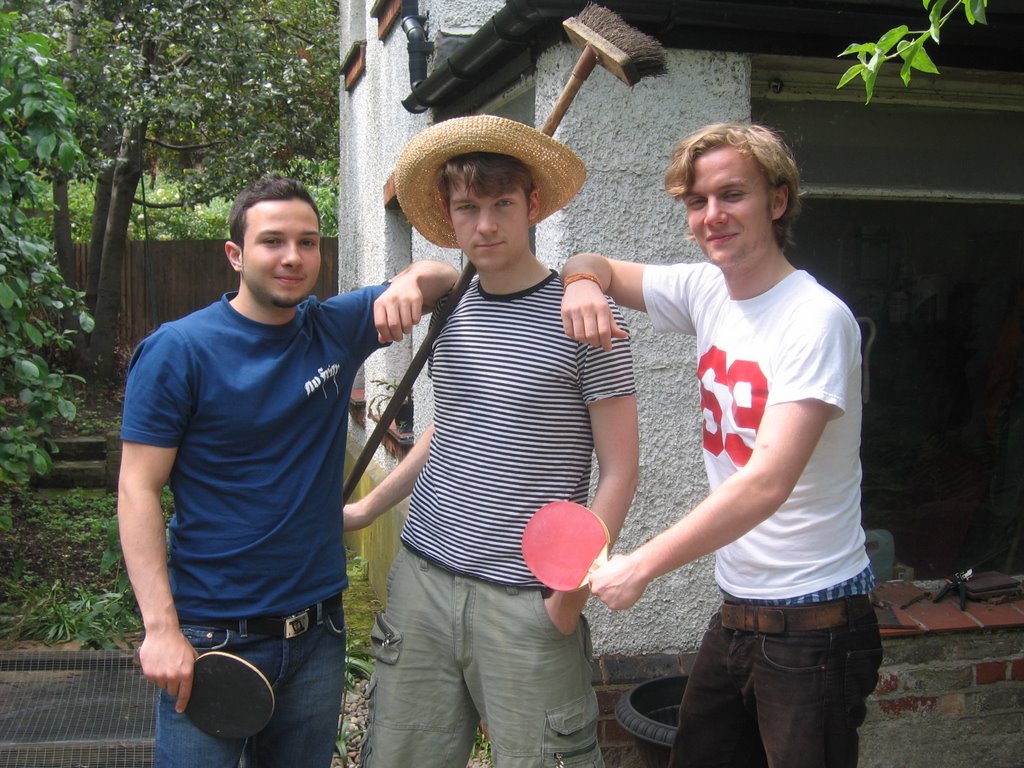
Sunday, May 28, 2006
Bank Holiday
Not a lot of startling news since the last post. I attended the House twice this week, and asked a supplementary question on Wednesday about reconstruction following the Kashmir earthquake. JW arrived from Nottingham with his two friends Nic and Rusty on Friday, and Tordie went off to Rome that morning.
No Bank Holiday weekend would be complete without the traditional emergency removal case, and sure enough, Puck called me at breakfast time about a Ugandan who has removal directions for thie evening. So when she lets me have the material, I'm afraid that means spending many a happy hour trying to raise someone at MODCU ( management of detained cases unit) and persuading them to defer removal pending the submission of important new evidence which Puck says she can produce. Why hadn't the solicitors been doing this work? Because many of them are useless, except at the box-ticking which keeps them on the approved list. The supervisory authority pays no attention tothe quality of reprsentation, and many good practitioners have withdrawn because of the cuts in the amount of legal aid allowed.
Paul Vallely wrote in The Independent yesterday on Bank Holidays: The break with tradition, saying that my grandfather Sir John Lubbock felt that friends and families should be able to enjoy an outing together. But the name 'Bank Holiday' didn't mean that only bank employees were allowed to take the day off. The name arose from the fact that bank bills which fell due for payment on the Bank Holiday were to become payable the following day. It had nothing to do with particular firms enjoying a commercial advantage, as Vallely supposed. Sir John thought one reason why the 1871 Act encountered no Parliamentary opposition was that at the time many people didn't realise that it gave everybody a holiday.
No Bank Holiday weekend would be complete without the traditional emergency removal case, and sure enough, Puck called me at breakfast time about a Ugandan who has removal directions for thie evening. So when she lets me have the material, I'm afraid that means spending many a happy hour trying to raise someone at MODCU ( management of detained cases unit) and persuading them to defer removal pending the submission of important new evidence which Puck says she can produce. Why hadn't the solicitors been doing this work? Because many of them are useless, except at the box-ticking which keeps them on the approved list. The supervisory authority pays no attention tothe quality of reprsentation, and many good practitioners have withdrawn because of the cuts in the amount of legal aid allowed.
Paul Vallely wrote in The Independent yesterday on Bank Holidays: The break with tradition, saying that my grandfather Sir John Lubbock felt that friends and families should be able to enjoy an outing together. But the name 'Bank Holiday' didn't mean that only bank employees were allowed to take the day off. The name arose from the fact that bank bills which fell due for payment on the Bank Holiday were to become payable the following day. It had nothing to do with particular firms enjoying a commercial advantage, as Vallely supposed. Sir John thought one reason why the 1871 Act encountered no Parliamentary opposition was that at the time many people didn't realise that it gave everybody a holiday.
Monday, May 22, 2006
Yesterday's photos
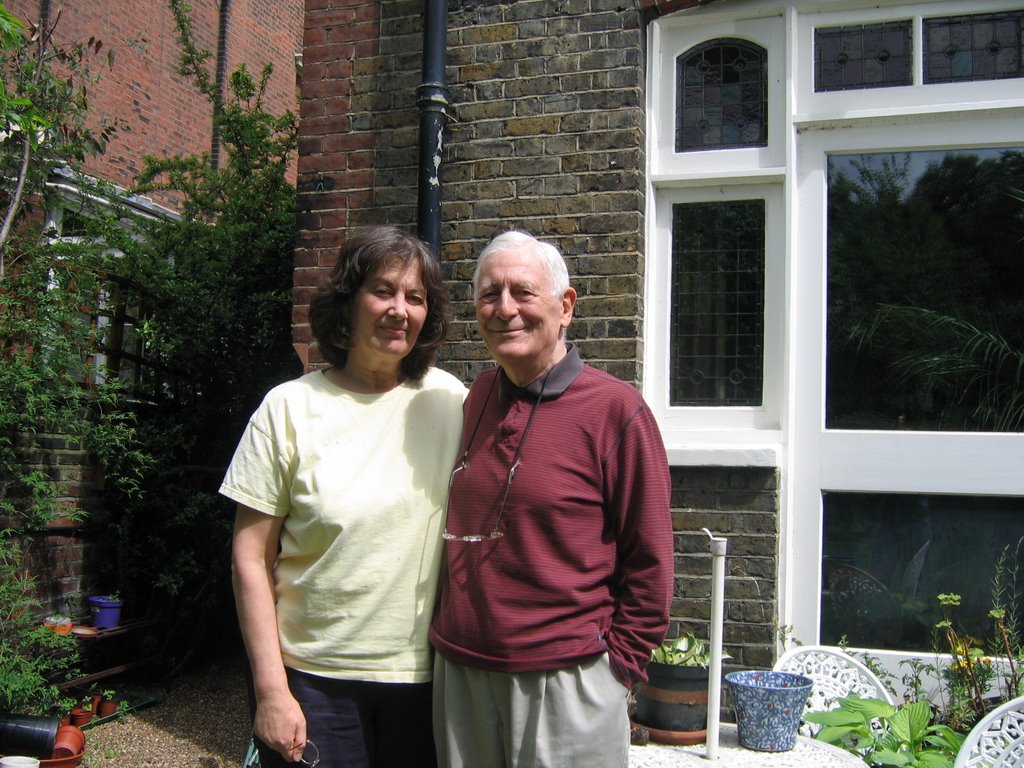
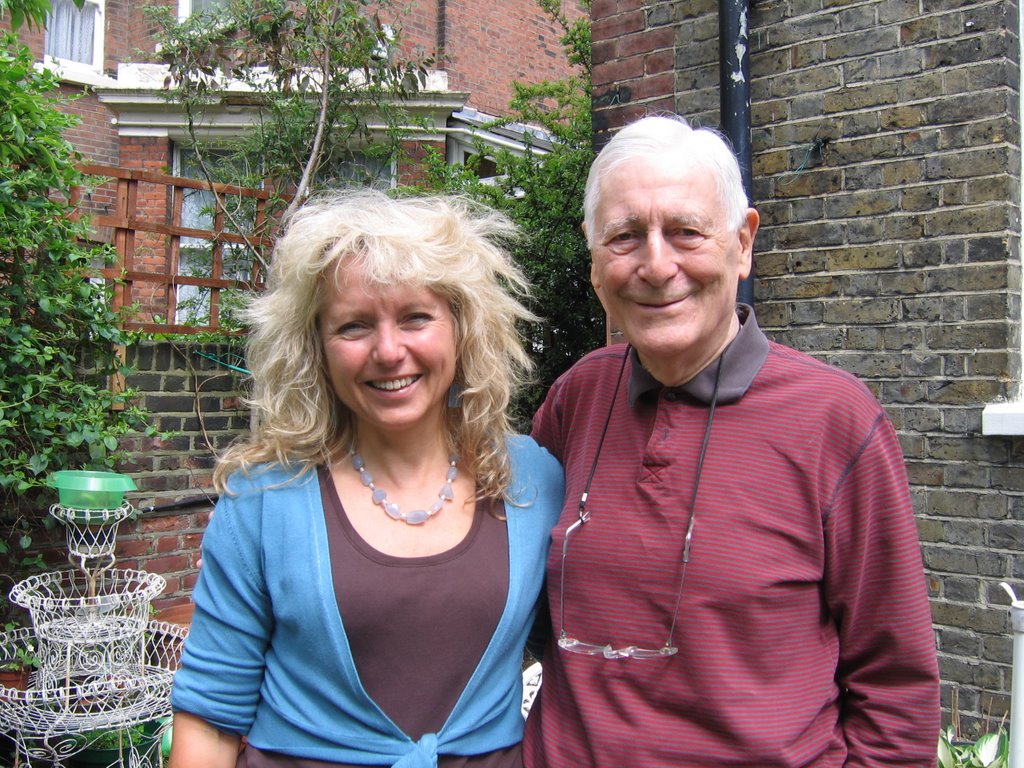
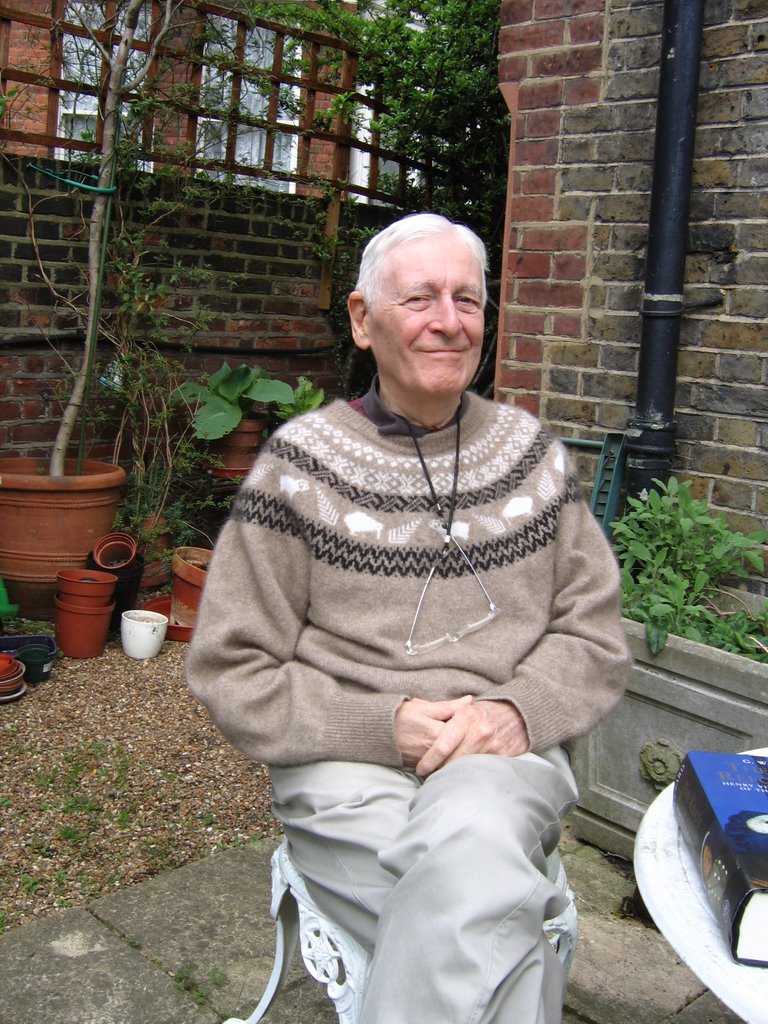
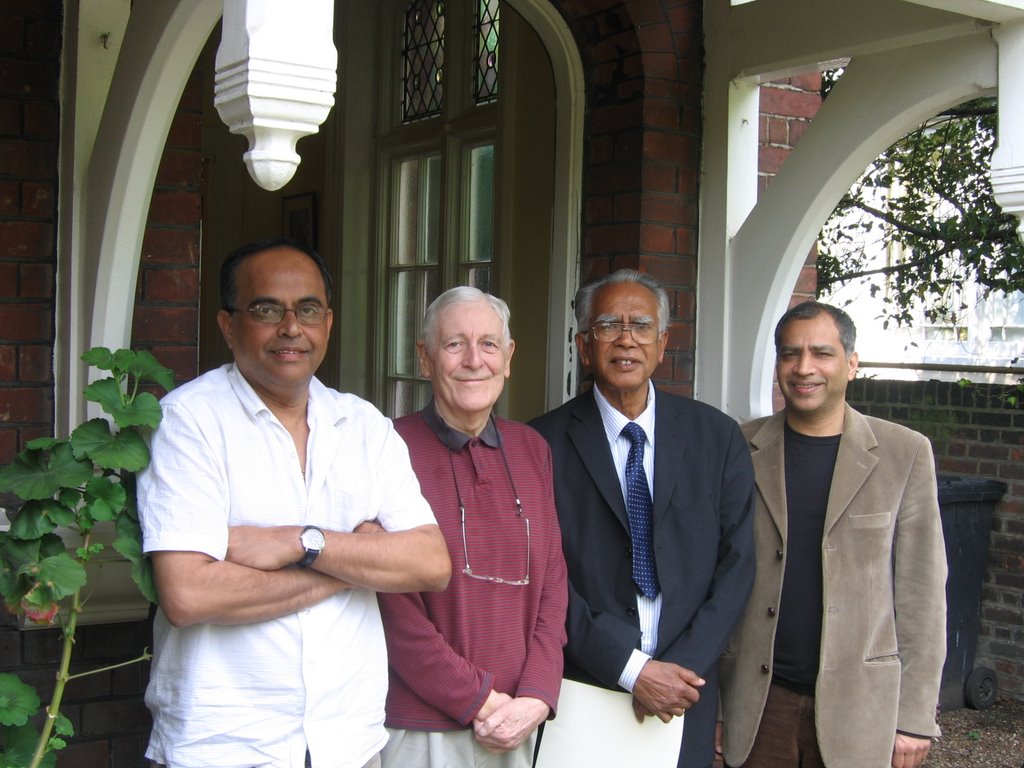
The two pictures below were yesterday's visits. The Secretary-General of the Bangladesh Communist Party reviewed the prospects for the elections at the end of the year. The caretaker government which takes over for the period of the campaign, and the Electoral Commission, are supposed to be neutral, but the government of Khaleda Zia has arranged for both to be headed by staunch supporters of her BNP. Since the Electoral Commission appoints the District Officers who are in charge of registration and polling arrangements, and the head of the caretaker government controls the army and police, there cannot be free and fair elections. During June both the EU and the Commonwealth Secretariat are sending pre-assessment missions to Bangladesh, and no doubt they will urge the importance of state non-partisanship in the election machinery. But with the government and opposition not taking to one another - because the Awami League, the main opposition party, refuses to attend any meeting at which the Jamaat-e-Islami, the government's coalition partners, are present - it isn't easy to see how progress can be made towards the reforms that are needed, and time is rubbing out.
In the afternoon, Nasim Bajwa and his wife came round and we had a good chat. He reminded me of the occasion when we had gone to the Pakistan TV studios for what was supposed to be a one-on-one interview, and the interviewer had failed to appear! Nasim had stepped into the breach, and although he had never done any broadcasting interviewing before in his life, the programme was a great success.
In the afternoon, Nasim Bajwa and his wife came round and we had a good chat. He reminded me of the occasion when we had gone to the Pakistan TV studios for what was supposed to be a one-on-one interview, and the interviewer had failed to appear! Nasim had stepped into the breach, and although he had never done any broadcasting interviewing before in his life, the programme was a great success.


Friday, May 19, 2006

Letter to the Foreign Secretary on the Chagos Islands case
From Lord Avebury P0619051
Tel 020-7274 4617
Email ericavebury@gmail.com
Dear Mrs Beckett,
I have read the judgement in the Chagos Islands case, EWHC 1038, and I also met Mr Olivier Bancoult for a discussion on the issue on Wednesday.
Clearly, your predecessors knew exactly what they were doing in hiding the fact that there was a civilian population on the islands, as the note of November 15, 1965 by an official quoted in paragraph 27 recognised, and the Commissioner was even more frank in his minute of June 1966, also quoted by Laws LJ in the previous case, “Bancoult 1” and repeated later in Para 27. We deliberately misled the Decolonisation Committee about the status of the islanders, a shabby piece of work intended to clear the way for us to exile them compulsorily from their homeland. It is also clear that we acted unlawfully in making the Order in Council which reversed Bancoult 1. As the judge said in para 142,
‘the suggestion that a minister can, through an Order in Council, exile a whole population from a British Overseas Territory and claim that he is doing so for the “peace, order and good government” of the territory is, to us, repugnant’.
As to the question of whether or not the removal of the islanders was challengeable, the bottom line is that ’the decision was in reality that of the Secretary of State, not of Her Mejesty, and is subject to judicial review in the ordinary way’ (para 163).
Sir Sydney Kentridge QC rightly described the treatment of the Chagossians as "outrageous, unlawful and a breach of accepted moral standards". He said there was no known precedent "for the lawful use of prerogative powers to remove or exclude an entire population of British subjects from their homes and place of birth".
In Gordon Brown’s keynote speech to the Fabian Future of Britishness conference on January he used the word ‘fairness’ repeatedly, citing a 2005 YouGov survey which showed that as many as 90 per cent of British people thought that fairness and fair play were very important or fairly important in defining Britishness. The behaviour of the Government towards the Chagossians has been monstrously unfair, and I hope you will not compound the wrong done to this small and powerless group by appealing against the High Court’s ruling in their favour.
Yours sincerely,
The Rt Hon Mrs Margaret Beckett MP,
Foreign & Commonwealth Office,
London SW1A 2AH.
Tel 020-7274 4617
Email ericavebury@gmail.com
May 19, 2006
Dear Mrs Beckett,
I have read the judgement in the Chagos Islands case, EWHC 1038, and I also met Mr Olivier Bancoult for a discussion on the issue on Wednesday.
Clearly, your predecessors knew exactly what they were doing in hiding the fact that there was a civilian population on the islands, as the note of November 15, 1965 by an official quoted in paragraph 27 recognised, and the Commissioner was even more frank in his minute of June 1966, also quoted by Laws LJ in the previous case, “Bancoult 1” and repeated later in Para 27. We deliberately misled the Decolonisation Committee about the status of the islanders, a shabby piece of work intended to clear the way for us to exile them compulsorily from their homeland. It is also clear that we acted unlawfully in making the Order in Council which reversed Bancoult 1. As the judge said in para 142,
‘the suggestion that a minister can, through an Order in Council, exile a whole population from a British Overseas Territory and claim that he is doing so for the “peace, order and good government” of the territory is, to us, repugnant’.
As to the question of whether or not the removal of the islanders was challengeable, the bottom line is that ’the decision was in reality that of the Secretary of State, not of Her Mejesty, and is subject to judicial review in the ordinary way’ (para 163).
Sir Sydney Kentridge QC rightly described the treatment of the Chagossians as "outrageous, unlawful and a breach of accepted moral standards". He said there was no known precedent "for the lawful use of prerogative powers to remove or exclude an entire population of British subjects from their homes and place of birth".
In Gordon Brown’s keynote speech to the Fabian Future of Britishness conference on January he used the word ‘fairness’ repeatedly, citing a 2005 YouGov survey which showed that as many as 90 per cent of British people thought that fairness and fair play were very important or fairly important in defining Britishness. The behaviour of the Government towards the Chagossians has been monstrously unfair, and I hope you will not compound the wrong done to this small and powerless group by appealing against the High Court’s ruling in their favour.
Yours sincerely,
The Rt Hon Mrs Margaret Beckett MP,
Foreign & Commonwealth Office,
London SW1A 2AH.
Wednesday, May 17, 2006
Still here
Today I had an email asking why my blog postings were becoming so infrequent. I had to admit that with no news about my health except to say I'm gradually becoming stronger, and a rather uneventful daily round at home, there wasn't a huge amount to say.
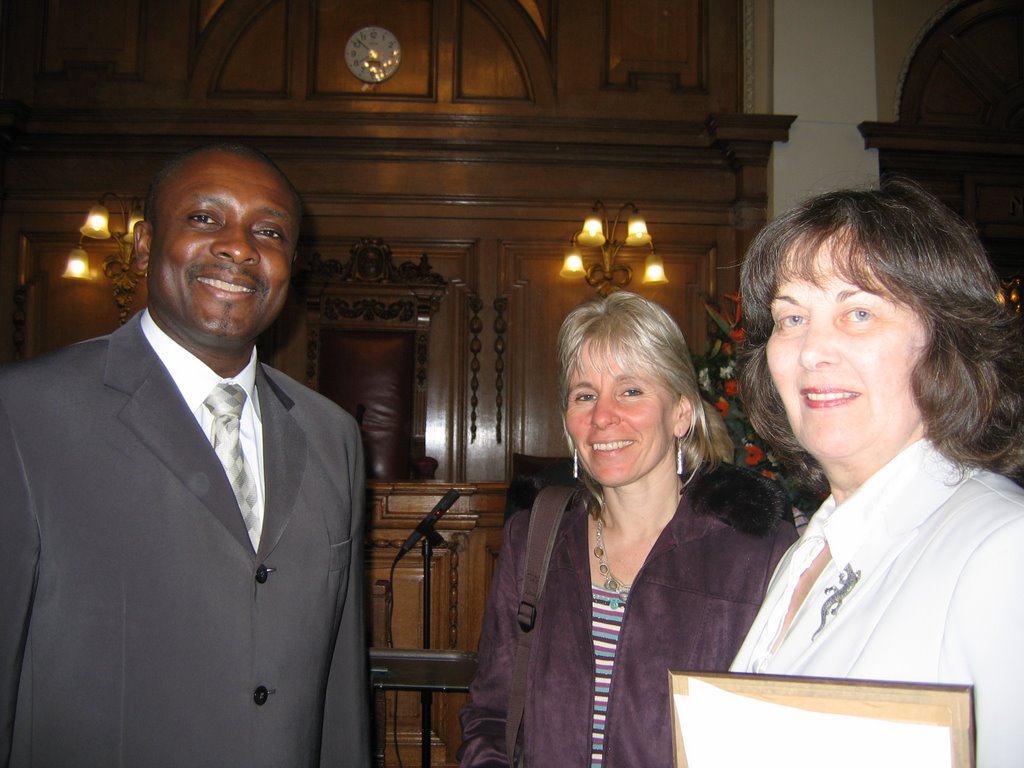
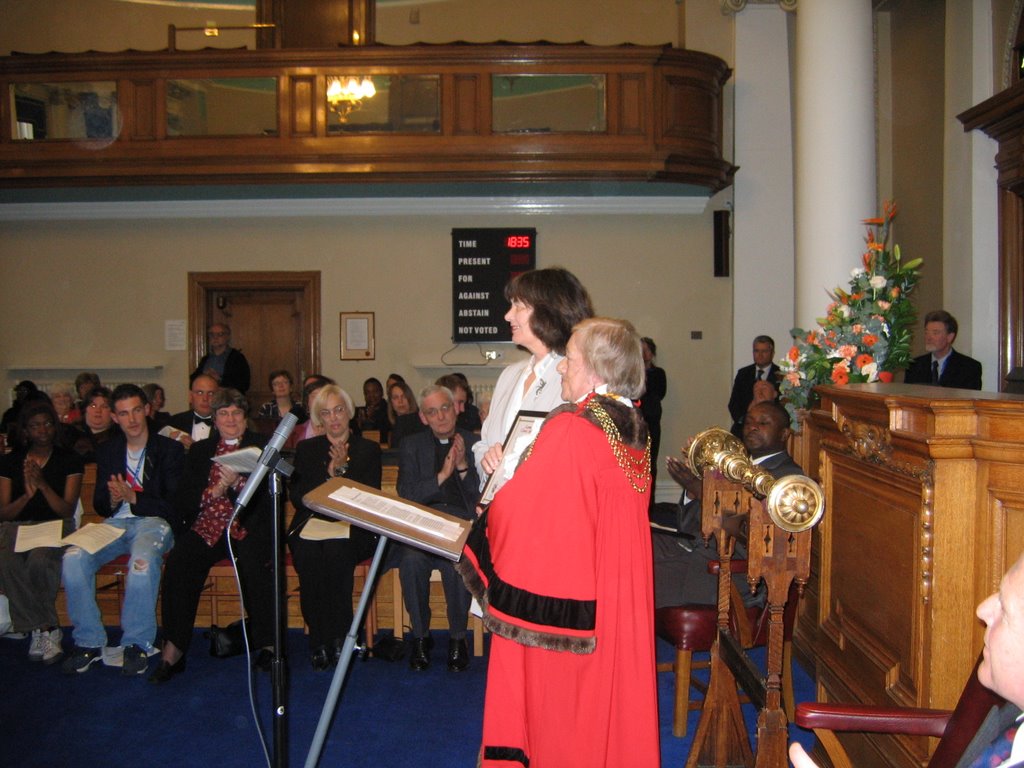
But a big event yesterday evening was the Lambeth Civic Awards at the Town Hall, where Lindsay received an award for her work on the Myatt's Fields Project Group. They are working towards a big regeneration of the Park, with the help of the Heritage Lottery Fund and Lambeth Council, in consultation with local people.
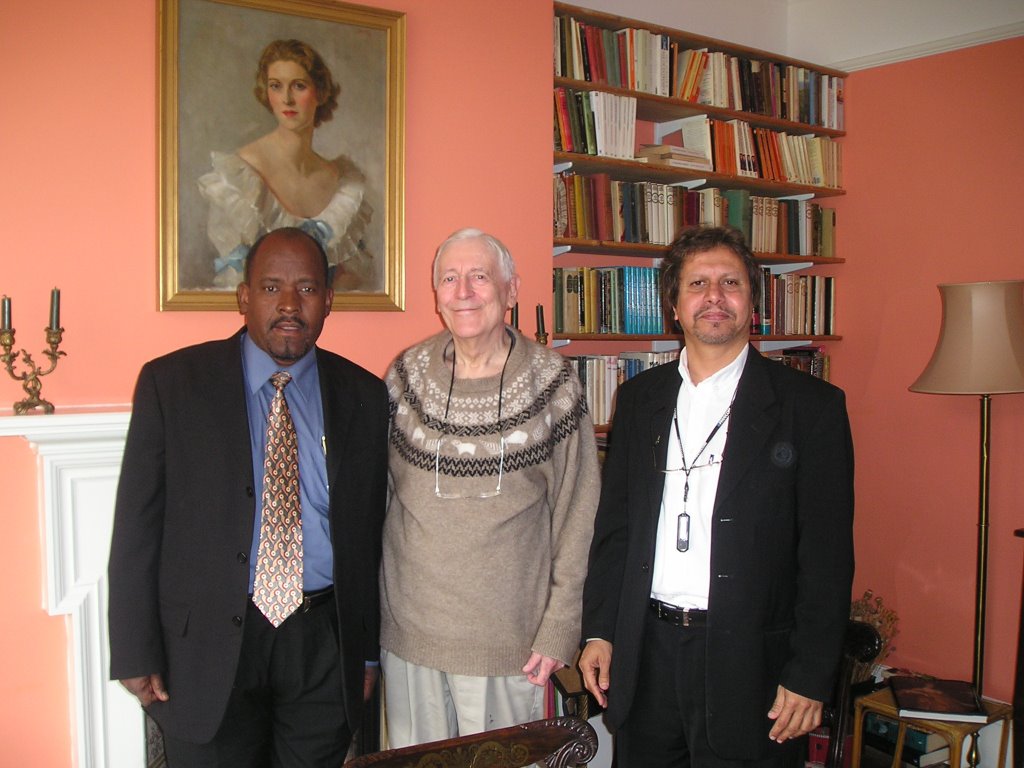
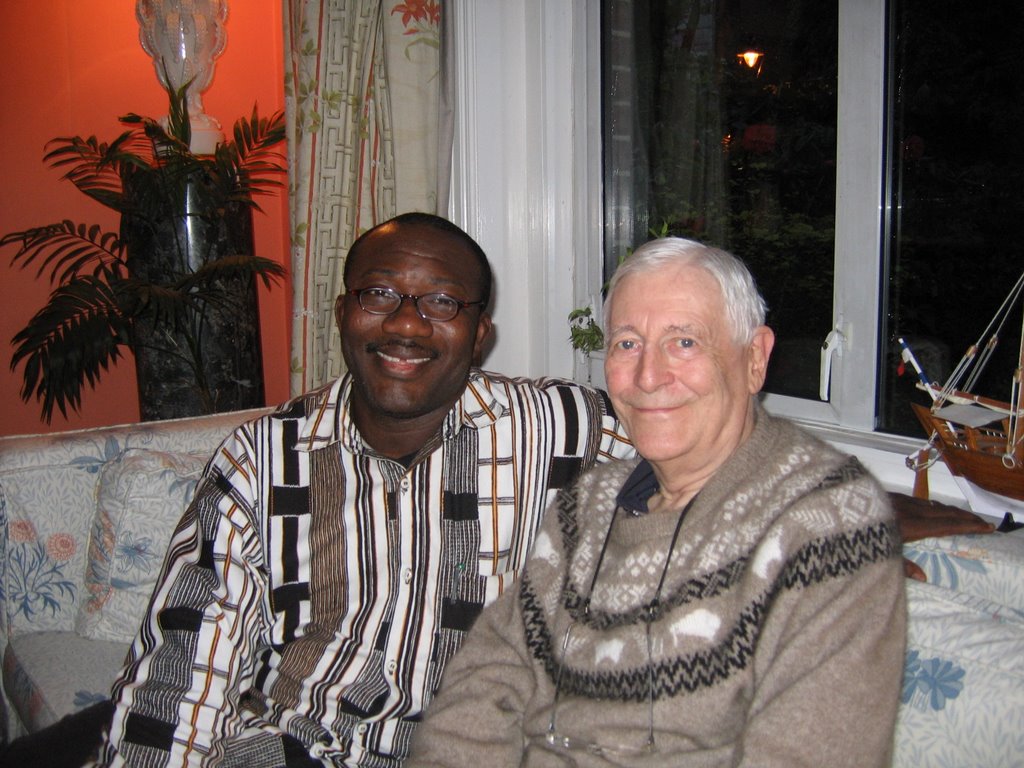
This morning I had a visit from my old friend Bashir Khan and the Leader of the Chagos Islanders, Olivier Bancoult, who has just won a case against the Government in the High Court which paves the way for the islanders to return, 40 years after they were unlawfully exiled by Harold Wilson's Government to make way for a US naval base on Diego Garcia. Wilson falsely pretended that there were no permanent inhabitants on the islands, so that it was unnecessary to consult them in accordance with the rules of the UN Committee in Decolonisation. Now this Government has 28 days to decide whether to appeal against the High Court's ruling that there predecessors' action was illegal.
Then this evening I had a visit from Kayode Fayemi, who flew in from Abuja this morning, with the latest news of the Nigerian Parliament's decision to reject the proposed change in the constitution which would have allowed President Obasanjo to stand for a third term. Kayode is standing for Governor of Ekiti State, and was on his way to the US to address a congress of Ekitians there, and to have talks at the State Department.
But a big event yesterday evening was the Lambeth Civic Awards at the Town Hall, where Lindsay received an award for her work on the Myatt's Fields Project Group. They are working towards a big regeneration of the Park, with the help of the Heritage Lottery Fund and Lambeth Council, in consultation with local people.
This morning I had a visit from my old friend Bashir Khan and the Leader of the Chagos Islanders, Olivier Bancoult, who has just won a case against the Government in the High Court which paves the way for the islanders to return, 40 years after they were unlawfully exiled by Harold Wilson's Government to make way for a US naval base on Diego Garcia. Wilson falsely pretended that there were no permanent inhabitants on the islands, so that it was unnecessary to consult them in accordance with the rules of the UN Committee in Decolonisation. Now this Government has 28 days to decide whether to appeal against the High Court's ruling that there predecessors' action was illegal.
Then this evening I had a visit from Kayode Fayemi, who flew in from Abuja this morning, with the latest news of the Nigerian Parliament's decision to reject the proposed change in the constitution which would have allowed President Obasanjo to stand for a third term. Kayode is standing for Governor of Ekiti State, and was on his way to the US to address a congress of Ekitians there, and to have talks at the State Department.
Friday, May 12, 2006
Haematology, and Assisted Dying
The haematology consultant says I don’t need further treatment, and the stomach biopsy didn’t find any H pylori (you don’t want to know, but there’s plenty of stuff about it on the web)
Readings from latest blood sample:
Haemoglobin 10.6
White cell 3.6
Platelet 426
This afternoon I’m going to the House to vote for Joel Joffe’s Assisted Dying for the Terminally Ill Bill. I wasn’t intending to make the effort, but have been provoked by the blizzard of letters, obviously prompted by Christian groups, from people who haven’t read the Bill and make the most extraordinary assertions about its likely use by grasping relatives to kill off rich aunt Mildred, so that her estate isn’t squandered on nursing home charges. The Bill is a slippery slope, many say, which can lead to euthanasia on demand. This is total rubbish.
What the opponents of the Bill ignore is that an estimated 900 lives are ended each year in the UK by illegal voluntary euthanasia, and a further 2,000 lives are ended by doctors without an explicit request by the patient. Joel Joffe’s Bill puts the patient firmly in the driving seat, as in Oregon where a similar law, but with less stringent safeguards, has been in force since 1997, without any of the consequences, particularly for vulnerable groups, that are predicted here.
Under this Bill, the patient has to make a request in writing for assistance in dying. Two independent doctors then have to examine the patient and confirm that s(he) is suffering from a terminal illness. They must also verify thar the patient’s request is well-informed, persistent and voluntary, and that s(he) has the necessary capacity.
The doctors than have to inform the patient of the alternatives, including palliative and hospice care, and an independent palliative care specialist has to attend the patient to explore this option.
If there is any doubt about the patient’s capacity in the mind of either of the two doctors, they must call in an independent consultant psychiatrist or clinical psychologist
If all these tests are passed, the patient then has to make a written declaration of his or her wish to receive assistance in dying, to be witnessed by two independent persons, neither of whom can be a relative or involved in the patient’s care. One of the witnesses must be a solicitor, who has to be satisfied that the patient is of sound mind, understands the implications of the declaration, and is making it voluntarily.
The patient can revoke the declaration at any time, regardless of capacity, and 14 days must elapse between the declaration and the assisted dying.
The opponents of the Bill want to kill it off this afternoon, not even being prepared to allow it to be debated in detail in Committee of the whole House. That process would enable the House to review all the safeguards, and strengthen them if necessary. It would also reserve the right of the House to reject the Bill at Third Reading, if a majority still considered that it was unsatisfactory after lengthy debate and amendment.
The opponents say that if the Bill were given an unopposed Second Reading, it would be taken as approval of the principle, but in their same letter they acknowledge that the previous version of Lord Joffe’s Bill, which contained fewer safeguards, was given an unopposed Second Reading. So also was every single Private Member’s Bill introduced between the Session of 1997-98 and today, 91 Bills without a single division! Surely not every Member is to be taken as having approved all those Bills in principle? What they did was to make it possible for the 91 Bills to be discussed, so why silence debate on this particular Bill?
In 1995, my Blasphemy (Abolition) Bill was voted down on Second Reading, and although the Religious Offences Bill, incorporating the abolition of blasphemy, got a Second Reading and was sent to a Select Committee which reported on June 10, 2003, same people, including the Government, continue to maintain that the proposal hasn’t been sufficiently discussed.
In that case, as with Lord Joffe’s Bill, the Christian minority think they know what’s best for the rest of us. Nobody is going to compel a Christian suffering from an agonising terminal illness to ask for medical help in ending his life, but they want to impose their ‘principle’ on the whole population.
I’m in favour of improvements in palliative care, but anybody who has spent time in high dependency wards can tell you that medical science cannot always prevent unbearable suffering. Where that suffering is associated with a terminal illness, the patient should have the right to ask for medical help in bringing his life to an end here, rather than have to undertake a traumatic and expensive journey to Switzerland for the purpose.
Assisted dying for the rich is here to stay. For the rest, it does exist, outside the law and without safeguards. To accept this situation is inhuman and callous.
Readings from latest blood sample:
Haemoglobin 10.6
White cell 3.6
Platelet 426
This afternoon I’m going to the House to vote for Joel Joffe’s Assisted Dying for the Terminally Ill Bill. I wasn’t intending to make the effort, but have been provoked by the blizzard of letters, obviously prompted by Christian groups, from people who haven’t read the Bill and make the most extraordinary assertions about its likely use by grasping relatives to kill off rich aunt Mildred, so that her estate isn’t squandered on nursing home charges. The Bill is a slippery slope, many say, which can lead to euthanasia on demand. This is total rubbish.
What the opponents of the Bill ignore is that an estimated 900 lives are ended each year in the UK by illegal voluntary euthanasia, and a further 2,000 lives are ended by doctors without an explicit request by the patient. Joel Joffe’s Bill puts the patient firmly in the driving seat, as in Oregon where a similar law, but with less stringent safeguards, has been in force since 1997, without any of the consequences, particularly for vulnerable groups, that are predicted here.
Under this Bill, the patient has to make a request in writing for assistance in dying. Two independent doctors then have to examine the patient and confirm that s(he) is suffering from a terminal illness. They must also verify thar the patient’s request is well-informed, persistent and voluntary, and that s(he) has the necessary capacity.
The doctors than have to inform the patient of the alternatives, including palliative and hospice care, and an independent palliative care specialist has to attend the patient to explore this option.
If there is any doubt about the patient’s capacity in the mind of either of the two doctors, they must call in an independent consultant psychiatrist or clinical psychologist
If all these tests are passed, the patient then has to make a written declaration of his or her wish to receive assistance in dying, to be witnessed by two independent persons, neither of whom can be a relative or involved in the patient’s care. One of the witnesses must be a solicitor, who has to be satisfied that the patient is of sound mind, understands the implications of the declaration, and is making it voluntarily.
The patient can revoke the declaration at any time, regardless of capacity, and 14 days must elapse between the declaration and the assisted dying.
The opponents of the Bill want to kill it off this afternoon, not even being prepared to allow it to be debated in detail in Committee of the whole House. That process would enable the House to review all the safeguards, and strengthen them if necessary. It would also reserve the right of the House to reject the Bill at Third Reading, if a majority still considered that it was unsatisfactory after lengthy debate and amendment.
The opponents say that if the Bill were given an unopposed Second Reading, it would be taken as approval of the principle, but in their same letter they acknowledge that the previous version of Lord Joffe’s Bill, which contained fewer safeguards, was given an unopposed Second Reading. So also was every single Private Member’s Bill introduced between the Session of 1997-98 and today, 91 Bills without a single division! Surely not every Member is to be taken as having approved all those Bills in principle? What they did was to make it possible for the 91 Bills to be discussed, so why silence debate on this particular Bill?
In 1995, my Blasphemy (Abolition) Bill was voted down on Second Reading, and although the Religious Offences Bill, incorporating the abolition of blasphemy, got a Second Reading and was sent to a Select Committee which reported on June 10, 2003, same people, including the Government, continue to maintain that the proposal hasn’t been sufficiently discussed.
In that case, as with Lord Joffe’s Bill, the Christian minority think they know what’s best for the rest of us. Nobody is going to compel a Christian suffering from an agonising terminal illness to ask for medical help in ending his life, but they want to impose their ‘principle’ on the whole population.
I’m in favour of improvements in palliative care, but anybody who has spent time in high dependency wards can tell you that medical science cannot always prevent unbearable suffering. Where that suffering is associated with a terminal illness, the patient should have the right to ask for medical help in bringing his life to an end here, rather than have to undertake a traumatic and expensive journey to Switzerland for the purpose.
Assisted dying for the rich is here to stay. For the rest, it does exist, outside the law and without safeguards. To accept this situation is inhuman and callous.
Tuesday, May 09, 2006
Scar
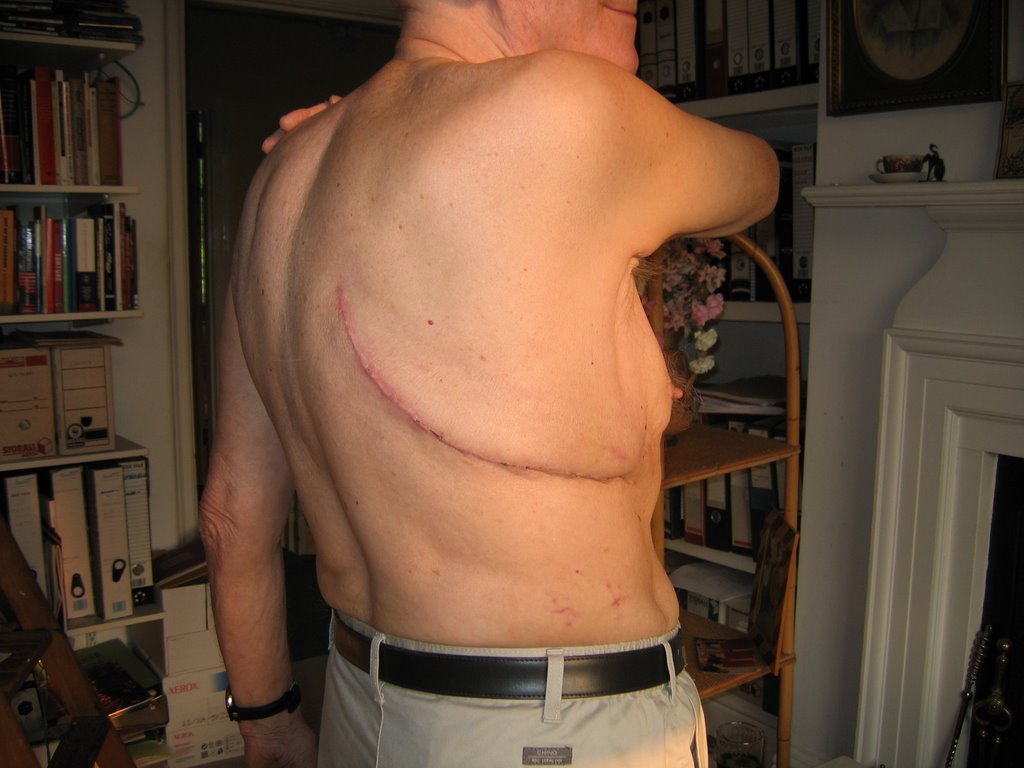
My scar today - bigger than either the CABG or the colostomy. If they were all on the same side you could play noughts and crosses on them.
Meeting with the surgeon
Saw Mr M today, who said he was pleased with progress. Why I lost a lot of blood four days after the operation and where it came from remain a mystery, but does it matter (my comment, not his)? The chunk that was removed measured 85 x 50 x 30 mm, and the tumour itself was an irregular ellipsoid, the major axis of which was 33 mm. Generally these lymphomas are more symmetrical. Mr M showed us the photographs taken during the operation, and has kindly promised to email them to me or send a CD. He said that the bacteria helicobacter pylori had been shown to cause MALT in the digestive system in a majority of cases, and it was unusual to find it in the lung.

Sunday, May 07, 2006
Half way there
This is my first blog post since the day before the operation. Many thanks to Lindsay for keeping it up so effectively over the last two and a half weeks. A big thank you also to Mr M and his colleagues at King's for looking after me so well, and to the many friends who sent get well messages, enough flowers to stock a funeral parlour for a year, assorted fruit and other goodies. I'm getting up for a few hours every day, and gradually regaining strength, though still feeling a bit weak, and weight down to 65 kg.
Thursday, May 04, 2006
3rd May 06 Eric Update

Eric has a visit from the Ven. Khemadhammo Mahathera, Head of the Buddhist Prison Chaplaincy, Angulimala, of which Eric is Patron.
Posted by Lindsay, 4 May 06
Monday, May 01, 2006
Lindsay with Eric, at home, 1st May 2006
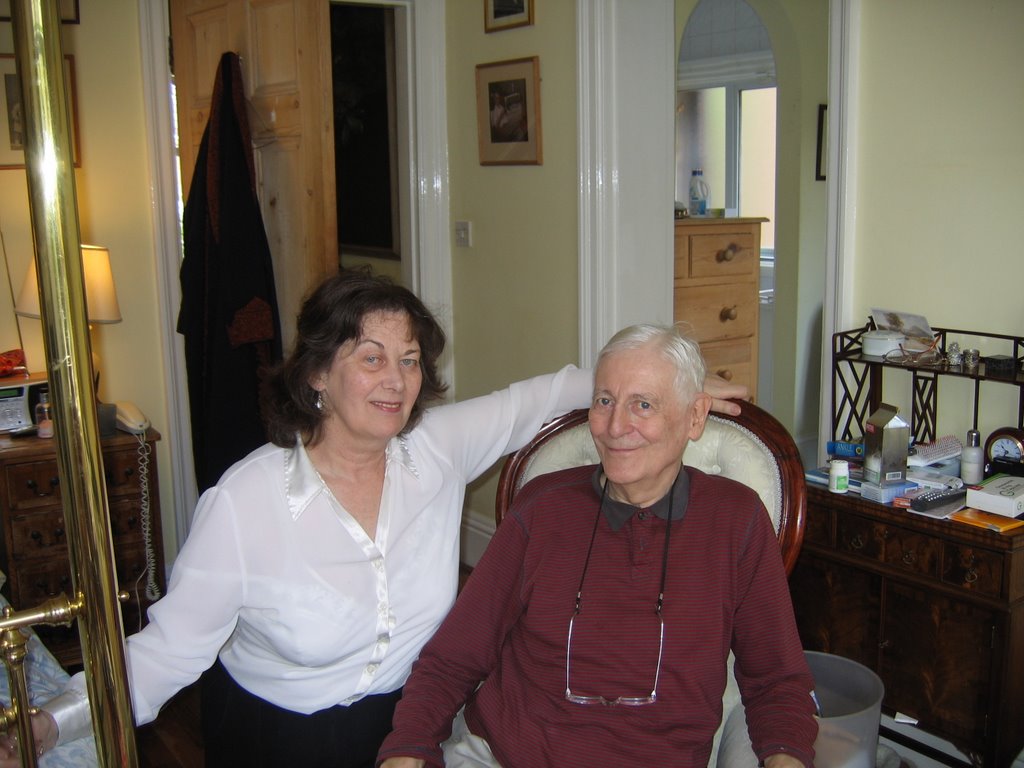
Lindsay at home with Eric, on Bank Holiday Monday, 2006. A reminder to you all that Eric's grandfather, Sir John Lubbock, invented Bank Holidays in 1871, so be thankful!
Posted by Lindsay 01.5.06
Jan Webster, 1.5.06

Jan Webster with Eric, 1st May. Jan flew in from Malaga yesterday to visit Eric, and returns tomorrow.
Update on Eric: May Day 2006
Eric's 2nd day home. Still very tired but so glad to be home. Visits on Sunday from Barbara Stapleton from Kabul, Jan Webster from Malaga and Dr and Mrs Salim Malik from the Ahmadiyya Muslims. On Monday, Jan visited again (see photo) before her return to Spain, and also Edwina Epstein, cousin and local resident.
Sunday, April 30, 2006
Eric returned from hospital on Saturday morning, with a large bag of pills
of varying kinds and various appointments for follow-up clinics, more of which he will find out in the coming week.
It’s wonderful to be home, to have a long, hot bath and to sleep in your own bed again. And the food is definitely better!
Posted by Lindsay, Sunday 30th April 2006
of varying kinds and various appointments for follow-up clinics, more of which he will find out in the coming week.
It’s wonderful to be home, to have a long, hot bath and to sleep in your own bed again. And the food is definitely better!
Posted by Lindsay, Sunday 30th April 2006
Saturday, April 29, 2006
Update, 28th April 2006
Eric is improving all the time. On Thursday, he and his catheter parted company, to Eric’s great relief. In the search for the suspected bleed which occurred a week ago, after which Eric experienced considerable loss of blood pressure, a second endoscopy was performed in the late afternoon. Nothing was found (again), but biopsies were taken.
This morning, he passed the ultimate test of walking up and down a staircase. Later, he had his first shower in eleven days. Surgeon Mr M visited and gave permission for Eric to be discharged on Saturday morning. He has been given a follow up appointment with Haematology Outpatients Department on 12th May. Delighted to be going home.
Posted by Lindsay 1.09 am Saturday morning.
This morning, he passed the ultimate test of walking up and down a staircase. Later, he had his first shower in eleven days. Surgeon Mr M visited and gave permission for Eric to be discharged on Saturday morning. He has been given a follow up appointment with Haematology Outpatients Department on 12th May. Delighted to be going home.
Posted by Lindsay 1.09 am Saturday morning.
Wednesday, April 26, 2006
Update on Eric, 26th April 2006
Eric’s surgeon, Mr M, reports that biopsies of material taken from Eric during his recent operation show that his tumour was a MALToma, which is a low grade B cell lymphoma. It’s unusual to find one in the lung, as in Eric’s case. MALT is short for Mucosa-Associated Lymphatic Tissue. These types of lymphoma are more often found in the gastro-intestinal tract. Mr M says that if you are going to have to have a lymphoma, this is the best one to have. (For further information see www.lymphomainfo.net/nhl/types/malt.html)
More good news is that there is no sign of the Maltoma having spread to his bone marrow or to his lymph nodes.
His doctors wish to double check that the maltoma has not sited itself anywhere in his gastro-intestinal tract. They will be doing another endoscopy tomorrow, and, at a later date, a colonoscopy. They are still puzzled as to the source of the internal bleed, which caused Eric to lose blood pressure on Saturday.
It is likely that chemotherapy can completely clear this lymphoma. There is also a possibility that chemotherapy will not be needed at all.
All in all, this is good news. Eric is still fairly weak, but walking a little every day and eating as adequately as you can in hospital. We hope to have him home in a few days. Posted by Lindsay. 22.00 hrs
More good news is that there is no sign of the Maltoma having spread to his bone marrow or to his lymph nodes.
His doctors wish to double check that the maltoma has not sited itself anywhere in his gastro-intestinal tract. They will be doing another endoscopy tomorrow, and, at a later date, a colonoscopy. They are still puzzled as to the source of the internal bleed, which caused Eric to lose blood pressure on Saturday.
It is likely that chemotherapy can completely clear this lymphoma. There is also a possibility that chemotherapy will not be needed at all.
All in all, this is good news. Eric is still fairly weak, but walking a little every day and eating as adequately as you can in hospital. We hope to have him home in a few days. Posted by Lindsay. 22.00 hrs
Tuesday, April 25, 2006
Eric, 25th April 2006
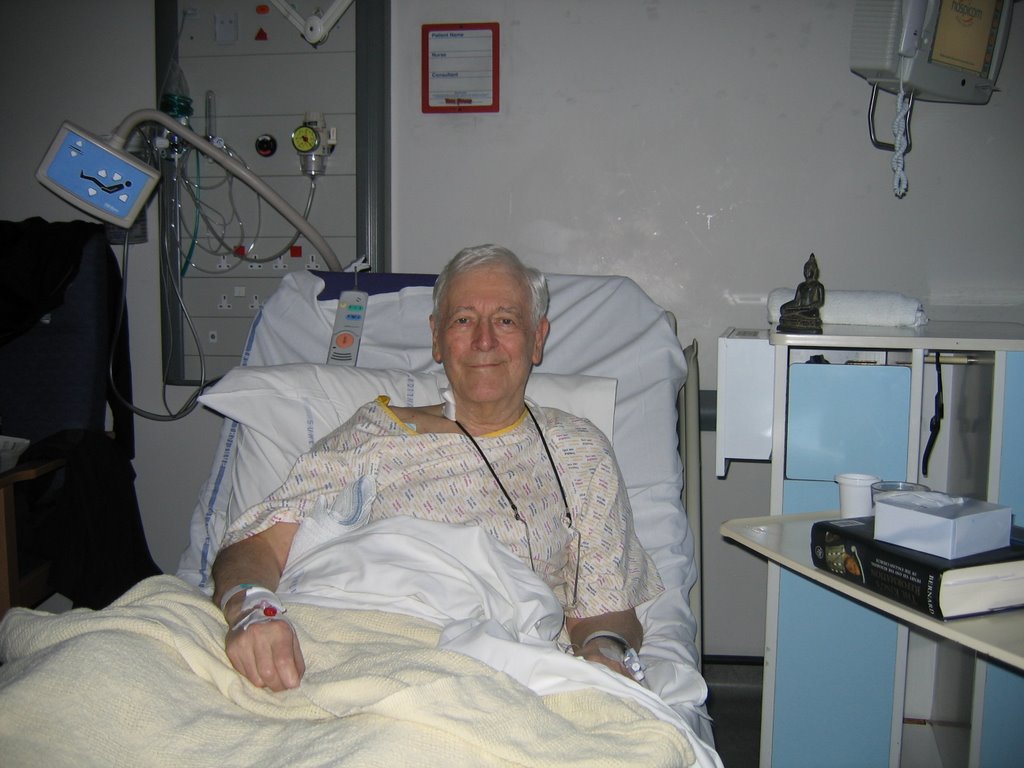
Eric, recuperating in Victoria & Albert Ward, King's College Hospital, SE5, on Tuesday, 25th April, 2006.
Update on Eric, 25th April, 2006
Eric has improved greatly. Today all his monitoring tubes were disconnected. He sat up in a chair early this morning for 1 ½ hours. This afternoon, he was moved from the High Dependency Unit to the general ward, where he shares a side ward with one other patient. Several times, he has walked short distances along the corridor. It seems that the infection which had given him a slight fever yesterday, is now under control.
We await further news as to whether the doctors wish to investigate any further the possible source of the internal bleeding which caused Eric’s massive drop in blood pressure on Saturday, as well as the results of the biopsies. We hope Eric can come home in two or three days.
Posted by Lindsay, 25th April 2006
We await further news as to whether the doctors wish to investigate any further the possible source of the internal bleeding which caused Eric’s massive drop in blood pressure on Saturday, as well as the results of the biopsies. We hope Eric can come home in two or three days.
Posted by Lindsay, 25th April 2006
Monday, April 24, 2006
Update on Eric, 24 April 2006
Eric is making progress. His blood pressure, heart rate and oxygen levels are good. He is eating well enough and has stood up twice today, without feeling dizzy. He is still very exhausted and weak. He has a slightly raised temperature caused by a bacterial infection (not MRSA or Clostridium). This is being treated with an antibiotic (Tazocin). Doctors are still unsure what caused the dramatic loss of blood pressure on Saturday and may do further investigations. He was well enough to complete most of the Guardian Quick Crossword today! Posted by Lindsay, 24.4.06, 23.00 hrs.
Sunday, April 23, 2006
Eric Update, Noon, 23 April 06
Eric much better today. All stats normal, ie blood pressure, heart rate, oxygen etc. Surgeon Mr M. visited and was pleased with Eric's progress. Eric eating and taking in lots of fluid. Still very weak and tired but seems to have turned the corner. More later. Lindsay. PS Family visitors only today and tomorrow. Please ring Lindsay (0207 640 2306) if you wish to visit.
Saturday, April 22, 2006
Update on Eric, 22nd April 2006
Eric was quite unwell this morning. His heart rate was too fast and he had trouble breathing. His blood pressure was very low. Doctors gave him 6 units of blood and slowly his blood pressure went up and his heart rate slowed down. Doctors thought that this may be due to an internal bleed, but despite an endoscopy, ultra-sound scan and a CT scan, no evidence of a bleed was found. It's possible that heavy use of pain killers with aspirin may have caused some bleeding in his stomach. He had also been taking a diuretic and a pill for his high blood pressure. All these pills were discontinued, so we hope to see a good improvement on Sunday.
By the end of Saturday, Eric was stable, though exhausted. Lindsay, Eric’s son Lyulph and daughter Victoria stayed at the hospital for much of the day, as well as Lyulph’s wife Sue, who is an experienced nurse. Sue was a great help as she knew the right questions to ask the doctors. More news tomorrow.
Posted by Lindsay, 23.4.06 12.25am
By the end of Saturday, Eric was stable, though exhausted. Lindsay, Eric’s son Lyulph and daughter Victoria stayed at the hospital for much of the day, as well as Lyulph’s wife Sue, who is an experienced nurse. Sue was a great help as she knew the right questions to ask the doctors. More news tomorrow.
Posted by Lindsay, 23.4.06 12.25am
Friday, April 21, 2006
Eric Update 21st April 2006
Eric is making slow but sure progress. All tubes out on the 20th, including the epidural. His blood pressure is on the low side and he’s feeling very weak and exhausted. But the pain is less and he’s managing on just Ibuprofen and paracetamol. It mainly hurts when he coughs, which he’s encouraged to do a lot, to help clear his chest. His surgeon, Mr M. visited today. He repeated his opinion that Eric has lymphoma and says he saw no evidence that it had spread, which is good news. We think biopsy results may come next week. Eric is to be moved from the high dependency unit to the main Victoria & Albert ward on Sunday, and possibly home on Monday or Tuesday.
Posted by Lindsay on 21.4.06
Posted by Lindsay on 21.4.06
Tuesday, April 18, 2006
APRIL 18, 2006, 5.0pm LATEST NEWS
Eric's operation is over and he is recovering well. Dr M reports that he has removed all of the tumour. He says that he found no lung cancer, but that all the evidence points to a lymphoma. This is excellent news, in that a lymphoma is far more treatable. Tests of the material removed will identify what kind of lymphoma this is.
Dr M also removed some lymph glands around the drain site of the tumour and they appeared clear.The PET scan showed only a mildly increased take up of the lymphoma in the bone marrow, which may not be significant. A sample of bone marrow taken from Eric during the operation will be fully analysed during the next few days, as will all the samples taken during the operation. Clearly, we'll know much more in a few days.
The usual treatment for lymphoma is chemotherapy and radiotherapy. Eric will be in Kings College Hospital, Denmark Hill, SE5, for the next six or seven days. He is in Victoria & Albert Ward on the 2nd floor of the main building. Visiting hours are 10.30am to 12 noon and 2.0pm to 8.0pm. Please ring Lindsay (0207 640 2306) before you visit. Posted by Lindsay Avebury
Dr M also removed some lymph glands around the drain site of the tumour and they appeared clear.The PET scan showed only a mildly increased take up of the lymphoma in the bone marrow, which may not be significant. A sample of bone marrow taken from Eric during the operation will be fully analysed during the next few days, as will all the samples taken during the operation. Clearly, we'll know much more in a few days.
The usual treatment for lymphoma is chemotherapy and radiotherapy. Eric will be in Kings College Hospital, Denmark Hill, SE5, for the next six or seven days. He is in Victoria & Albert Ward on the 2nd floor of the main building. Visiting hours are 10.30am to 12 noon and 2.0pm to 8.0pm. Please ring Lindsay (0207 640 2306) before you visit. Posted by Lindsay Avebury
Monday, April 17, 2006

Saturday, April 15, 2006
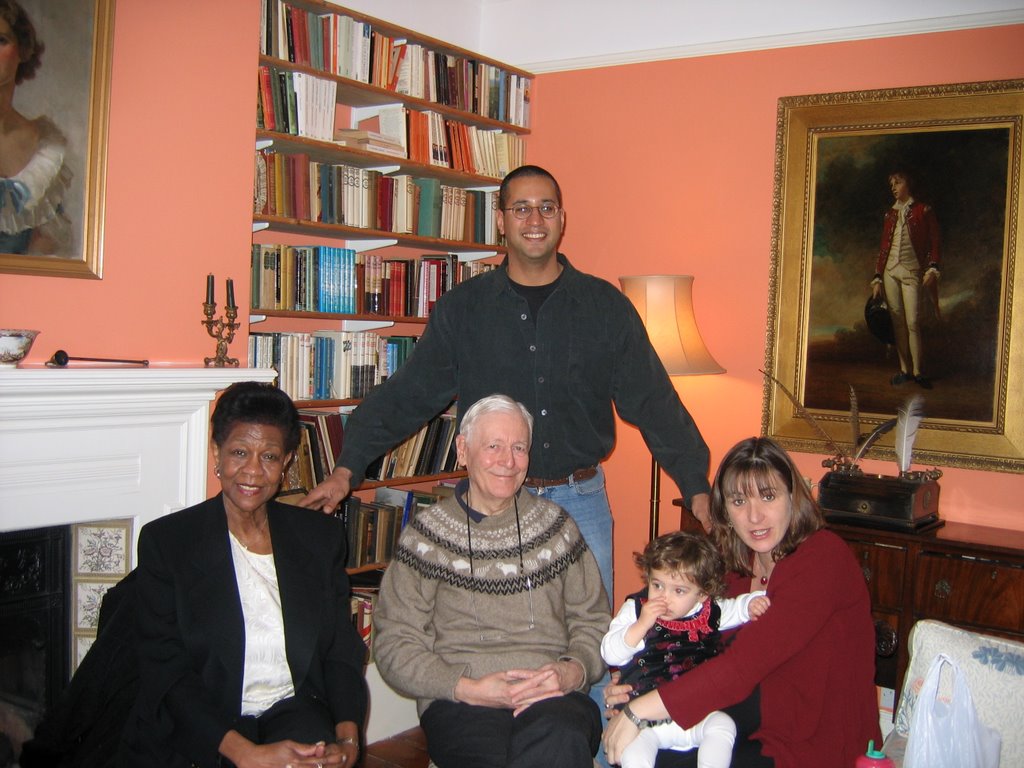
Friday, April 14, 2006
No real news from the PET scan yesterday. The procedure involves an injection with Fluorine 18 labelled glucose analogue, which is taken up preferentially by cancers. The F18 has a half life of 110 minutes and in decaying, it gives off a positron which is detected by the scanner (or more precisely, the scanner detects annihilation photons produced when the positrons encounter electrons after travelling a few mm), to produce an image. After the injection the patient has to wait an hour and a half for the glucose to be taken up by the tumour, and the imaging process itself takes about an hour.
This is a more accurate procedure for detection and identification of cancerous tissue than a CT scan, and enables the physician to determine whether the cancer has spread to any other organs. But as previously noted, the results won’t be available until Tuesday morning. JW has agreed to continue this blog after Monday evening and will report further.
King’s has an excellent policy of full disclosure of written opinions to patients, but they take a week or so, and those received up to now are out of date.
The Matthew yesterday evening wasn't the best I've ever heard, but the bass ws not bad, and the viola da gamba continuo was excellent.
This is a more accurate procedure for detection and identification of cancerous tissue than a CT scan, and enables the physician to determine whether the cancer has spread to any other organs. But as previously noted, the results won’t be available until Tuesday morning. JW has agreed to continue this blog after Monday evening and will report further.
King’s has an excellent policy of full disclosure of written opinions to patients, but they take a week or so, and those received up to now are out of date.
The Matthew yesterday evening wasn't the best I've ever heard, but the bass ws not bad, and the viola da gamba continuo was excellent.
Wednesday, April 12, 2006
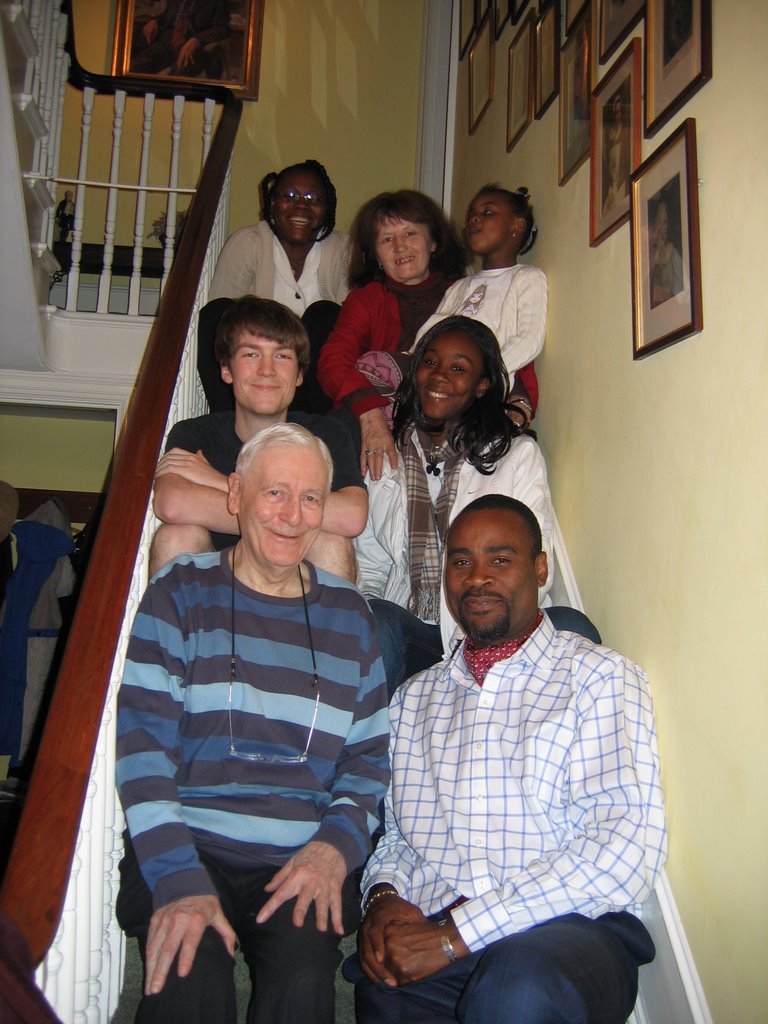
Tuesday, April 11, 2006


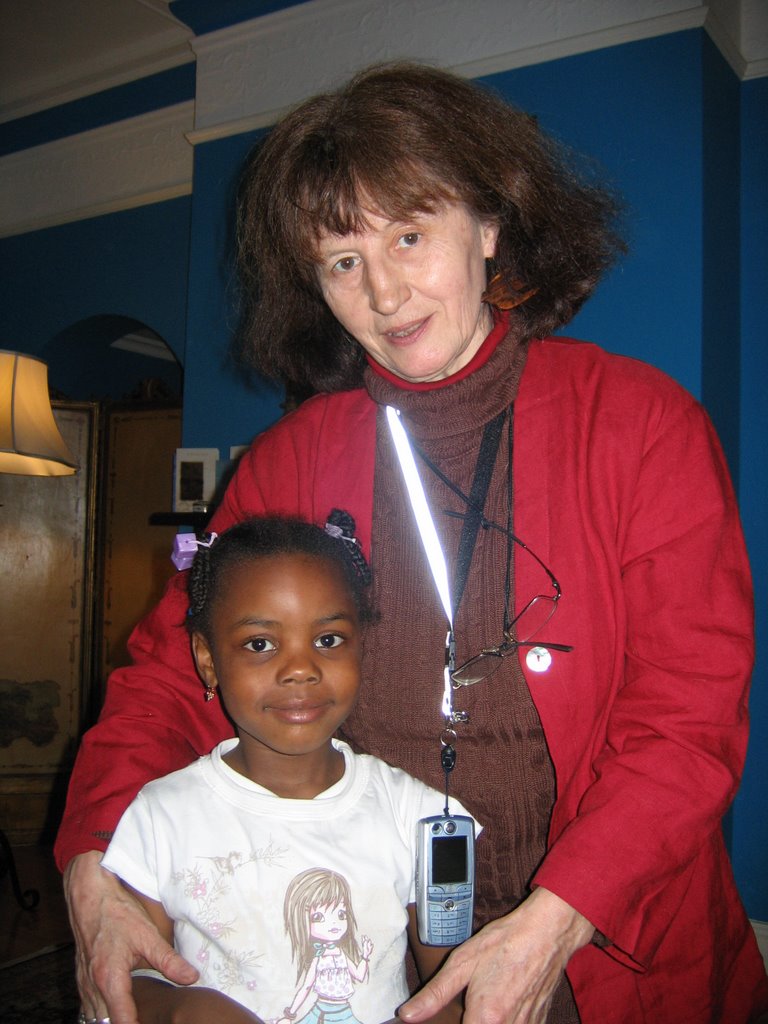
Schlage doch, gewünschte Stunde
Mr M has now decided to go ahead and remove the lymphoma (?) next Tuesday, and at the same time take a sample of bone marrow. The risk is 2-3%, and 40% of the right lung will be removed. Meanwhile the PET scan has been arranged for 13.00 Thursday at St Thomas’s, and putting this on the blog will make sure it isn't forgotten.
Thursday evening we have Matthew Passion at St John's Smith Square. There was a St John on Friday - all booked up, but we can listen to it on the radio.
Thursday evening we have Matthew Passion at St John's Smith Square. There was a St John on Friday - all booked up, but we can listen to it on the radio.
Lymphoma?
Mr M the surgeon has now had the report on the biopsy which again showed only lymphoid cells, suggesting, but not conclusively, that the abnormality is a lymphoma. Mr M is talking to the haematologist.
Lymphomas are generally difficult to diagnose, though Antonio Giordano and others of Temple University, Philadelphia have developed a test which looks for cyclin dependent kinase 9 (CDK9) and a molecule attached to it CYCLIN T1, in lymphoid cells from a blood sample, which is claimed to identify the type of lymphoma and its stage of advancement.
Lymphomas are generally difficult to diagnose, though Antonio Giordano and others of Temple University, Philadelphia have developed a test which looks for cyclin dependent kinase 9 (CDK9) and a molecule attached to it CYCLIN T1, in lymphoid cells from a blood sample, which is claimed to identify the type of lymphoma and its stage of advancement.
Not my day
Today I was supposed to have the MRI scan, which I thought was at 13.30. I had tried to confirm the time yesterday evening, but the appointments office was closed. At 10.00 this morning I called again, and was told that I had missed the appointment, which had been arranged for 09.00, and they couldn’t fit in another one until 10.00 on April 20. Presumably this will have a knock-on effect on the timetable for the operation, unless Dr L can persuade the MRI to fit me in earlier, depending on what comes out of last Friday’s biopsy.
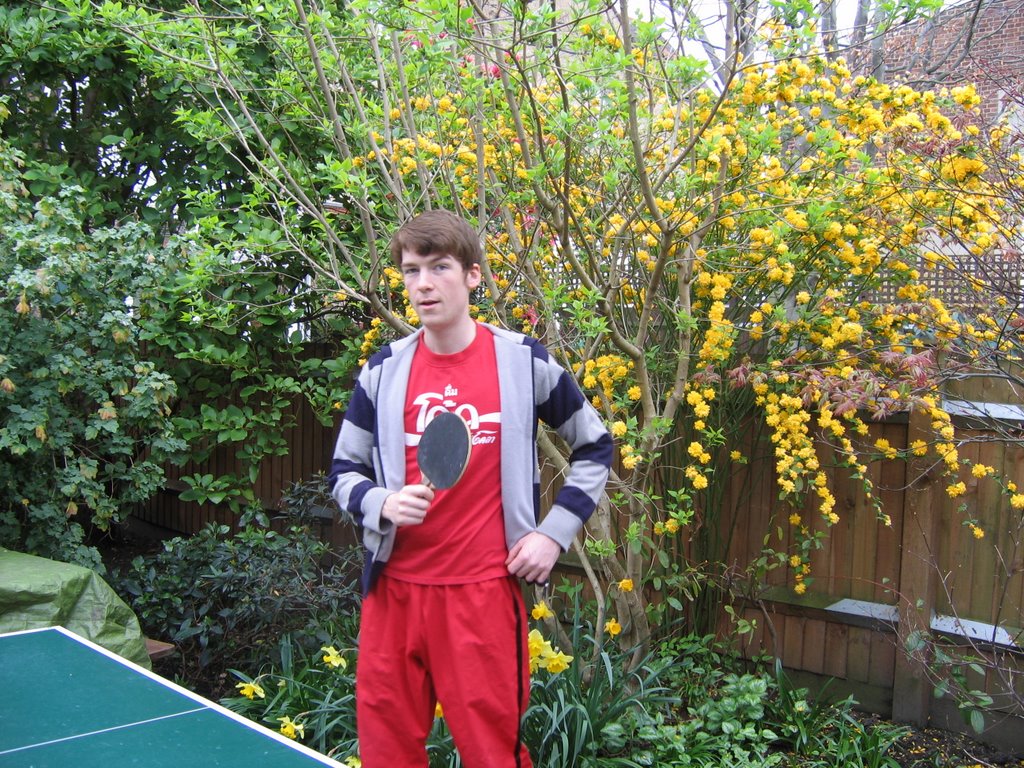
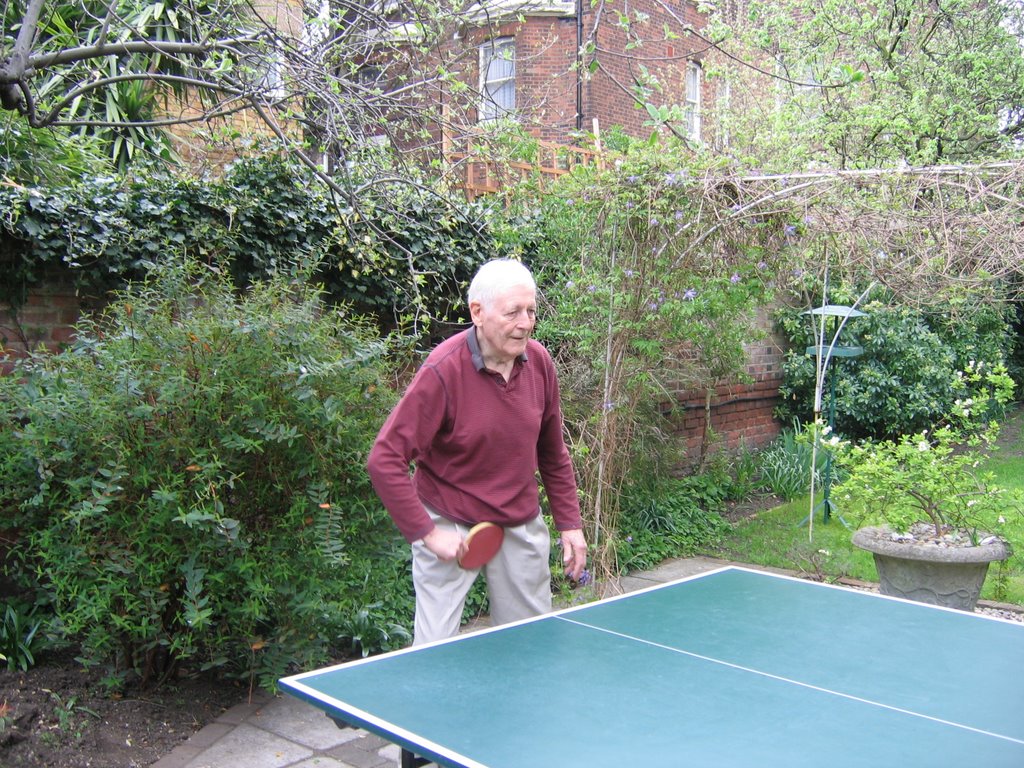
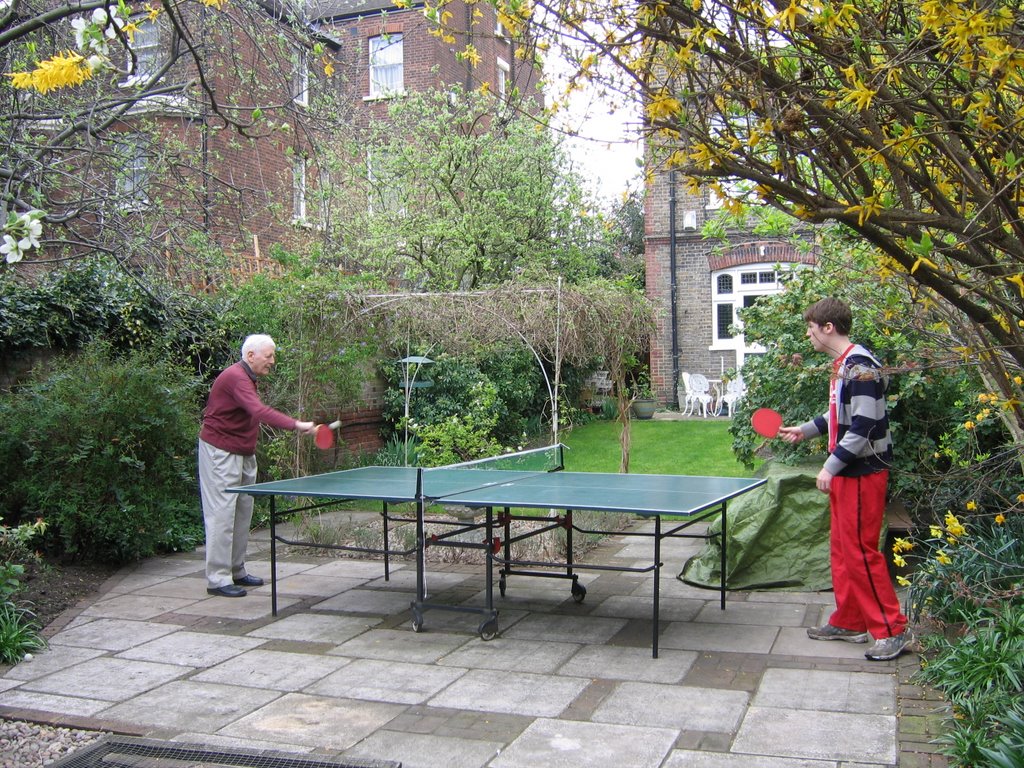
But I did beat JW 4-0 at ping pong yesterday.
But I did beat JW 4-0 at ping pong yesterday.
Saturday, April 08, 2006
Ping-Pong April 8
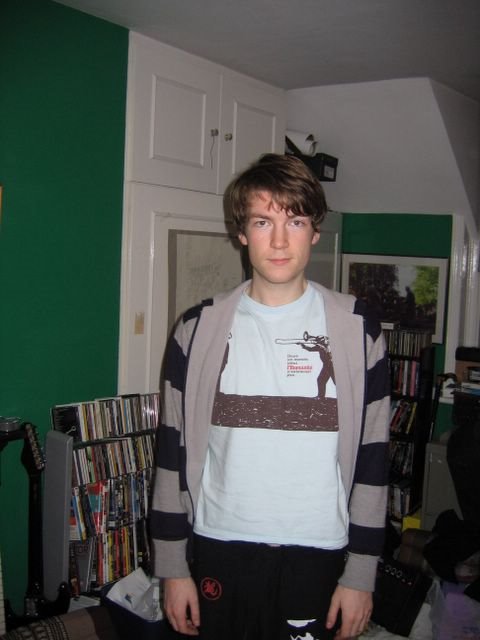
I was beginning to think I'd become too decrepit to beat JW, having lost 4-0 the last two outings, but today I beat him 3-1!

Friday, April 07, 2006

Another biopsy, April 7, 2006
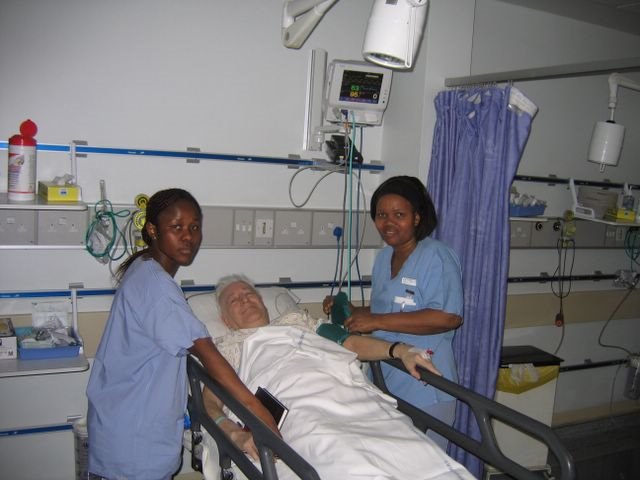
Many thanks to the splendid team at King’s, and specially to Dr C, Nurse M from the Philippines, Nurse S from New Zealand, Nurse M from Sierra Leone and Nurse P from Nigeria.
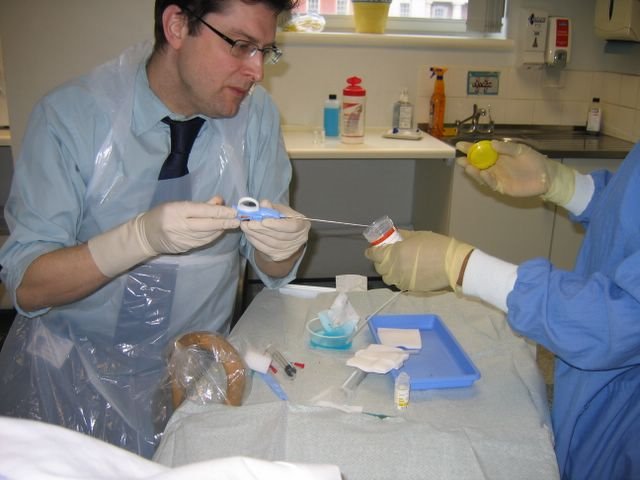
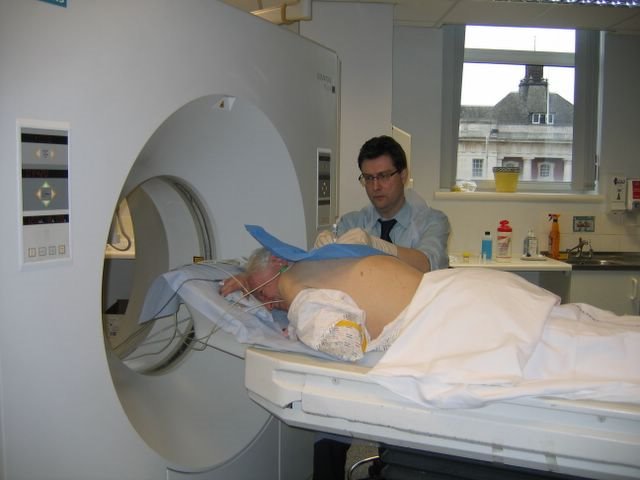
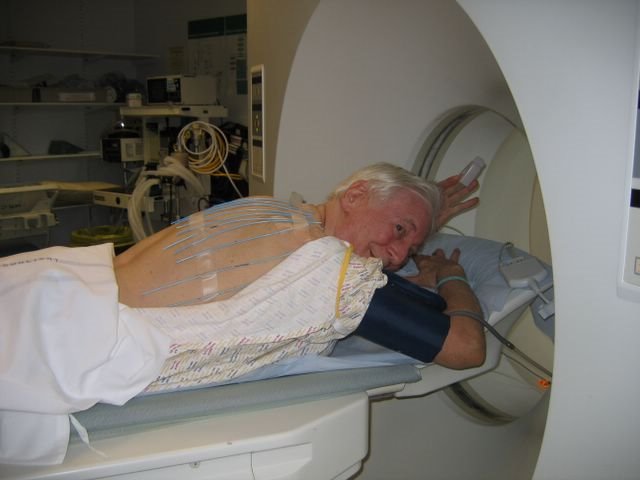
The procedure takes about an hour and a quarter, including preliminary CT scan, injection with dye, giving local anaesthetic, and finally, taking the samples. The biopsy needle is hollow, with a solid rod in the middle. When the needle is positioned so that the end is in the abnormality, the rod is withdrawn and replaced by an 18-gauge tube (1.2 mm diameter), into which a sample of 10-20 mm is drawn.
Afterwards the patient has to lie still for 3 hours and an X-ray is taken, particularly to look for pneumo-thorax, pockets of air at the site of the biopsy which may lead to collapsed lung. On this occasion Dr C said there was a small pneumothorax, but he didn’t think a further stay in hospital was needed. So it was, as expected, just over 6 hours total at King’s.
The procedure takes about an hour and a quarter, including preliminary CT scan, injection with dye, giving local anaesthetic, and finally, taking the samples. The biopsy needle is hollow, with a solid rod in the middle. When the needle is positioned so that the end is in the abnormality, the rod is withdrawn and replaced by an 18-gauge tube (1.2 mm diameter), into which a sample of 10-20 mm is drawn.
Afterwards the patient has to lie still for 3 hours and an X-ray is taken, particularly to look for pneumo-thorax, pockets of air at the site of the biopsy which may lead to collapsed lung. On this occasion Dr C said there was a small pneumothorax, but he didn’t think a further stay in hospital was needed. So it was, as expected, just over 6 hours total at King’s.



Monday, April 03, 2006
Consultation at King's April 3, 2006
The chest physician Ms L and the surgeon Mr M were both present, plus two third-year students.
The biopsy showed lymphocytes but that doesn’t indicate the nature of the abnormality. The histopathologist at first thought it was lymphoma but that seems unlikely. Mr M said it was ‘a fairly meaty lung cancer if that’s what it is’, but the best approach would be a further CT-assisted biopsy, now arranged for Friday April 7.
Mr M would also request a PET scan, (positron emission tomography), which is only done at St Thomas’s. Many cancer cells are metabolically active and take up radioactive glucose which is injected into the body an hour before the scan, so that the cancer shows up on the image. A whole body PET scan may also detect whether the cancer is in one area, or has spread to other organs. (The CT scan hadn’t shown any sign of spread).
There were likely to be significant adhesions in the lung from the 1995 bypass, making surgery more difficult, but lessening the risk of pneumothorax or collapsed lung.
The MRI scan is scheduled for April 13. This would give a clear view of the nerves and blood vessels at the top of the neck. It produces a more detailed picture than a CT scan, and allows the images to be taken from almost any angle, as opposed to the CT scan which only displays a horizontal section.
The likely end product is surgical removal of the abnormality within a week of the MRI scan, ie by April 18
Note dated March 16, updated March 25
Chest X-ray March 10 revealed an abnormality at the top of the right lung. Monday March 16 I saw consultant Dr Rebecca Lyall at King's who ordered blood tests an a CT scan. This was done Tuesday March 14 and confirmed that there is a tumour, which Dr Lyall had discussed with Dr Marrinan the chest surgeon with a view to its removal. The good news was that the scan didn't show any signs that the tumour had spread to other parts of the body.
Dr Lyall has ordered a MRI scan for April 11 which will show more detail and in particular, how near the tumour is to nerves.
Lung function tests were done on March 17 at 12.00 and after that, a pre-assessmeny for the CT-assisted biopsy which is scheduled for 09.00 March 24,
The consultant's note read 'Looks like R apical lung cancer. No other evidence of spread. Waiting histo'. Jf this is confirmed by the biopsy they probably won't hang about.
The biopsy showed lymphocytes but that doesn’t indicate the nature of the abnormality. The histopathologist at first thought it was lymphoma but that seems unlikely. Mr M said it was ‘a fairly meaty lung cancer if that’s what it is’, but the best approach would be a further CT-assisted biopsy, now arranged for Friday April 7.
Mr M would also request a PET scan, (positron emission tomography), which is only done at St Thomas’s. Many cancer cells are metabolically active and take up radioactive glucose which is injected into the body an hour before the scan, so that the cancer shows up on the image. A whole body PET scan may also detect whether the cancer is in one area, or has spread to other organs. (The CT scan hadn’t shown any sign of spread).
There were likely to be significant adhesions in the lung from the 1995 bypass, making surgery more difficult, but lessening the risk of pneumothorax or collapsed lung.
The MRI scan is scheduled for April 13. This would give a clear view of the nerves and blood vessels at the top of the neck. It produces a more detailed picture than a CT scan, and allows the images to be taken from almost any angle, as opposed to the CT scan which only displays a horizontal section.
The likely end product is surgical removal of the abnormality within a week of the MRI scan, ie by April 18
Note dated March 16, updated March 25
Chest X-ray March 10 revealed an abnormality at the top of the right lung. Monday March 16 I saw consultant Dr Rebecca Lyall at King's who ordered blood tests an a CT scan. This was done Tuesday March 14 and confirmed that there is a tumour, which Dr Lyall had discussed with Dr Marrinan the chest surgeon with a view to its removal. The good news was that the scan didn't show any signs that the tumour had spread to other parts of the body.
Dr Lyall has ordered a MRI scan for April 11 which will show more detail and in particular, how near the tumour is to nerves.
Lung function tests were done on March 17 at 12.00 and after that, a pre-assessmeny for the CT-assisted biopsy which is scheduled for 09.00 March 24,
The consultant's note read 'Looks like R apical lung cancer. No other evidence of spread. Waiting histo'. Jf this is confirmed by the biopsy they probably won't hang about.
Thursday, March 30, 2006
Speech on the situation in the Democratic Republic of Congo
Lord Avebury: My Lords, the right reverend Prelate has drawn our attention to the desperately bleak history of the DRC. The noble Lord, Lord Alton, has just spoken about the horrible present. We might feel depressed as we consider what the United Kingdom can do, if it were not for the fact that, as the noble Lord, Lord Giddens, has told us, this is not a forgotten country.
Things are happening there. In particular, working towards the elections on June 18 is the biggest and most costly exercise of this kind ever undertaken by the United Nations. If they contribute towards a peaceful and orderly environment, allowing the 460,000 refugees in neighbouring countries to return and the 1.3 million people displaced internally to be rehabilitated, it will be a rewarding investment for the international community. We welcome the decision by the European Union to comply with the request of the Secretary-General to provide additional troops for the election itself and the immediate post-election period—though we do wonder whether such a small number of troops for such a short time can be more than just a token of moral support. Apparently, there will be only 400 to 450 EU troops in the DRC, with a further 800 to 1,000 on standby somewhere else. Is the UK providing any of these troops and, if so, how many and in what capacities?
The European Council statement of 23 March says the 450 troops will be deployed in Kinshasa, with the other 1,000 somewhere "over the horizon", outside the country. But any attempts to disrupt the elections, which the commander of the local UN force has said he will deal with proactively, are likely to be at the other end of the country, in the east. So what will the European Union troops be doing in Kinshasa? Who is going to pay for them? The Council statement seems to imply that it is the EU rather than the states
27 Mar 2006 : Column 620
contributing to the force, which is fair; but the Minister said in the week before last that we are making a £40 million contribution to MONUC. Presumably the EU contingent is not covered by MONUC's budget. Perhaps the Minister could enlighten us on that point.
The European Council says that it will,
"provide . . . support to MONUC",
but surely this needs to be properly defined and amplified. The Minister's gloss was that the EU troops,
"should be only for purposes that add value to the existing MONUC force on the ground".—[Official Report, 16/3/06; col. 1344.]
However, he then added that discussions were going on about what they might do, implying that no firm decisions had yet been made. Will the EU contingent come under the command of General Cammaert—in which case, they can presumably be asked to do anything that comes within the mandate of MONUC? If not, do all requests for support on particular tasks or operations have to be routed via Brussels? Will the support include military action against armed factions such as the Mai Mai in Katanga; the FLDR, who are mostly former Interahamwe genocidaires from Rwanda, numbering 8,000 to 10,000 in North Kivu; and the LRA, now reported to be concentrating in Garamba National Park, where the leader Kony and his deputy Otti have now joined up?
Under-Secretary-General for Peacekeeping Operations, Mr Guehenno, said that MONUC had asked the Security Council for a complete brigade in northern Katanga, where the UN had so far had no presence. The Secretary-General also said that he made a request for an unspecified increase in the MONUC force but was refused by the Security Council. Did it make that decision on the grounds that troops were not needed in the province, or because it formed the view that no suitable member state or states would be willing to provide the extra troops? Did it ask the EU whether the 1,500 troops it is going to supply could be used in northern Katanga? It is now intended to redeploy a battalion from north Kivu, which means less protection for civilians in a province where the FLDR and, even more so, the Congolese army itself—the FARDC—are accused of dozens of atrocities every month. But the consequences of neglecting Katanga are even more serious.
I understand that in the past six months 150,000 people have fled their homes, caught in between the Mai Mai and the undisciplined army. Earlier this month MONUC asked for the withdrawal of the 63rd Brigade, stationed in Mitwaba, which has been guilty of serious crimes against civilians. I hope that the noble Lord can assure me that those troops have now been replaced by MONUC forces.
From all the reports made by the UN, the FARDC is responsible for infinitely more atrocities than any of the non-state armed groups, and surely it ought to be drastically reduced in size, dismissing soldiers who commit any acts of violence against civilians, and making sure that the core who remain are properly
27 Mar 2006 : Column 621
trained, equipped and paid. The International Crisis Group says that reform of the army is far behind schedule, and it criticises the policy of demobilising militias and giving handouts to ex-combatants. Of the $2 billion spent on the DRC by the international community so far, only a small fraction has been used to improve the status and management of the armed forces and the police. We know something about this from our experience in Sierra Leone. If the UN adopts the cluster response principle being tested in Uganda, which we talked about a couple of weeks ago, could the United Kingdom perhaps volunteer to play the lead role in the security sector reform cluster in the DRC?
In spite of all this, the security situation is better than it was a year ago, and the decision to postpone the elections turned out to be fully justified. There have been some hopeful signs—notably the decision at the end of last week by the biggest armed group, RCD-Goma, to end its boycott of the peace process, and for its leader, Azaria Ruberwa, to stand as a candidate for the presidency. As the noble Lord, Lord Giddens, reminded us, the first trial has begun at the ICC of a prominent war criminal, Thomas Lubanga, who is accused of forcing nine year-olds to fight for his Union des Patriotes Congolais in blood-drenched Ituri. Other militia leaders from the same area are awaiting trial on charges of killing nine Bangladeshi peacekeepers in February last year.
MONUC has captured Bosco Atubo, one of the LRA's senior commanders, in Garamba, and I hope that this means it is on the trail of Kony and Otti. It would be a major achievement if MONUC and the FARDC brought these evil men to justice, ending their reign of terror over large areas of Uganda, the DRC and south Sudan, boosting confidence in the elections and helping to promote amicable co-operation between the three neighbouring countries.
In both south and north Kivu, thanks to MONUC, it was claimed that voter registration was carried out in almost every polling district before the December 2005 referendum, at which 25 million people voted. But the register was not perfect, and Etienne Tshisekedi has asked for it to be reopened, because he now accepts that there was massive support for the new constitution. Although the head of the Electoral Commission said there was no time, surely a supplementary list could be produced over the next 10 weeks to include not only Tshisekedi's UDPS supporters, but also the districts not covered, and the voters left off the register last October. If nominations can be extended, as the right reverend Prelate explained, why not registrations, too?
Will the refugees and internal exiles be able to vote, and if so, have they been registered? Secondly, was the registration equally successful in the north, particularly in the areas of Ituri and Bunia, and in Katanga province in the south? People are still crossing Lake Albert into western Uganda, though not in large numbers, and clashes were reported with rebel forces south of Bunia only last Wednesday. It would be good to have some reassurance about the stability of that area in the period leading up to the elections.
27 Mar 2006 : Column 622
But it is also time to begin thinking about the next stages. The Secretary-General has talked about the post-election challenges, which need the continuous assistance of the international community. The priorities that he mentions are the reform of the army and the police, and the establishment of state authority and the rule of law. To achieve these objectives we need to stay the course, recognising that it will take several years. But as the DRC starts to build effective and disciplined police and armed forces, MONUC will downsize, and its role will shift towards training.
Correspondingly greater attention will need to be given to the question of how the vast mineral riches can be harnessed for the benefit of the people, and not for the foreign interests dealt with in the reports of the UN Panel on the Illegal Exploitation of Resources of the DRC. There is now a mining code, developed with the assistance of the World Bank, but it is not well enforced and has failed to attract large investors. Huge quantities of unprocessed minerals are smuggled across the borders into Zambia untaxed, losing state revenue. Foreign business interests and corrupt politicians have contributed to instability. Potentially, DRC is one of the richest countries in Africa. We must help the people not only to eliminate non-state armed groups and create a firm democratic foundation, but to establish control over their mineral resources so that they no longer need our help.
7.56
Things are happening there. In particular, working towards the elections on June 18 is the biggest and most costly exercise of this kind ever undertaken by the United Nations. If they contribute towards a peaceful and orderly environment, allowing the 460,000 refugees in neighbouring countries to return and the 1.3 million people displaced internally to be rehabilitated, it will be a rewarding investment for the international community. We welcome the decision by the European Union to comply with the request of the Secretary-General to provide additional troops for the election itself and the immediate post-election period—though we do wonder whether such a small number of troops for such a short time can be more than just a token of moral support. Apparently, there will be only 400 to 450 EU troops in the DRC, with a further 800 to 1,000 on standby somewhere else. Is the UK providing any of these troops and, if so, how many and in what capacities?
The European Council statement of 23 March says the 450 troops will be deployed in Kinshasa, with the other 1,000 somewhere "over the horizon", outside the country. But any attempts to disrupt the elections, which the commander of the local UN force has said he will deal with proactively, are likely to be at the other end of the country, in the east. So what will the European Union troops be doing in Kinshasa? Who is going to pay for them? The Council statement seems to imply that it is the EU rather than the states
27 Mar 2006 : Column 620
contributing to the force, which is fair; but the Minister said in the week before last that we are making a £40 million contribution to MONUC. Presumably the EU contingent is not covered by MONUC's budget. Perhaps the Minister could enlighten us on that point.
The European Council says that it will,
"provide . . . support to MONUC",
but surely this needs to be properly defined and amplified. The Minister's gloss was that the EU troops,
"should be only for purposes that add value to the existing MONUC force on the ground".—[Official Report, 16/3/06; col. 1344.]
However, he then added that discussions were going on about what they might do, implying that no firm decisions had yet been made. Will the EU contingent come under the command of General Cammaert—in which case, they can presumably be asked to do anything that comes within the mandate of MONUC? If not, do all requests for support on particular tasks or operations have to be routed via Brussels? Will the support include military action against armed factions such as the Mai Mai in Katanga; the FLDR, who are mostly former Interahamwe genocidaires from Rwanda, numbering 8,000 to 10,000 in North Kivu; and the LRA, now reported to be concentrating in Garamba National Park, where the leader Kony and his deputy Otti have now joined up?
Under-Secretary-General for Peacekeeping Operations, Mr Guehenno, said that MONUC had asked the Security Council for a complete brigade in northern Katanga, where the UN had so far had no presence. The Secretary-General also said that he made a request for an unspecified increase in the MONUC force but was refused by the Security Council. Did it make that decision on the grounds that troops were not needed in the province, or because it formed the view that no suitable member state or states would be willing to provide the extra troops? Did it ask the EU whether the 1,500 troops it is going to supply could be used in northern Katanga? It is now intended to redeploy a battalion from north Kivu, which means less protection for civilians in a province where the FLDR and, even more so, the Congolese army itself—the FARDC—are accused of dozens of atrocities every month. But the consequences of neglecting Katanga are even more serious.
I understand that in the past six months 150,000 people have fled their homes, caught in between the Mai Mai and the undisciplined army. Earlier this month MONUC asked for the withdrawal of the 63rd Brigade, stationed in Mitwaba, which has been guilty of serious crimes against civilians. I hope that the noble Lord can assure me that those troops have now been replaced by MONUC forces.
From all the reports made by the UN, the FARDC is responsible for infinitely more atrocities than any of the non-state armed groups, and surely it ought to be drastically reduced in size, dismissing soldiers who commit any acts of violence against civilians, and making sure that the core who remain are properly
27 Mar 2006 : Column 621
trained, equipped and paid. The International Crisis Group says that reform of the army is far behind schedule, and it criticises the policy of demobilising militias and giving handouts to ex-combatants. Of the $2 billion spent on the DRC by the international community so far, only a small fraction has been used to improve the status and management of the armed forces and the police. We know something about this from our experience in Sierra Leone. If the UN adopts the cluster response principle being tested in Uganda, which we talked about a couple of weeks ago, could the United Kingdom perhaps volunteer to play the lead role in the security sector reform cluster in the DRC?
In spite of all this, the security situation is better than it was a year ago, and the decision to postpone the elections turned out to be fully justified. There have been some hopeful signs—notably the decision at the end of last week by the biggest armed group, RCD-Goma, to end its boycott of the peace process, and for its leader, Azaria Ruberwa, to stand as a candidate for the presidency. As the noble Lord, Lord Giddens, reminded us, the first trial has begun at the ICC of a prominent war criminal, Thomas Lubanga, who is accused of forcing nine year-olds to fight for his Union des Patriotes Congolais in blood-drenched Ituri. Other militia leaders from the same area are awaiting trial on charges of killing nine Bangladeshi peacekeepers in February last year.
MONUC has captured Bosco Atubo, one of the LRA's senior commanders, in Garamba, and I hope that this means it is on the trail of Kony and Otti. It would be a major achievement if MONUC and the FARDC brought these evil men to justice, ending their reign of terror over large areas of Uganda, the DRC and south Sudan, boosting confidence in the elections and helping to promote amicable co-operation between the three neighbouring countries.
In both south and north Kivu, thanks to MONUC, it was claimed that voter registration was carried out in almost every polling district before the December 2005 referendum, at which 25 million people voted. But the register was not perfect, and Etienne Tshisekedi has asked for it to be reopened, because he now accepts that there was massive support for the new constitution. Although the head of the Electoral Commission said there was no time, surely a supplementary list could be produced over the next 10 weeks to include not only Tshisekedi's UDPS supporters, but also the districts not covered, and the voters left off the register last October. If nominations can be extended, as the right reverend Prelate explained, why not registrations, too?
Will the refugees and internal exiles be able to vote, and if so, have they been registered? Secondly, was the registration equally successful in the north, particularly in the areas of Ituri and Bunia, and in Katanga province in the south? People are still crossing Lake Albert into western Uganda, though not in large numbers, and clashes were reported with rebel forces south of Bunia only last Wednesday. It would be good to have some reassurance about the stability of that area in the period leading up to the elections.
27 Mar 2006 : Column 622
But it is also time to begin thinking about the next stages. The Secretary-General has talked about the post-election challenges, which need the continuous assistance of the international community. The priorities that he mentions are the reform of the army and the police, and the establishment of state authority and the rule of law. To achieve these objectives we need to stay the course, recognising that it will take several years. But as the DRC starts to build effective and disciplined police and armed forces, MONUC will downsize, and its role will shift towards training.
Correspondingly greater attention will need to be given to the question of how the vast mineral riches can be harnessed for the benefit of the people, and not for the foreign interests dealt with in the reports of the UN Panel on the Illegal Exploitation of Resources of the DRC. There is now a mining code, developed with the assistance of the World Bank, but it is not well enforced and has failed to attract large investors. Huge quantities of unprocessed minerals are smuggled across the borders into Zambia untaxed, losing state revenue. Foreign business interests and corrupt politicians have contributed to instability. Potentially, DRC is one of the richest countries in Africa. We must help the people not only to eliminate non-state armed groups and create a firm democratic foundation, but to establish control over their mineral resources so that they no longer need our help.
7.56
March 30, 2006, 14.15
The consultant telephoned to say that the preliminary analysis of the biopsy sample didn't determine the nature of the abnormality. Further tests were being undertaken and she hoped to have the results by the time of the next appointment, on Monday April 2 at 15.00. Watch this space!
Friday, March 24, 2006
Biopsy
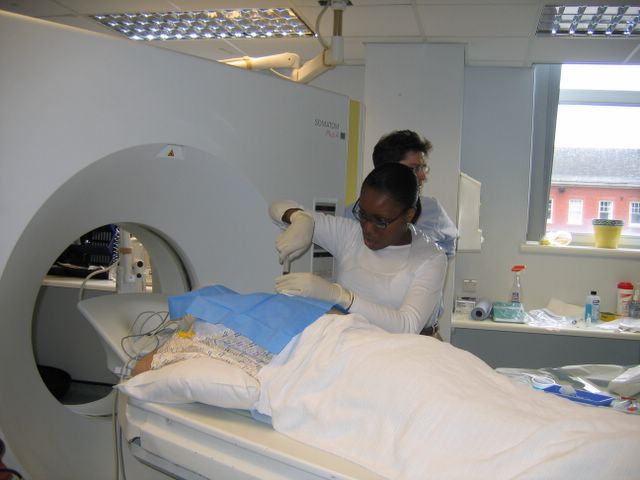
On the CT scanner table at King's, with Dr A from Nigeria taking a biopsy. Picture taken by nurse M, from Philippines. Procedure took about an hour altogether, but the stay in King's was 6 hours. An X-ray was taken 3 hours after the biopsy.
Sunday, March 19, 2006
Slight attack of cancer
Chest X-ray on March 10 showed an abnormality at the top of the right lung (the opposite side to a persistent pain), confirmed at an interview with a consultant at King's March 13. She ordered blood tests and a CT-scan, both done March 14, and the consultant telephoned the following day to say she had discussed the tumour with a chest surgeon, with a view to its removal. Lung function tests were done March 17 followed by pre-assessment for CT-assisted biopsy, arranged for 09.00 March 24. Consultant's note reads:
"Looks like R apical lung cancer. No other evidence of spread. Waiting histo".
Median survival for all lung cancer patients is 15 months, 5-year survival 9%. Survival chances inversely related to size of lesion at discovery.
"Looks like R apical lung cancer. No other evidence of spread. Waiting histo".
Median survival for all lung cancer patients is 15 months, 5-year survival 9%. Survival chances inversely related to size of lesion at discovery.
Subscribe to:
Posts (Atom)