
Sunday, June 03, 2007


Tuesday, May 29, 2007
Somaliland meeting
Meeting to discuss the promotion of security and devlopment in Somaliland, with Mr Abdi Hassan, Chairman of Horn of Africa Development Organisation; Mr Mohamed Kahon, Kulmiye Party Spokesperson; Ms Lulu Todd, and Dr Ahmed.


Friday, May 25, 2007
This week
The highlight of my week was attending the Court of Appeal to hear the judgement handed down in the case of the Chagossiams, who have been fighting a legal battle to be allowed to return to their homeland for years. The Court declared that the two Orders in Council which evicted the islanders 40 years ago were unlawful, and refused the Government leave to appeal to the House of Lords. But the Government still have the right to petition the House of Lords direct for leave to appeal. At the request of Olivier Bancould, leader of the Chagossians, I asked Lord Triesman whether he would agree to meet Olivier in the hope of reaching an amicable agreement and he answered No! From this it is fairly obvious that the Government had already made up their minds to fight this case to the bitter death, regardless of the fact that now three different courts have said the evictions were unlawful, and their chances of getting the law lords to take a different view must be minimal.
I tabled two questions as follows:
Lord Avebury to ask Her Majesty’s Government whether, following the refusal by the Court of Appeal to grant leave to appeal to the House of Lords against the judgment of the Court of Appeal on 23 May dismissing the Government’s appeal against the cancellation by the Divisional Court of two Orders in Council on the right of abode of the Chagossian people in their homeland, they propose to petition the House of Lords for leave to appeal; and whether they accept the decisions of the courts to date. [FCO] HL3981
Lord Avebury to ask Her Majesty’s Government whether they will take measures to facilitate the return of the Chagos islanders; and create a trust fund to help revive the economy of the Chagos Islands. [FCO] HL3982
Once the petition is lodged, these will be erased from the Order Paper, except in the unlikely event they have already been answered. The sub judice rule is absurd in a case like this, because the media will have commented in detail already, and there has been unanimous condemnation of the government's policy. If the law lords were influenced by what is said outside the court, the damage will have been done already.
Yesterday I chipped in on three questions: Caroline Cox's on further offensives by the Burmese regime against the Karen people inside Karen State and in camps for the displaced in Thailand [www.publications.parliament.uk/pa/ld200607/
ldhansrd/text/70524-0001.htm#07052466000009]; Peter Blaker's on the election of Zimbabwe to the chair of the United Nations Commission on Sustainable Development [www.publications.parliament.uk/pa/ld200607/
ldhansrd/text/70524-0001.htm#07052466000010], and Nasir Ahmed's, on the disappearance of certain United Kingdom citizens in Pakistan [www.publications.parliament.uk/pa/ld200607/
ldhansrd/text/70524-0002.htm#07052466000011]
I have a competition with Dominic Addington to see which of us can contrive to ask supplementaries on all four of the oral questions taken at the start of business.
Wednesday, May 23, 2007

Saturday, May 19, 2007
Business of the House his week
Asylum-seekers: torture victims
www.publications.parliament.uk/pa/ld200607/
ldhansrd/text/70517-0001.htm#07051777000006
The Government doesn’t train officials at Immigration Removal Centres to recognise torture victims, and although allegations of torture by detainees are usually but not always reported, they aren’t properly followed up.
House of Lords (Amendment) Bill
www.publications.parliament.uk/pa/ld200607/
ldhansrd/text/70518-0003.htm#07051825000004
My first speech on House of Lords reform for 38 years (see previous one in the post a few days ago). My Bill seeks to end the by-elections held when a hereditary peer dies, to maintain the number of hereditaries at the arbitrary figure of 92 decided in an agreement between the then Lord Chancellor, Lord Irvine of Lairg, and the then Leader of the Opposition, Viscount Cranborne, in 1999. The Liberal Democrats weren’t consulted, and we didn’t agree to this Gilbert and Sullivan arrangement.
www.publications.parliament.uk/pa/ld200607/
ldhansrd/text/70517-0001.htm#07051777000006
The Government doesn’t train officials at Immigration Removal Centres to recognise torture victims, and although allegations of torture by detainees are usually but not always reported, they aren’t properly followed up.
House of Lords (Amendment) Bill
www.publications.parliament.uk/pa/ld200607/
ldhansrd/text/70518-0003.htm#07051825000004
My first speech on House of Lords reform for 38 years (see previous one in the post a few days ago). My Bill seeks to end the by-elections held when a hereditary peer dies, to maintain the number of hereditaries at the arbitrary figure of 92 decided in an agreement between the then Lord Chancellor, Lord Irvine of Lairg, and the then Leader of the Opposition, Viscount Cranborne, in 1999. The Liberal Democrats weren’t consulted, and we didn’t agree to this Gilbert and Sullivan arrangement.
Wednesday, May 16, 2007
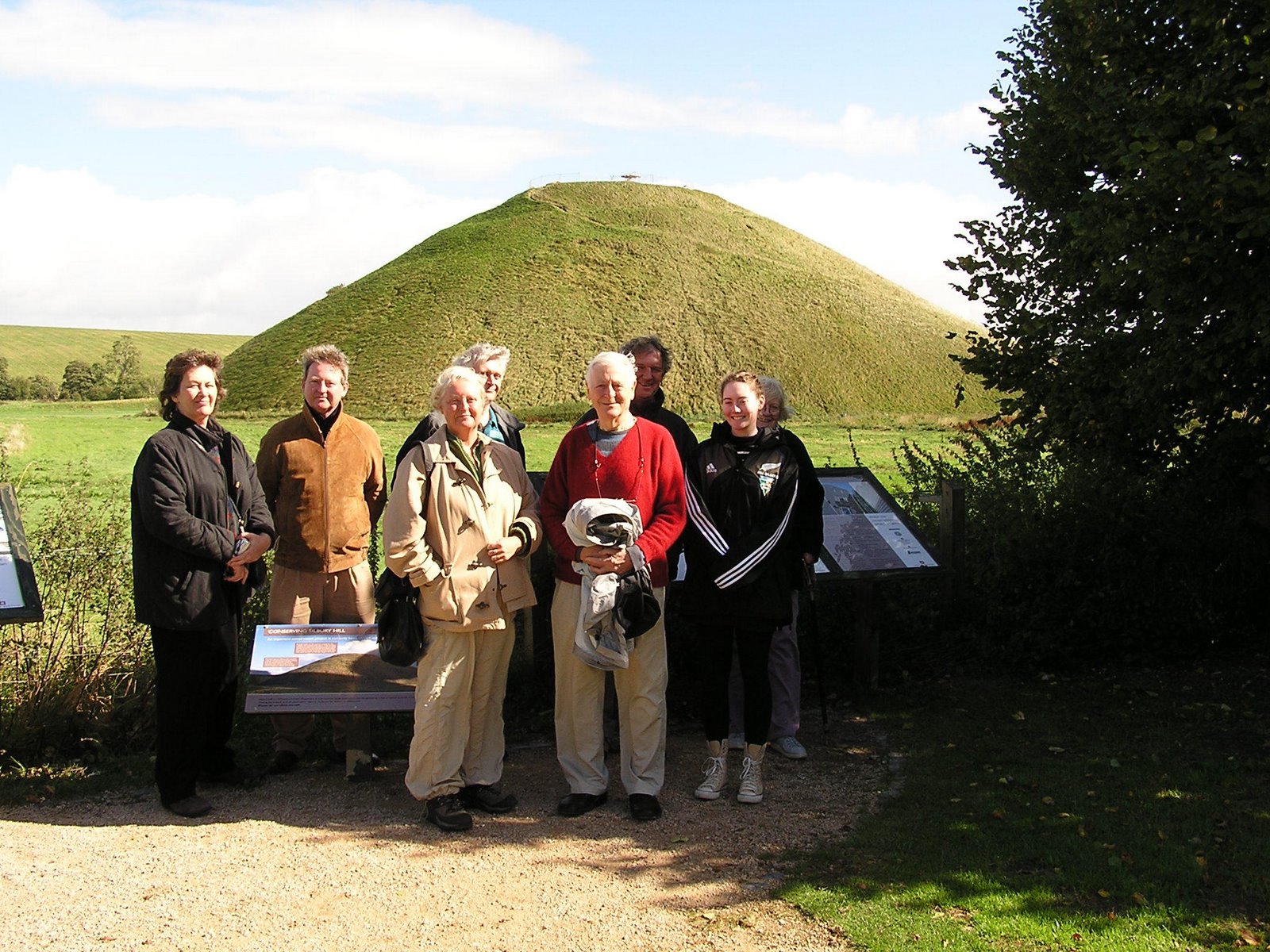
Repairs to Silbury Hill start
May 11 was the start of a big project by English Heritage to repair the damage caused to Silbury Hill by various amateurs going back too the Duke of Northumberland in 1776, see www.english-heritage.org.uk/server/show/ConWebDoc.10894. The contractors are Skanska, who are restoring the monument to as near to its original Neolithic condition as possible.
And by the way, it was Sir John Lubbock, my grandfather, who coined the terms neolithic and palaeolithic in his Prehistoric Times (see the OED references).
There's a new life Science, Politics and Business in the Work of Sir John Lubbock: A Man of Universal Mind (Science, Technology & Culture, 1700-1945) (Hardcover), by Mark Patton, published by Ashgate. The bad news is its £55, even from Amazon, and I think I'll borrow it from the Library.


Tuesday, May 15, 2007


Wednesday, May 09, 2007
Meeting organised by the JKLF on Kashmir
Resolution on Kashmir
This meeting, held in the House of Lords on May 8th 2007 on ‘Kashmir, the Way Forward’, under the chairmanship of Lord Avebury
1. Welcomes the improvement of relations between India and Pakistan, but demands that in any projected agreement between them, no constitutional settlement should be imposed on the people of Kashmir.
2. Urges them to continue with normalization in Kashmir, including the facilitation of unfettered contacts between all communities on both sides of the LoC and the progressive reduction of military forces from the whole of the State.
3. Regrets that the report of the Foreign Affairs Select Committee of the House of Commons does not encourage a more positive role for the UK in promoting a solution of the problem of Kashmir which is acceptable to the people of Kashmir.
Friday, May 04, 2007
The Balibo murders
Thursday May 4
http://www.publications.parliament.uk/pa/ld200607/
ldhansrd/text/70503-0001.htm#07050365000005
An Australian inquest has confirmed that in October 1975, five journalists, including British citizens Brian Peters (28) and Malcolm Rennie (29) were murdered in cold blood by Indonesian troops at Balibo on October 16, 1975 during the invasion of East Timor. On World Press Freedom Day, it was necessary to record that the Rome Statute of the International Criminal Court was not retrospective, so war crimes such as this, committed before the ICC came into existence, are not subject to international jurisdiction.
African leaders' myopia on Zimbabwe
Wednesday May 2
http://www.publications.parliament.uk/pa/ld200607/
ldhansrd/text/70502-0002.htm#07050230000008
How do we get the latest Human Rights Watch report on systematic abuses against opposition members and civil society activists in Zimbabwe, and the increasingly violent repression of ordinary Zimbabweans in Harare’s densely populated suburbs, before African heads of state and foreign ministers? And the same for the Resolution of the Inter-Parliamentary Union on the violations of the rights of Zimbabwean opposition Parliamentarians, likely to be passed this week?
Wednesday, May 02, 2007
International Tribunals (Sierra Leone) Bill [HL]
www.publications.parliament.uk/pa/ld200607/
ldhansrd/text/70501-0002.htm#07050140000002
The Bill enables us to imprison former Liberian President Charles Taylor in an English prison if he is convicted by the Special Court on Sierra Leone. But was it right to transfer the proceedings from Freetown to The Hague? What evidence was there of the supposed threat to regional stability in West Africa that would have arisen if the trial had been conducted in Freetown; what are the views of Sierra Leone civil society and the victims of the war crimes about removing the trial from the country where the offences were committed, amd why did the court refuse to allow Charles Taylor to argue about the venue?
Tuesday, May 01, 2007

Darfur and Chad (and Central African Republic)
Sudan and Chad
3.02 pm
Lord Alton of Liverpool asked Her Majesty’s Government:
What is their assessment of the current humanitarian and security situation in Darfur and Chad.
The Parliamentary Under-Secretary of State, Foreign and Commonwealth Office (Lord Triesman): My Lords, the humanitarian and security situation in Darfur and eastern Chad continues to deteriorate.In Darfur, 107,000 people have been displaced since January, the total number displaced now rising to1.2 million, and 4 million are dependent on aid. Insecurity, lack of access and a tax on humanitarian agencies continues to hamper severely the delivery of aid. In Chad, violence and cross-border attacks have left hundreds of thousands of people vulnerable and dependent on aid.
Lord Alton of Liverpool: My Lords, as the hourglass recorded at the weekend, on the fourth anniversary of the war in Darfur with reports of the Sudanese military continuing to bomb Darfur,some 4 million people are now dependent on aid, some 2 million people have been displaced, and some 400,000 people have been killed during the conflict. Can the Minister tell the House when the heavy-duty package which he referred to when we last discussed this issue will be put in place? Will he contrastthe welcome decision of Rolls-Royce to proceed immediately with divestment in Darfur because of the humanitarian catastrophe there with the craven and ineffectual response of the international community to impose a no-fly zone or to impose any form of sanctions against a regime responsible for these deaths?
Lord Triesman: My Lords, it is certainly true that in the past week and a half there have been a couple of incidents of bombing about which we have made the appropriate representations to the Government of Sudan. The problem will plainly not improve until not just the heavy support package but the whole of the hybrid African Union and United Nations force can be deployed. Discussions are proceeding on that but, I agree, far too slowly. It is a matter for businesses to decide whether they will impose sanctions; I hope that whatever sanctions they impose do not impact on the people of southern Sudan who are not guilty of any of the crimes that have been described by the noble Lord. However, each time one of those decisions is taken, it seems to reflect a very sound ethical principle.
30 Apr 2007 : Column 869
Lord Hurd of Westwell: My Lords, are the Government supporting the idea of a no-fly zone over Darfur because they think that that would be practical?
Lord Triesman: My Lords, I am sure that it would be technically very difficult, but it is one of the possibilities that remains in play.
Lord Howarth of Newport: My Lords, will my noble friend point out to the celebrated actors and musicians who were yesterday calling for intervention in Darfur as well as to the famous writers who recently upbraided the leaders of the European Union that the terrible events of Darfur in the past four years have not been a simple morality tale of evil against innocence or of genocide but have been features of a civil war, born in complex political and economic circumstances, in which atrocious things have been done on all sides? Does he agree that the object of international engagement should not be to enable one side to prevail over another but should be to promote political accommodation and power-sharing within Sudan?
Lord Triesman: My Lords, I wholly agree with my noble friend. Atrocities have been committed by all parties fighting in Darfur; they are all violating ceasefire agreements and attacking civilians. None will escape with impunity from the consequences that the international community insists upon. Until there is a comprehensive discussion on a peace as well as a security solution, the prospects for ending the conflict are very poor.
Lord Avebury: My Lords, will the noble Lord elaborate on the deployment of the heavy support package? Since it has finally been agreed by the Government of Sudan, five months after it was mandated by the Security Council, what obstacles remain to getting the troops on the ground and getting the attack helicopters, which have been accepted as part of the package, deployed in Darfur? Will the noble Lord explain what difficulties have been raised by Chad and the CAR to deployment of the peacekeeping mission which would enable them to restore order and return hundreds of thousands of displaced persons in those countries to their homes?
Lord Triesman: My Lords, the problems with deploying the heavy force which is still being discussed are essentially logistical, although President al-Bashir has agreed to it on several occasions without carrying through his agreement. However, the logistic problems lie in making sure that there are adequate camps, clean water, munitions, and so on. That should be dealt with relatively quickly. The Government of Chad object to having other troops on its soil, much in the same way that the Government of Sudan object, but it is plain to me that, unless a humanitarian effort is mounted by the United Nations, the problems in Chad will not be resolved any more than the problems in Darfur.
Monday, April 30, 2007


Saturday, April 28, 2007

Last week
Tuesday, April 24, anniversary of the start of the Armenian Genocide, chaired a meeting to hear from expert historians led by Christopher Walker in the Grand Committee Room. The proceedings are to be published, and will contribute towards the campaign for official recognition of the Armenian Genocide by the Government.
Then, a meeting of the All-Party Burma Group, and after that to Mr Speaker's for the announcement of the Mr Speaker Abbott Award (of which I'm one of the judges). This year's award went to Akbar Ganji from Iran, with a special posthumous award to Anna Politkovskaya.
Thursday, attended a morning FCO roundtable on Afghanistan.
Today, had a long conversation with Maurice in NZ on Skype.
Tuesday, April 24, 2007

See somalilandpatriots.com/index.php
Xayiraadda Xoolaha Ee Somaliland Oo Xukuumadda Tony Blair
________________________________________
Lord Avebury oo xisbiga Liberal Democrat ugu jiray aqalka sare ee Odayaasha dalka Britain, ayaa xukuumadda Tony Blair wax ka weydiiyay xayiraadda Sucuudigu ku soo rogay xoolaha Somaliland uga dhoofa. Haatuf
London. April 20, 2007 (Haatuf) – Lord Avebury oo xisbiga Liberal Democrat ugu jiray aqalka sare ee Odayaasha dalka Britain, ayaa xukuumadda Tony Blair wax ka weydiiyay xayiraadda Sucuudigu ku soo rogay xoolaha Somaliland uga dhoofa.
Mudanahan ayaa su’aashaas waxa uu weydiiyay gabadha la yidhaahdo Baroness Amos oo metelaysay xukuumadda Britain, isagoo intaas ku daray inuu nuqul laga dheehan karo mashruuca JNA, waxaanu yidhi: “Ma jiraan wax horumar ah oo laga sameeyay xalinta cunaqabataynta xoolaha Somaliland ee ay ku soo rogeen wadamada carabta iyo in laga heli karo maktabadda Ingiriiska Nuqul laga dheehan karo macluumaadka JNA oo si gundheer uga waramaya barmaamijka dib u dhiska iyo dib u habaynta Somaliland ee dhawaan guddida JNA daraasada ka samaysay?”.
Baroness Amos ayaa iyadoo ka jawaabaysa su’aasha Lord Avebury waxay tidhi: “Xoolaha la joojiyay dhamaantood waxay ka siinaayeen Somalida oo dhan, waxaana xayiraada laga qaaday sanadkii 2006, laakiinse waxa taas ka dambaysay xanuunka Rift Valley oo billawgii sanadkan ku soo noqday meelihii lagu arkay berigii hore, taas oo ku keliftay Sucuudiga iyo wadamo kale oo carbeed inay joojiyaan xoolaha Somalida.”
Ms. Baroness Amos waxa kale oo ay intaas raacisay in wadamada Yurub ay wadaan sidii ay u abuuri lahaayeen istiraatijiyad mucaawinooyin waxtar leh lagu siinayo Soomaalida iyo sidii kalsooni buuxda xoolaha Somaalida loogu soo celin lahaa, “talaabooyinkaasna waxa ka mid ah sidii loo heli lahaa adeeg aan kharash badan ku kicin isla markaana sugaya caafimaadka xoolaha, in la horumariyo daryeelka xoolaha Somalida ayaa qayb kaga jirta mashruuca JNA ee loogu talo galay dib u dhiska iyo qorshaha horumarineed ee Soomaalida. Macluumaadka ay JNA soo ururisay waxay ka koobnaayeen lix qaybood waxaana laga heli karaa internet ka, hawshuna imika way socotaa oo waxa isku dubaridkeeda u xilsaaran World Bank ka iyo UNDP oo loogu talo galay qaybaha maamulada Soomaalidu ka kooban yihiin barmaamijka ka dib iyo qorshaha horumarineed kaas oo la filayo marka la soo dhamaystiro macluumaadka in iyagana website-ka la soo galin doono” ayay hadalkeena ku soo xidhay.
Haatuf
Justice & Security (Northern Ireland) Bill
Clause 7 [Limitation on challenge of issue of certificate]:
Lord Avebury moved Amendment No. 3:
Clause 7, page 5, line 27, leave out “exceptional circumstances” and insert “lack of jurisdiction”
The noble Lord said: My Lords, this amendment is in the name of my noble friend Lord Lester of Herne Hill, with whose permission I move it. We have already dealt with the issues arising on Clause 7 in Grand Committee, so I need summarise them only very briefly.
The clause prevents the ordinary courts entertaining challenges to the DPP’s decision under Clause 1 to certify that a trial is to be conducted without a jury. As the Bill stands, the certificate can be questioned only on grounds of dishonesty, bad faith or other exceptional circumstances, and we relied on the report of the Joint Committee on Human Rights on the Bill to argue that the Government had misread the Shuker judgment on which the clause was said to be based and that Parliament had consistently set its face against statutory ouster clauses. We had the powerful support of the noble and learned Lord, Lord Mayhew, and the noble Lord, Lord Trimble, who cited the observation by the Lord Chief Justice, Sir Brian Kerr, in the Shuker case that,
“further grounds of judicial review challenge may be deemed appropriate”.
23 Apr 2007 : Column 509
However, he added that it would not be,
“helpful, or even possible, to predict what those grounds might be”.—[Official Report, 19/3/07; col. GC 128.]
The noble and learned Lord the Attorney-General explained that the main reason for the clause was that, in issuing the certificate, the DPP would almost always have relied on sensitive human intelligence which he could not reveal but which would certainly be demanded by the defence if a challenge to the DPP’s decision was allowed.
The noble and learned Lord also disputed the JCHR’s reading of the Shuker judgment and drew attention to the quotation, in paragraph 17, by the Lord Chief Justice of a sentence from the judgment of the noble and learned Lord, Lord Steyn, in the case of Kebilene, where the words “exceptional circumstance” were used. That, he told the Grand Committee, was the language that had been picked up for the purpose of this clause.
The first of these arguments was already known to the JCHR; it dealt with it explicitly in paragraph 1.34 of the report. The gist of it was recited in Grand Committee, so I do not need to go over it again. The JCHR welcomed the amendments tabled by the Government following the debates in another place, but it pointed out that the High Court of Northern Ireland had taken on board the sensitivity of the information on which the DPP's decision was based and had still rejected it as an argument for ousting the jurisdiction of the court.
The Kebilene case was not germane to this debate, because the decision of the DPP there was, not to deny a jury trial, but to consent to criminal proceedings before a jury. Incidentally, the words attributed by the Lord Chief Justice to the noble and learned Lord, Lord Steyn, were in fact those ofMr Pannick of counsel. The Lord Chief Justice, followed by the JCHR and the noble and learned Lord the Attorney-General, left out seven crucial words at the beginning of the quotation. The noble and learned Lord, Lord Steyn, said that Mr Pannick had contended that,
“there is a common law principle that”—
I emphasise those words—
“absent dishonesty or mala fides or some other wholly exceptional circumstance, the High Court will as a matter of discretion not entertain judicial review proceedings of a decision to prosecute”.
I therefore suggest to the noble and learned Lord that it is inappropriate to use those words as a model in this context, reading across from a common law principle applying to a decision to prosecute to a statutory rule applying to a decision to deny jury trial. In any case, the noble and learned Lord, Lord Steyn, specifically disclaimed the application of this principle to the Kebilene case. The paragraph in that judgment, following the one just quoted, begins:
“For my part, I would not wish to base my decision on these observations”.
Whether the analogical force of Section 29(3) of the Supreme Court Act 1981, which prohibits an application for judicial review of the decision of the Crown Court judge to refuse to hold a prosecution to be an abuse of process by reason of an alleged breach
23 Apr 2007 : Column 510
of the convention, extends to the matter under review, as it did in Kebilene, I would not have the temerity to say, but I would like to hear it argued.
No doubt these matters have been covered in the discussions since Grand Committee between my noble friend Lord Lester and the Attorney-General. As I understand it, they were moving towards a compromise under which the clause would be retained but the grounds on which judicial review could be sought would be widened. My noble friend has suggested “other lack of jurisdiction” instead of “other exceptional circumstances”, and we believe that this amendment would bring the clause more into line with accepted judicial principles. It takes full account of the Attorney-General's concerns, which are shared by my noble friends, about the unique circumstances of Northern Ireland, where non-jury trials may still be needed for some time to come and it is undesirable to open the reasons for certifying a case to examination because it would compromise the security of human intelligence.
I fully understand that the Attorney-General may not have had sufficient time to consider this proposal since it appeared on the Marshalled List, but I hope that he will indicate this afternoon that discussions with my noble friend are still in progress and that he is hopeful that a mutually acceptable form of words can be agreed. I beg to move.
3.30 pm
Lord Trimble: My Lords, I thank the noble Lord, Lord Avebury, for his reference to me and our discussions in Grand Committee. However, I remain of the opinion that I expressed then: the clause is unnecessary and the Government would be well advised to leave it out. I am sorry to say that I do not see the amendment tabled by the noble Lord, Lord Lester, as particularly helpful. I suspect that it would narrow the scope for challenge rather than extend it as the noble Lord wishes. From a drafting point of view, it would be much better to insert “lack of jurisdiction” as an additional ground rather than take out “exceptional circumstances”. The one good thing that can be said about the clause is the reference to exceptional circumstances, which gives the judges a door through which they can walk if they think that it is appropriate to do so.
Lord Goldsmith: My Lords, I am grateful to both noble Lords and to the noble Lord, Lord Lester. I knew that the noble Lord would not be able to be here today, and I entirely understand.
I should like to get one technical point out of the way. I listened with interest to what the noble Lord, Lord Avebury, said about the Lord Chief Justice of Northern Ireland quoting from the noble and learned Lord, Lord Steyn. I beg to differ with him, however. I have the report with me; on page 371, between letters f and g, the noble and learned Lord, Lord Steyn, says:
“My Lords, I would rule that absent dishonesty or mala fides or an exceptional circumstance, the decision of the Director to consent to the prosecution of the applicants is not amenable to judicial review”.
23 Apr 2007 : Column 511
That is the passage quoted by the Lord Chief Justice of Northern Ireland in the Shuker judgment, not an earlier passage that recites what counsel had submitted. Just to be technical about that, I think that what has been said about the Shuker judgment is correct.
Fundamentally, the issue has been how to produce a situation in which, as I explained in Grand Committee, there would not be an undesirable risk that sensitive intelligence information, on which these decisions are generally based, would have to be revealed. The conversations that I have had outside the House have been very helpful in getting a common view as to the significance of that point and how to deal with it. But the noble Lord, Lord Avebury, is right in saying that I am not in a position today, given the time at which the amendment was tabled, to express a concluded view on it. Therefore, if your Lordships are agreeable, I propose that we accept the invitation of the noble Lord, Lord Avebury, that I should continue to discuss the matter with the noble Lord, Lord Lester. Then the matter can be brought back at Third Reading to be decided one way or the other. It is a slightly unusual approach, but I hope that your Lordships will agree.
Lord Avebury: My Lords, I am most grateful to the noble Lord, Lord Trimble, for his intervention. Iwas advised, technically, that the words “lack of jurisdiction” included exceptional circumstances and were wider. I specifically questioned that point with those who assisted us in drafting the amendment and was assured that it was so.
I am most grateful to the noble and learned Lord the Attorney-General for his assurance that the matter is not closed and can still be the subject of further discussions between my noble friend and himself.
The words that I quoted from the Kebilene judgment were taken from the text available in the public domain on the British and Irish Legal Information Institute (BAILII) website. I am afraid that the paragraph number is not given, so I cannot argue with the noble and learned Lord about which paragraph I am referring to. However, the material point is in the words that I cited:
“there is a common law principle that”,
which precede the sentence quoted in the Shuker judgment. My argument was the substantive one that you could not read across from the common-law principle to a rule of statute as the drafters of this legislation have attempted to do. However, it may be best to leave that matter for the discussions between my noble friend and the noble and learned Lord. With that, I beg leave to withdraw the amendment.
Amendment, by leave, withdrawn.
Thursday, April 19, 2007

Last 36 hours
Saw my GP yesterday to ask why I hadn’t heard anything following a January MRI scan to see that my chest was still clear after last April’s maltoma removal. No problems, next appointment with haematology clinic May 4. Ditto prostate, appointment with urology clinic to review medication May 31 Ditto Barrett’s oesophagus (you probably don’t want to know, but Google finds plenty of sites), where I am to be reviewed January 2009. Ditto orthopaedic where there is no news of the scan of my left foot. As Michael Winstanley used to say, the human body is only designed to last 40 years, and after that bits wear out.
Then lunch with Pola Uddin to meet the Foreign Minister of Bangladesh, Dr Iftekhar Ahmed Chowdhury.
Then my topical question on the World Bank managing director and family planning:
www.publications.parliament.uk/pa/ld200607/
ldhansrd/text/70418-0002.htm#07041868000007
Later, interesting meeting of the All-Party Afghanistan Parliamentary Group for a discussion with the Director of Womankind.
This morning, to the Baitul Futuh, the great Ahmadi Mosque in Morden, where there was a reception for Meg Munn MP, the Communities Minister, see picture above. The Minister, who was accompanied by the Muslim Adviser Maqsood Ahmed, said she was impressed by the work of the Ahmadi community.
Also present were Justine Greening, MP for Putney; Siobham McDonaggh, MP for Mitcham & Morden, and Dan Rogerson, MP for Cornwall North.
Wednesday, April 18, 2007
Monday and Tuesday
Two minute speech on Zimbabwe on Monday:
www.publications.parliament.uk/pa/
ld200607/ldhansrd/text/70416-0012.htm
Offender Management Bill second reading Tuesday:
www.publications.parliament.uk/pa/
ld200607/ldhansrd/text/70417-0006.htm
Community Legal Service (Asylum and Immigration Appeals) (Amendment) Regulations 2007:
www.publications.parliament.uk/pa/
ld200607/ldhansrd/text/70417-0014.htm
Plus meetings with Amnesty International on Bangladesh, and with Alcohol Concernto discuss the forthcoming review of the Government's alcohol harm reduction strategy.
www.publications.parliament.uk/pa/
ld200607/ldhansrd/text/70416-0012.htm
Offender Management Bill second reading Tuesday:
www.publications.parliament.uk/pa/
ld200607/ldhansrd/text/70417-0006.htm
Community Legal Service (Asylum and Immigration Appeals) (Amendment) Regulations 2007:
www.publications.parliament.uk/pa/
ld200607/ldhansrd/text/70417-0014.htm
Plus meetings with Amnesty International on Bangladesh, and with Alcohol Concernto discuss the forthcoming review of the Government's alcohol harm reduction strategy.

Thursday, April 12, 2007
Not much news
JW went back to Nottingham on Tuesday, having won the last exchange 2-1, making us level pegging at 56-56.
Yesterday I had a meeting with former Ambassador Andebrhan W Giorgis, the newly appointed Africa Advocacy Director of the International Crisis Group, an excellent source of information and analysis. (www.crisisgroup.org)
Speaking of favourite sites, edwardthesecond.blogspot.com/index.html is a model of what blogs should be. Its informative, amusing and well written, and Alianore deservedly gets a lot of favourable comments. Her current post is about Maud de Chaworth my 18G grandmother, who died February 19, 1317/18, and was half-sister of Hugh le Despenser,Edward II's notorious favourite and 20G grandfather.
Monday, April 09, 2007


Sunday, April 08, 2007
Easter Monday
Alastair came over and stayed overnight, and today helped by JW he put up Irma's enormous swinging set in the garden. There must be a name for these things but I can't think of it.
Yesterday JW and I had only the second game of ping-pong since the winter and he won 2-1. Today it was 2-1 to me so the cumulative score since my operation last April 55-54 in my favour.
Yesterday Prins and Sriya Gunasekera, Lanka and little Leon came to lunch, but all the pictures are on JW's camera, so I will post them later.


Friday, April 06, 2007


Monday, April 02, 2007


Subscribe to:
Posts (Atom)