
Tuesday, April 01, 2008

Sunday, March 30, 2008
Maurice's house
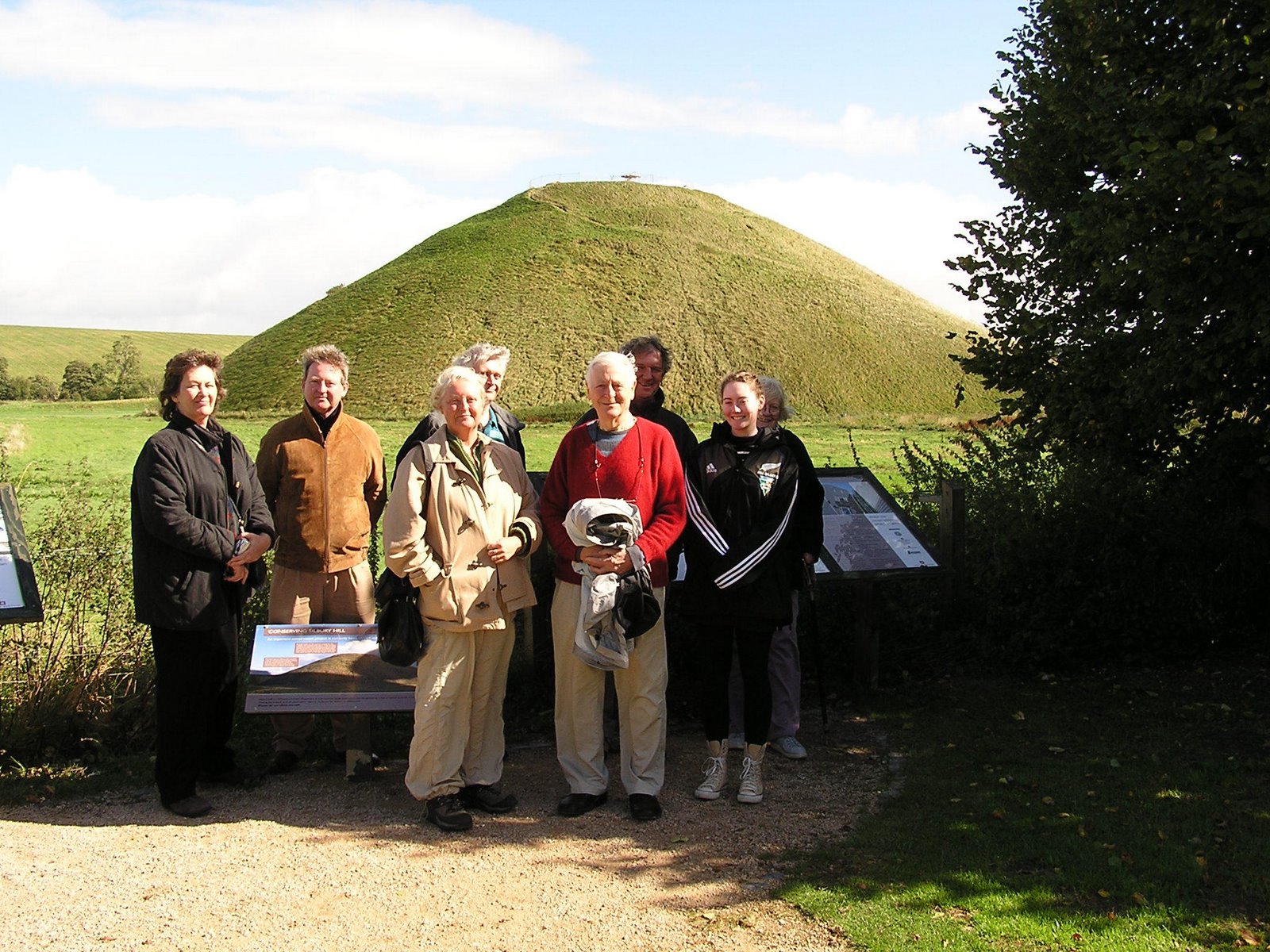
Maurice's house in Auckland, in the middle of building works. He is hobbling about with a sprained foot at the moent.

Friday, March 28, 2008
This week
Last weekend we were supposed to be attending the opening of the new Buddha Grove at Albany Prison, but the governor cancelled at only a few days' notice on the feeble grounds that the plinth for the Buddha Rupa wasn't ready. As we had booked the hotel and the ferry and had arranged to stop off at a meeting of the Bahraini community being held in Portsmouth, we decided to go ahead. After a useful discussion with the Bahrainis including several old friends, we crossed on the 13.00 ferry and checked in at the elaborately 19th century Villa Rothsay, which had been used by King Edward VII when he was Prince of Wales during his visits to the island. He was Duke of Rothsay so the house was named after him.
In the afternoon we visited Osborne [www.english-heritage.org.uk/server.php?show=nav.14479], Queen Victoria's pad on the island where she enjoyed playing the housewife, free of any public commitments.
Monday we did Carisbrooke Castle [en.wikipedia.org/wiki/Carisbrooke_Castle] where Charles 1 was imprisoned for 14 months before being taken to London for his trial and execution. Then Quarr Abbey [www.quarrabbey.co.uk] where as it happened we attended the first half of vespers. Bhante had stayed there 20 years ago when there were 30 monks compared with only nine there for the service. Probably not so many people have vocations nowadays, and they may have some difficulty keeping the place up with dwindling numbers in the next few years, though the grounds and buildings seemed in good condition. Then back on the 18.00 ferry.
Tuesday I had a morning meeting at the House with some 40 Bahrainis, and fielded a Question on Darfur.
Wednesday, fielded a Question by Raymond Hylton calling for an independent review of the decision to detain asylum seekers, then spoke to an amendment on the Criminal Justice and Immigration Bill on facilities for the treatment of young people with a dependency on or a propensity to misuse alcohol. The Government aren't proposing to allow any additional resources for the new treatment orders, once again demonstrating that they don't take alcohol seriously.
Thursday I fielded a Question on Zimbabwe, and spoke on two Orders dealing with the early release of foreign national prisoners who are being removed or deported. On the TV news this evening it was announced that the previous early release scheme had allowed a couple of convicted terrorists to be released early, and Jack Straw had said he was going to see that this didn't happen again. As in the days of Henry VIII with his Statute of Proclamations, it seems that laws are now being made by decree, except that Mr Straw is mow the monarch.
Today I have been trying to clear backlogs of paperwork, though sidetracked by a case reported by the Kent Police to which Nick Tolson of Churchwatch drew my attention:
Arrests made at Canterbury Cathedral
Protesters attempt to disrupt service
Police arrested two men at Canterbury Cathedral on Sunday 23 March after they attempted to protest during the Archbishop of Canterbury's Easter Sunday service.
Their protests centred around the Archbishop's recent comments on Sharia law.
Kyle Spotswood, 26, of Dagenham Road, Sheffield and Sidney Cordle, 52, of Knowle Lane, Sheffield, were later charged with a disturbance in church under the 1860 Ecclesiastical Courts Jurisdiction Act. The offence under the Act carries a maximum penalty of two years imprisonment.
They have been bailed on condition they do not come into Kent except for their appearance at Canterbury Magistrates Court on 7 April.
Posted on: Updated Monday 24 March
Having attempted twice to repeal S 2 of the 1860 Ecclesiastical Courts Jurisdiction Act, and spent a year in the Select Committe on Religious Offences [www.parliament.the-stationery-office.co.uk/pa/ld200203/ldselect/
ldrelof/95/9501.htm], I have more than a passing interest in this case, and spent a couple of hours making telephone calls to find out whey the police (or the Crowm Prosecution Servive?) didn't think to use S 4A or S 5 of the Public Order Act 1986. It appears that the police didn't consult the CPS, as perhaps they would have needed to with such a small maximum penalty. But if they were under the impression that the offence carried a two year prison sentence, they certainly ought to have done so. If one of the objects is to deprive the protesters of the oxygen of publicity, its certainly a mistake to prosecute under the ECJA, because the use of this archaic legislation is bound to attract extra media attention.
Saturday, March 22, 2008
End of Mar's visit
She is off to the refugee camps in Thailand for Burmese fleeing the atrocious SPDC regime, then back to Canberra. She's been a lovely guest and we will miss her.


Thursday, March 20, 2008
Week in Westminster
Last Friday Phil Clarke came to see me about the research we have been conducting for several years on the statistical discrepancies in the various estimates of the number of refugees from Rwanda in the DRC at the end of 1996.. The Ministry of Defence had agreed to make available some large high resolution photographs taken from overflights of eastern Zaire (as it was then) by an RAF Canberra at the end of November 1996. More of this anon.
Monday I asked a supplementary on Lord Skelmersdales question on National Insurance numbers, which give a rough picture of the numbers entering the workforce. Only 3% of these people claim outof work benefits within six months, indication that the large majority of them are making a productive contribution to the economy.
Tuesday, to the West Ham football ground to speak at a conference of Traveller teachers in the morning, then back to Westminster for Roger Roberts' question on gay asylum seekers from Iran. Under pressure, the Government have agreed to give Mehdi Kazemi a new hearing. The Minister who was answering, Alan West, wasn't very well briefed, we thought.
Today I had a question on the situation in Tibet, and spoke later in Norman Fowler's debate on Iranian refugees and displaced people - four and a half million of them, who lost their homes because of the egregious folly of the invasion five years ago today.
Now we have Good Friday and Easter Monday off,with a dreadful weather forecast for the Easter weekend.
TLRU meeting March 7
Meeting of the Traveller Law Research Unit Adisory Group meeting, with Elena Tsetsekou, Administrator, Migration and Roma Department, Social Cohesion Directorate, Council of Europe. The CoE has worked on an awareness campaign, but although most member states have official policies on equality, the majority of populations are slow to understand the need. Cases heard at the European Court of Human Rights have made a bigger difference than national policies.

Friday, March 14, 2008
Orpington Circle Inauguration Dinner
Yesterday evening, as guests of Paul Hunt, Chairman of the National Liberal Club, at a dinner to launch the Orpington Circle, an organisation of Club members to support Liberal Democrat candidates at by-elections. First picture is Gill Pratt (nee Cheesbrough) who was my right hand in the Commons from 1964 to 1966. She married and moved to Huddersfield and I hadn't seen her for over 40 years. Second picture is of Chris Maines, LibDem candidate for Orpington 5 times, who only missed by 269 votes in 2001; and on my right, David McBride, the present candidate.


Tuesday, March 11, 2008
Update
The busier I am, the later my posts, but here's a belated update on March so far.
Monday March 3 presented the awards to Gypsy and Traveller children winners of the ELAMP distance learning awards, in the Moses Room of the House of Lords. Its a great scheme for GRT children who travel in the summer to receive assignments and send in their coursework using laptops.
Then my Question on the UNICEF report on The State of the World's Children 2008, with particular reference to the lack of progress in reducing infant and maternal mortality in West Africa.
At 16.00, weekly meeting of the Select Committee considering the value for money we get from our subscriptions to international organisations concerned with communicable diseases, mainly B, malaria and HIV/AIDS. So fare we have been considering evidence from medical and academic bodies.
At 18.15, meeting with (Baroness) Kay Andrews to discuss my amendment to the Criminal Justice & Immigration Bill abolishing blasphemy and the remaining statutory religious offences, dealt with by the Law Commission in 1985 and covered by my Bills of 1995 and 2002, followed by the Select Committee on Religious Offences which reported in 2003. The Government had tabled their owm amendment falling a bit short of mine, in that they retained a couple of obsolete Acts I wanted to repeal. The main one was the Ecclesiastical Courts Jurisdiction Act 1860, which provides that
"riotous, violent, or indecent behaviour in England or Ireland in any cathedral church, parish or district church or chapel of the Church of England, or in any chapel of any religious denomination, or in England in any places of religious worship duly certified under the provisions of the Places of Worship Registration Act 1855, whether during the celebration of divine service or at any other time, or in any churchyard or burial ground, or who shall molest, let, disturb, vex, or trouble, or by any other unlawful means disquiet or misuse any preacher duly authorized to preach therein, or any clergyman in holy orders ministering or celebrating any sacrament, or any divine service, rite, or office, in any cathedral, church, or chapel, or in any churchyard or burial ground, shall, on conviction thereof before two justices of the peace, be liable to a penalty of not more than [F4 level 1 on the standard scale]for every such offence, or may, if the justices before whom he shall be convicted think fit, instead of being subjected to any pecuniary penalty, be committed to prison for any time not exceeding two months".
My argument is that the charge is rarely used, and that conduct of the kind described can be dealt with by the secular laws dealing with public order or harassment. Kay wouldn't have been in a position to make a concession even if she had agreed with me, because Ministers in the Lords are kept on a short leash by their Departments
Tuesday, met TH< who was unfairly sacked by the UNHCR and offered inadequate compensation by the UN Appeals Tribunal many years later. Lord Desai and I are advising him on further steps to get a fair deal.
Then a meeting with Akin Birdal, Turkey's most prominent human rights activists, who has been imprisoned, shot by attempted assassins, but still keeps going.
Wednesday, the debate on the floor of the House on the religious offences amendments. Having got three quarters of a loaf,I will have a go at getting the remaining slices at the Report Stage. In the dinner hour, took part in a debate on the National Audit Office report on risks to overseas territories. I spoke about tax avoidance, the shabby treatment of the Chagos Islanders who were expelled from their lands, and the reversal of moves towards self-government on Ascension Island. All in six minutes. The dinner hour debates are timed, and the more speakers there are, the shorter each speaker has to be.
Thursday, a meeting with Mark Canning, our Ambassador to Burma. At Question time, joined in Lindsay Northover's question on gender inequality, and in Lord de Mauley's, on alcohol and young people.
Yesterday, Monday March 10, lunch and discussion with Abbas al-Bayati, Iraqi MP and Turcoman leader who is on the Committee looking at constitutional change. The Turcomans are concerned among other matters with the status of Kirkuk. Because all decisions have to be unanimous, no progress is being made.
Later, joined in Baroness Rawlings' Question onclimate change and South West Africa, then in the Criminal Justice and Immigration Bill, moved amendments deleting Part 12, dealing with 'Special Immigration Status'. The Government want to create a limbo for people they say are disqualified from refugee status but can't be deported for human rights reasons. The UNHCR say the Government are wrongly interpreting the Convention.to make these ew people destitute for as long as they remain in the UK.
This special status is being created because the convictions of the hijackers who brought a plane load of asylum seekers here from Afghanistan in 2000 were quahed by the Court of Appeal,and they would have had to grant the hijackers 6 months renewable leave to remain without these provisions. We say that nobody was killed or injured by the hijackers, but 100 people were delivered from torture or execution by the Taliban, who ruled the country at the time.
Today, spent the morning and spoke at the National Association of Traveller Teachers/ Advisory Council on theEducation of Romanies and Travellers conference in West Ham. Returned to Westminster in time to join in a Question on the threatened deportation of an Iranian homosexual,Mehdi Kazemi. I asked whether,in view of the persecution of gay and lesbian people in Iran, they would promote an EU wide moratorium on the deportation of gay and lesbian people to Iran.
Later, sat in on Climate Change Bill and spoke on two amendments.
Sunday, March 02, 2008

Thursday, February 28, 2008
The week
I should have added, in the note on the Second Reading of my House of Lords (Amendment) Bill last Friday, that the Leader of the Conservatives, Lord Strathclyde, called me 'shallow and discraceful'. I thanked him for his compliments, which will do me good with my Party.
Monday from 10.00 to 13.00 I chaired a very successful and well-atttended seminar on Bangladesh in the Moses Room, with speakers from the Commons, the European Parliament, the Bangladesh High Commission, Amnesty International, Human Rights Watch, the Awami League, the BNP etc. We were looking at the roadmap to the elections, which are to be held by the end of the year. In April there are to be local elections in the larger towns and cities, and the High Commissioner said that the ID cards would be issued to al the urban electors, and the registers would be published in good time. Although the timetable has slipped, the authorities will consider publishing a revised paper on the tasks that remain to be completed before the general election. The Electoral Commission has recommended that the restrictions on political activites should be lifted on March 20, and they are in fact being progessively relaxed. There are still concerns about the treatment of some independent TV stations and some print journalists, and we are intending to summarise these and other matters raised during the seminar in a communication to Dhaka, via the High Commissioner.
Monday afternoon from 16.00 to 18.00 I had Select Committee on International Organisations, which is considering whether the UK gets value for money from its payments to the World Health Organisation etc, in tackling communicable diseases - mainly HIV/AIDS, TB and Malaria, the three largest killers (though I hope we will pay some attention o pneumococcal disease, which kills a million children a year). We are also looking at the organisations that are preparing for the next flu pandemic,a matter of when, not whether. The Committee took evidence on Monday from the Health Protection Agency, which has an important role to play in protecting our own population against communicable diseases as well as other potential hazards such as chemical and nuclear, by providing impartial advice and authoritative information on health protection issues to the public, communities, professionals and to government.
Then from 19.30 to 20.30 I was in the Chamber speaking on two Orders - one on the above-cost fees to be charged for certain immigration services, the other on the vast database to be constructed giving details of the passports and 'Pasnger Name Records' of every person entering or leaving the United Kingdom, at a cost of £1.4 billion. Of this, £240 million is to be charged to airlines.After the debate I had a call from the Geneva-based SITA, the world's leading service provider of IT business solutions and communication services to the air transport industry, who are coming to see me to discuss problems arising from this proposal. Somebody reads Hansard!
Tuesday I hosted an English Speaking Union tea party as understudy for my colleague George Thomson (Lord Thomson of Monifieth), who wasn't well. George is 86 and pretty good for his age, but I think he's had some knee problems recently.
Then I had a meeting with Hugh McKinney and Nick Osbourne to discuss the work of the Al-Party Group on Pneumococcal Disease, and particularly the outline of a report by the Group.
In the dinner hour debate I spoke on the human rights situation in West Papua. The UN Rapporteur on Human Rights Defenders, Hina Jilani, was there last summe, and as well as her report, there is a good deal of material from the US State Department, Human Rights Watch and Amnesty International. The Indonesians had also invited Manfred Nowak, the Rapporteur on Torture, to visit West Papua, and openness to the UN Special Procedures is a move in the right direction, though journalists and human rights NGOs are still not welcome in the Province.
Wednesday, Party meeting 14.00 to 15.00. Then I fielded a question on the return to war in Sri Lanka, and the recommendations of the All-Party Representative Committee there. I asked what DfID was contributing towards the Common Humanitarian Action Plan, which it is feared may have to assist half a million people; whether the Ministr agreed that limited devolution of power to the north and east would do something to mitigate the polarisation of the two communities, even though it would be better to insist that the all-party committee recommendations are published by April, even if the parties weren't unanimous, and if the Minister would comment on the need for a more politically powerful contact group, now that the Norwegian role has come to an end.
After questions I attended a meeting of the Parliamentary Human Rights Group officers - I'm Vice-Chair - with the Russian Ambassador, largely to discuss the situation in Chechnya. He agreed that the Group could send a delegation to Chechnya.
Today I fielded a question on the queues at immigration control at the UK's airports. The evidence is that the length of the queues vary, from 0 to 68 minutes, and there must be best practice that could be developed from an analysis of the reasons for the differences between one airport and another.
After lunch I was invited to te office of the Leader of the House, Cathy Ashton (Baroness Ashton of Upholland) who was receiving a large party of schoolchildren She had promised to get me the answer to a question I had tabled more than three and a half months ago, on the dates of the former Prime Minister Tony Blair's contacts with Rupert Murdoch towards the end of his term of office. The schoolchildren left; the answer to the question arrived hot off the press, and Cathy handed it to me!
Wednesday, February 27, 2008

Tuesday, February 26, 2008
Daily Star, Dhaka
Daily Star
Bangladesh reminded of obligation to hold free, fair election
UNB, London
British and European parliamentarians have said the Bangladesh caretaker government should live up to its political obligation by lifting the state of emergency so as to allow political activities and political reform.
As "friends of fair and democratic Bangladesh", they have reminded the government of its obligation to hold free and fair elections.
The observations were made at a seminar on "The Roadmap to Parliamentary Elections?" held yesterday in the Moses Room at the Houses of Lords.
The seminar was organised by the International Bangladesh Foundation and chaired by Lord Avebury, vice chair of All Party Parliamentary Human Rights Group and chairman of International Bangladesh Foundation.
It was attended by MPs, MEPs, peers, councillors and representatives of human rights organisations, including Amnesty International, Human Rights Watch, Global Human Rights Defence, Jumma People's Network, Nirmul Committee and Bangladesh Hindu Buddhist Christian Unity Council.
The speakers at the seminar said human rights violations and lifting of the emergency rule must be placed on the reform agenda as a top priority and the government must respect human rights of its citizens and ensure that no torture takes place.
Lord Avebury in his opening remarks said, "We're concentrating on the conditions that will enable free and fair elections to be held as scheduled before the end of the year."
He reminded that according to the electoral roadmap, talks with political parties were to be completed by the end of 2007, and electoral reforms to be passed by March. "These targets have slipped," he said.
Saida Muna Tasneem, counsellor at Bangladesh High Commission in London, gave a presentation on and an overview of the caretaker government's commitment to the roadmap to parliamentary elections by December 2008.
She informed the seminar of the progress in voter registration work and various reforms the government has already implemented, including separation of the judiciary and formation of independent Election Commission, Anti-Corruption Commission and National Human Rights Commission.
Tasneem called for continued support from the international partners for successful completion of the caretaker government's roadmap and reforms.
Baroness Pola Uddin, chair of Britain-Bangladesh All Party Parliamentary Group; Anne Main MP, chair of Conservative Friends of Bangladesh; Jeremy Corbyn MP of Britain-Bangladesh All-Party Parliamentary Group; Robert Evans MEP, chair of European Parliament's South Asia Delegation; Dr Charles Tannock MEP, vice president of subcommittee of European Parliament's Human Rights; Tim Parritt, deputy programme director for Asia of Amnesty International; Brad Adams, Asia director for Human Rights Watch; and Sultan Shariff of the Awami League also spoke at the seminar.
Joshna Miah of BNP, MA Rauf of Gano Forum, and Dr Ahmed Ziauddin, Bangladesh Centre for Genocide Studies, Belgium, and Sally Kebble MP also attended the seminar.
In the general discussion that followed, speakers expressed their "deep concern over the human rights abuses" under the state of emergency in the country. Some speakers raised the issue of the trial of war criminals.
The speakers, however, appreciated the various steps taken by the present government against corruption, terrorism and welcomed Chief Adviser Fakhruddin Ahmed's recent comments against the war criminals but stated that it is the duty of the government to initiate cases and take initiatives against the alleged war criminals.
Lord Avebury in his concluding remarks said, "There has to be freedom of expression and of assembly if elections are to be free and fair."
He added: "Elections aren't only about having the right laws, an accurate register and impartial officials. They depend on the preconditions in the months before polling day, and crucially, on the maintenance of a peaceful environment during election campaign."
Monday, February 25, 2008

Friday, February 22, 2008
Hereditary by-elections
Second reading of my House of Lords (Amendment) Bill this morning. The Tories say that the scheme for maintaining the number of hereditaries at 92, which was cobbled together by Jack Weatherill in 1999, was binding in honour on the two main parties' front benches, and thus on the House as a whole. But there is a well-established principle that Parliament can't bind its successors, and back-benchers of all Parties, who weren't part of the backstairs deal, have no obligation to stick to it. Not a single one of the speakers defended the by-elections on objective grounds

Thursday, February 21, 2008

Update
First posting in February!
In the Houise:
February 6 question on Kenya, debate on Zimbabwe
February 7 question on floods in southern Africa
February 18 chaired Maqbool Butt memorial event, spoke on Infant Formula
February 20 statement on citizenship
February 21 question on Darfur
During the week's February recess, spent four days in Pakistan talking to journalists, lawyers and others about the legal crisis, with 50 judges sacked, 3 judges of the Supreme Court in incommunicado detention. Most were pessimistic about the likelihood of change after the February 18 Parliamentary elections, but they were reasonably fair, and there is some hope now that the rule of law will be restored.
Tomorrow I have the second reading of my House of Lords (Amendment) Bill, to abolish the by-elections to maintain the 92 hereditary peers. But with the emergency legislation on Northern Rock there's a danger that Friday's sitting will be cancelled.
Wednesday, January 30, 2008

Tuesday, January 29, 2008
Human trafficking
Last Thursday I spoke in a debate on human tafficking, the second we have had in the Lords this session. There e=were so many speakers we were confined to four minutes each, and today again the huge public concern over this vile trade was clear from two packed meetings in the Palace of Westminster - one by the UK Human Trafficking Centre to launch their Blue Blindfold campaogn to raise public awareness of the problem, the other to hear from Lin Homer the head of the Borders and Immigration Agency on what they are doing to combat trafficking. She was vague about what exactly has been done and what remains to be done of the Action Plan the Government produced last autumn in preparation for ratifying the Council of Europe Convention. She couldn't answer my question as to why there are apparently still 3,000 unaccompanied asylum seeking children expected to arrive in the UK this yeat, when all children arriving in the UK are now accompanied by an approved adult. There was some talk about how to identify a child who turns up without a passport and says he doesn't know what flight he was on, but there must be an unmatched adult who arrives at the same terminal.
Saturday, January 26, 2008
Sarah Ward, my grandmother's grandmother's grandmother
This is a reconstruction by Jacqueline Taber of the portrait by Sir Thomas Lawrence PRA of Sarah Ward, formerly in the Victoria Art Gallery, Bath, but missing since it was stolen in 1986. It was probably one of the earliest portraits by Lawrnce, painted when he was a boy of 16 at Bath in 1786. Ms Taber resuscitated Sarah from a poor black and white photograph kindly supplied by the Victoria Art Gallery.
Sarah Ward was born at Clonmel, Ireland, on September 2, 1735. She belonged to the troupe of actors managed by her father John Ward (b June 24, 1704 October 30, 1773) and at the age of 17 married Roger Kemble (b March 1, 1721/22) on June 6, 1753 shortly after he had joined the troupe. Ward and his wife Sarah Butcher, also a strolling player, had 15 children, but apart from Sarah,only two sons, William and Stephen, survived, and neither are said to have had any theatrical talent. Life on the road must have been harsh for small children; most died as infants and the longest lasting of the remaining ten, Elizabeth perished before her tenth birthday.
Sarah must have been extremely tough. She turned down a rich Quaker and a young nobleman in favour of Roger Kemble, against the wishes of her father, who had compelled her to swear that she would never marry an actor. Afterwards, according to Ann Kemble Hatton, one of Roger and Sarah's 13 children, Mr Ward consoled himself with the thought
"My daughter Swore she would never marry an Actor, and by G-d Sir, she has religiously kept her word'.
Roger stayed with his father-in-law's company for the next eight years, and Srah's first child Sarak Kemble (the most famous of their offspring, thefuture Mrs Sdiddns) was born on July 1, 1753 at the Shoulder of Mutton Inn, Brecon, while the company was there on tour. The next child, John Philip, was born at Prescott, Lancashire, on February 1, 1757 and was followed by Stephen George at Kington, Herefordshire, on April 23, 1758. Sarah was playing the role of the pregnant Anne Boleyn in Henry VIII earlier othe night of his birth. Then came Frances, born December 28, 1759.
Around 1761 the Kembles may have left Sarah's father and struck out on their own. On April 2 1761 their fifthchild, Elizabeth was born in E+Warrington, Lancs, followed by the sixt, Mary, at Stratford-upon-Avon on January 3, 1763. She died in infancy. Later that year the Kembles returned to Ward, and when he retired on May 24,1766, Roger took over the management.
Six more children arrived during the first 11 years of Roger's management and all those who survived became actors. All except Frances also married actors. Sarah was said to be a disciplinarian,with her children and the company. A playbill of Charles the First at Worcester on February 12, 1767 records five Kembles in the cast, including Sarah as Princess Elizabeth.
The couple retired in 1781, and lived in London for the rest of their lives, though clearly they still had connections in Bath, where Lawrence painted Sarah's portrait at the age of 51. She died on April 24, 1807, aged 71,and was buried at St Marylebone on April 29.

Thursday, January 24, 2008
Lords Reform
Harold Wilson's ill-fated attempt at House of Lords reform occupied the House of Commons for 21 sitting days in 1968-69. Twentynine years later, there are still hereditary peers, and incremental reform is stymied by some Tories' insistence that the 'Weatherill amendment' - a deal cobbled together by the foremer Speaker Lord Weatherill, and the then leader of the Tories, Lord Cranborne (now Marquess of Salisbury), to keep 92 elected hereditary peers until a comprehensive overhaul of the composition and functions of the second chamber can be agreed, should be treated as holy writ. David Steel introduced a Bill to give the Appointments Commission statutory authority and a few other modest changes agreed by a cross-party group of peers, but a blizzard of amendments appeared on the Order Paper, making it virtually impossible for the Bill to get through in the time allowed for backbench legislation. So I have re-tabled my own House of Lords (Amendment) Bill, which merely eliminates the topping up of the hereditaries every time one of the dies, through by-elections at which the only candidates eligible are the peers who were excluded by the 1999 cull. A more irrational and absurd way of making appointments would be difficult to imagine, but I know already, from a conversation with a very senior Tory, that they will do their best to scupper even this tiny step forward.


Saturday, January 12, 2008
First week back
Monday
Zimbabwe
www.publications.parliament.uk/pa/ld200708/ldhansrd/text/80107-0001.htm#0801073000006
Pakistan and Kenya
www.publications.parliament.uk/pa/ld200708/ldhansrd/text/80107-0004.htm
Thursday
China: Human Rights
www.publications.parliament.uk/pa/ld200708/ldhansrd/text/80110-0015.htm
Zimbabwe
www.publications.parliament.uk/pa/ld200708/ldhansrd/text/80107-0001.htm#0801073000006
Pakistan and Kenya
www.publications.parliament.uk/pa/ld200708/ldhansrd/text/80107-0004.htm
Thursday
China: Human Rights
www.publications.parliament.uk/pa/ld200708/ldhansrd/text/80110-0015.htm
Sunday, January 06, 2008
Barack Obama
Our dear friend Phil Krone from Chicago who visits us often, has been promoting Barack Obama for more than a year - months before he even decided to run - and is on his way to New Hampshire after having campaigned for Obama in Iowa where he carried the small (676 people, 327 households, and 182 families at the 2000 census), rural, all white precinct of Elgin for Obama. It was his first visit there in 55 years, but as a child he had spent a week in Elgin every summer between 1947 and 1952 with Henry and Rose Wolf. Dr Henry Wolf, an old fashioned family doctor, was from Chicago and his father's best friend.
Phil believes that Obama will at least tie Hillary in New Hampshire, lose narrowly in Nevada and then score big in South Carolina. On February 5 “Super Tuesday”, there are a lot of states voting, including New York and Illinois, New Jersey and California. Phil thinks that this might be the day that the nomination is decided in favour of Obama. His tentative forecast is that Obama will come in second in New York and carry all of the other big states, and by that day he will be getting up to 90% of the black vote, not for reasons of hostility to Hillary Clinton or John Edwards, but out of unalloyed pride in the first African American to have a real chance of being president.
Senator Clinton said that 'while some hope for change [referring to Obama], some demand change [referring to Edwards] I work for change'. Phil told the Iowa caucus that he believed all of the major candidates were better than the Republicans and that they all hoped, demanded and worked for change. But the big difference was that "Obama IS change”. He told the 64 all white caucus participants at Elgim that while the United States is predominantly white, the world is predominantly yellow, brown and black, and as intelligent and good as they all are, only Obama is truly different and his election would indeed send a message to Africa, Asia and South American unlike any ever sent before."
Phil has always been an astute and hugely knowledgeable observer of political developments, both in the US and around the world, and I hope Gordon Brown is thinking seriously about the prospect that under Obama, the US would be turning its back on the disastrous foreign policies of the Bush era.
If I were a US citizen I would be voting for Mr Obama, and any time he's in town, he's welcome to dine at the House of Lords as my guest with a representative group of MPs and peers of all parties. But I hope that after the election, he will be getting an invitation from Downing Street.
Tuesday, January 01, 2008

Monday, December 31, 2007


Saturday, December 29, 2007
Benazir Bhutto
This morning a New Year card arrived from beyond the grave, from Benazir Bhutto, with whom I was always on good terms, though I didn't think she was an effective Prime Minister. She wrote kindly about me in her autobiography, for the efforts I made to save her father from execution as Chairman of the Parliamentary Human Rights Group in 1979, and to oppose the persecution of democrats including her mother Begum Nusrat Bhutto and many PPP members by Zia ul-Haq. When she was living in exile in the Barbican in the early 80s I sold her an Apricot computer - at that time I was running a business selling PCs - and my daughter Victoria taught her to use it. We knew Dr Niazi, a gentle man who had been her father's dentist and then acted as her factotum. He had a flat in the same block, and was at her beck and call day and night, for which he got little thanks.
Although the vicious persecution of the Ahmadiyya Muslims in Pakistan was given a huge boost under General Zia ul Haq's dictatorship, with the infamous Ordinance XX and the subsequent incorporation of the blasphemy laws in the criminal code, attacks on the community had started earlier on and Zulfikar Ali Bhutto had done little to curb them. When Benazir became Prime Minister and I appealed to her personally to repeal the notorious blasphemy laws, she told me that it was all very difficult, and she was forced by the pressure of the mullahs to withdraw even a modest proposal to make it an offence to accuse someone of blasphemy without good cause. Now her failure to confront the extremist followers of Maudoodi when she was in power has come home to roost in the present epidemic of terrorist atrocities in Pakistan, amongst them her own murder.
Although the vicious persecution of the Ahmadiyya Muslims in Pakistan was given a huge boost under General Zia ul Haq's dictatorship, with the infamous Ordinance XX and the subsequent incorporation of the blasphemy laws in the criminal code, attacks on the community had started earlier on and Zulfikar Ali Bhutto had done little to curb them. When Benazir became Prime Minister and I appealed to her personally to repeal the notorious blasphemy laws, she told me that it was all very difficult, and she was forced by the pressure of the mullahs to withdraw even a modest proposal to make it an offence to accuse someone of blasphemy without good cause. Now her failure to confront the extremist followers of Maudoodi when she was in power has come home to roost in the present epidemic of terrorist atrocities in Pakistan, amongst them her own murder.
Wednesday, December 26, 2007
Christmas lunch at Lyulph's
Lunch at Lyulph's, with the traditional turkey, brussels sprouts, roast potatos, parsnips (cooked in High Elms honey), mince pies and plum pudding. Lindsay made the bread sauce, cranberry sauce and brandy butter What does the Archbishop of Canterbury advise one to eat on this day, I wonder, and does he himself sit down to Ryvita and water? But he's right about greed threatening to destroy the planet, and the epidemic of consumer spending at Christmas and the winter sales that have already begun makes a significant contribution. What can I do about kind friends who send me bottles of drink, and boxes of chocolates and sweets? I don't like to risk offending them by pointing out that I gave up alcohol in 1973 and sweets in 1977!


Saturday, December 22, 2007

Friday, December 21, 2007
Today's events
First, a meeting with Lulu Todd and Ahmed Kadleye, Director of Somaliland Overseas, to discuss recent developments in Somaliland: (1) freedom of expression and the possibility of funding for a proposal by Haatuf; (2) the coup d'etat at ShuroNet by agents of the fovernment; (3) the illegal Security Commiittee and the extrajudicial penalties it imposes; (4) the human rights of minorities, and particularly the Gabooye. We will formulate proposals to be put to the All-Party Parliamentary Group on Somaliland
Next, a meeting with my old friend Adnan Mufti, who I had last met in Erbil, in the Kurdish region of northern Iraq, in 1995. and the Representative of the Patriotic Union of Kurdistan in the UK, Hawar Rasoul. Adnan Mufti is now Speaker of the Kurdistan National Assembly (KN), the Parliament of the Kurdish rgion of northern Iraq. we talked of other old friends including Mahmoud Osman and Bakhtiar Amin, both now Members of the KNA, and Jalal Talabani, now President of Iraq. Who would have imagined it in 1995! We spoke about a Chatham House conference two days ago on the future of Kirkuk and other majority Kurdish areas on the boundary between the Kurdish region and the rest of Iraq; about the High Committee for Article 140, which deals with returns, and about the rights of Turcomans, on which there are proposed amendments to the constitution. Meanwhile, they have freely operating political parties, their own TV and other rights.
Third, I met Philip Clarke, for a discussion on the events of November 1996 in eastern DRC, when assessments were made by the international community and the UNHCR of the number of refugees from Rwanda and Burundi in the region, and the number who returned to Rwanda during the month. An RAF Canbverra was sent to overfly the region and take aerial photographs to help assess the numbers, and the Americans sent P3 Orion reconnaissance aircraft with the same objective. On the ground, the UNHCR counted the refugees recrossing into Rwanda. There are mysterious discrepancies in the figures, and the Government have refused to allow me access to the flight los of the Canberra, or to look at the photographs they took.
Thursday, December 20, 2007

Wednesday, December 19, 2007
Keynote speech at today's Bahrain seminar, Moses Room, House of Lords
A year ago our theme was ‘elections without democracy or human rights’. We noted that in Bahrain, there is a pretence of democracy whilst all the sinews of government are bent to maintaining the absolute rule of the al-Khalifa family, with the assistance of others who benefit financially from the regime.
Twelve months later, the people are still powerless, but there is a growing sense of resentment and a feeling that with no sign of progress towards equality, the rule of law, democracy and human rights, the situation is likely to become unstable.
Some people who don’t belong to the exclusive Sunni tribe who hold all the political power have become very rich by collaboration and are dependable supporters of the status quo.
Foreign immigrants have been and still are being granted citizenship and jobs, gradually marginalising the native people and driving most of them downwards into poverty.
The king and members of his family have taken control of several large islands including those regained by Bahrain through a decision of the international court. That annexation showed clearly that King Hamad regards the state of Bahrain as his personal property.
He and his uncle the Prime Minister have also enriched themselves by the sale of valuable land reclaimed from the shallow sea adjacent to the capital, Manama. To quote from Property Development World:
“The Two Seas development is the creation of a luxury waterfront community located across eleven million square meters of manmade island which will offer investors and potential residents the chance to own freehold property in Bahrain within a district dominated by state of the art homes, recreational, retail and commercial space and an expanse of manicured and landscaped gardens”.
It is the ruling family that controls reclamation, though of course the process is opaque, like the rest of the royal accounts.
Nobody demands that the King’s finances be open to public scrutiny, still less that they should be subject to Parliamentary control as they would be in a proper democracy. It’s a taboo subject.
So is the endemic discrimination against the Shi’a, who still form the majority of the population, though not for much longer. The strategy of the al-Khalifas is to continue with their demographic engineering until the Shi’a can be outvoted, so that the inequality of wealth and incomes, of opportunity, and of political power, can be maintained even in free and fair elections.
In the meanwhile, elections change nothing. After the last Parliamentary elections in 2006 the king reappointed the Prime Minister, who has now held that office continually for 37 years, and a cabinet half the members of which also belonged to the al-Khalifa family. The relatives occupied most of the important portfolios such as defence.
This incestuous system leads to corruption and skulduggery of the sort described by De Salah al Bander, a British citizen who worked for the government until he blew the whistle and was expelled. He exposed Sheikh Ahmed bin Atiyatalla Al Khalifa – a minister and relative – as the centre of a multi-billion Dinar conspiracy to manipulate the elections, foment sectarian distrust, and to keep the Shi’as down. These criminal activities are tolerated by the government to this day as far as we know.
The authorities couldn’t rebut the 200 pages of evidence Dr al-Bander published, so they tried to blacken his name. The accused Sheikh Ahmed is still a ‘key minister’ according to The Economist.
The allegations made by Dr al-Bander, like every other report of misconduct by the al-Khalifa such as the land grab, can’t be discussed by the media in Bahrain.
Among other recent examples of censorship was the instruction to the media not to report anything said by the woman activist Ms Ghada Jamsheer. She had criticised the Supreme Council of Women, chaired by the King’s wife, for its failure to promote women’s rights and its steadfast loyalty to the government.
Bahrain acceded to the CEDAW in July 2002 and was due to submit is first report in July 2003. So its now over four years overdue, and the second report is also late.
But now at least, Bahrain is due to answer to the UN Human Rights Council next February, under the new procedure for review of member states. Key features of the procedure are that a State has to prepare the information through a broad national consultation process and the High Commissioner for Human Rights has to compile a summary of the State’s compliance with the human rights treaties including the CEDAW.
Bahrain will have to explain why it hasn’t reported, and why the king’s wife is considered to be a suitable person to head the women’s rights body, when she is unlikely to call her husband’s government to account.
It remains to be seen whether the consultation required will include bodies such as the Bahrain Center for Human Rights, or the Bahrain Youth Society for Human Rights, whose leader Mr Mohammed Al Maskati is due in court on January 21, charged with operating an unregistered society. He says the charge is a violation of Article 19 of the International Covenant on Civil and Political Rights, which Bahrain has ratified.
I challenge civil society in Bahrain to put together their own report for the Human Rights Council. The National Committee for Martyrs and Victims of Torture could write a note on the continued violation of the government’s obligations under the Convention Against Torture, drawing attention to the excellent report by Redress that we discussed last year. The BCHR could draw attention to the death of Mr Ali Jassim al-Barbari, a young bus driver, only recently married, following a demonstration on Tuesday, a tragic echo on the eve of Martyrs Day of the two who were killed on December 17, 23 years ago. It was said that he had been overcome by teargas, but he hadn’t previously had any respiratory problems that would have made him particularly vulnerable. Abdul-Hadi al-Khawaja, the head of the Bahrain Center for Human Rights who was at the morgue said that bruises could be seen over Jassem's dead body. And Jassim is not the first unexplained death. The Human Rights Council should be provided with a summary of the many others over the years, to enable them to consider whether the right to life, the most fundamental right of all, is protected in Bahrain.
The Special Forces, largely recruited from other countries had been using excessive force against demonstrators over the last weeks, injuring several people by firing rubber bullets at them from close range and beating up demonstrators, some of them children. Bahrain ratified the Convention on the Rights of the Child in 1992 and took 6 ½ years to submit its initial report. Exceptionally, it was given until March 2004 to submit its second and third reports, but they haven’t yet appeared nearly four years later. Evidently Bahrain wishes to be thought of as a state where human rights are respected, but doesn’t have any real intention of complying with standard international norms.
Yesterday was International Migrants Day and Louise Arbour, the High Commissioner for Human Rights, issued a statement condemning
“Working conditions that amount to modern forms of slavery, such as long working hours, payment of salaries well below minimum wage established by law, exposure to degrading and dangerous working conditions and confiscation of travel documents”.
She could have been thinking of Bahrain. Those who complain get sacked, like the 50 migrant workers who went on strike against low wages at a Saudi-owned dairy. And its reported that so far this year alone, tens of thousands have been deported without a hearing.
Finally, the attention of the Human Rights Council should be drawn to the report on Bahrain last month from the freedom of expression NGO Article 19. They talk about the recent crackdown, including the banning of books and films, the blocking of websites, and the prosecution of individuals, such as writers and journalists, for exercising their right to free expression.. This year so far 32 cases have been filed against journalists; two writers have been refused leave to publish academic book; several films have been banned; at least 22 websites, including the site of the Bahrain Center for Human Rights and the Arabic Network for Human Rights Information, have been blocked by Batelco, the only Internet Service Provider in the country, owned by the Bahraini government.
The 2002 Press and Publication Law, and the 1976 Penal Code have been used in justify interrogation and prosecution not only of journalists but even bloggers and website administrators.
It seems that no further progress towards freedom and democracy can be expected, and we have entered what the title of our seminar describes as a post-reforms era, when the hopes that were raised by the present ruler when he inherited, are dashed, and people must either knuckle under to the dictatorship or take new initiatives of their own to seize their rights. Let us appeal to the Human Rights Council, from this meeting, to take this issue very seriously, when they consider Bahrain’s record in a few weeks’ time. The rising tensions we see in Bahrain at the end of 2007 can only be defused if the people can get robust support from the United Nations for their legitimate aspirations.
Samaritan Medal
Receiving the Samaritan Medal for Humanitarian Achievement and Peace, 'awarded by the Samaritan People of the Holy Land for distinguished service to Humanity. It is the only Samaritan Medal actually awarded by the Samaritan people themselves'.
Presented by Benyamim Tsedaka, Chairman of the Samaritan Medal Foundation committee.
The Samaritans are descended directly from the Samaritans of the Bible story of the Good Samaritan. They have established the Samaritan Peace Centre on Mount Gerizim, where they work with peace-minded Israelis and Palestinians

Letter published in The Rising Nepal, December 1
Serious difficulties are being faced by people who hold British nationality by birth in Hong Kong and are of Nepalese ancestry. Many are entitled to register for full British citizenship, with right of abode in the UK, under the UK’s British Nationality (Hong Kong) Act 1997 or British Nationality Act 1981. Applicants must have held no other nationality on February 4, 1997 or June 30, 1997.
The responsible Minister confirmed to me in the House of Lords on January 18, 2007 that these people were British Dependent Territories citizens on February 4, 1997 and June 30, 1997. But the UK refuses to register them as full British citizens because the Government say that even though they were adults they legally held dual British/Nepalese nationality on those dates. The Minister advised me on July 17, 2007 that under Nepalese law it is possible for an adult person to hold British and Nepalese nationality at the same time.
British authorities tried to persuade the Government of India to take a similar view regarding people of Indian descent from Hong Kong, but the Government of India took a clear position against dual nationality. When senior officials from our Foreign & Commonwealth Office visited New Delhi on May 15, 1990, to lobby the Indian authorities to take responsibility for British nationals of Indian ancestry from Hong Kong, they were rebuffed. On July 25, 1991, in a debate on this issue in the Lok Sabha, India's former Prime Minister Mr Atal Behari Vajpayee told the Indian Parliament that "the attitude of the British government is wrong and is based on apartheid". In the same debate, the Indian Minister of External Affairs said that "the government has time and again represented to the British government, saying that these people are your citizens and you must take care of them and protect their rights". British Parliamentarians also raised this issue, The Rt Hon Jack Straw MP, then Shadow Home Secretary and now our Secretary of State for Justice and the Lord Chancellor, wrote to the then Home Secretary on January 30, 1997 taking the position that “common sense and common humanity demand that we give these people full British citizenship.” Thousands of Hong Kong based British Dependent Territories citizens (BDTCs) of Indian ancestry have now acquired full British citizenship.
I now turn to the BDTCs of Nepalese ancestry. Nepalese law has never allowed dual nationality. Section 9(2) of the Nepal Citizenship Act 1964, the law in force at the time of the handover of Hong Kong in 1997, states that:
“In case any person becomes a citizen of a foreign country as well as of Nepal at the same time by reason of birth and descent, he may choose the citizenship of either country within five years of reaching 16 years of age. In the event he fails to do so, his Nepalese citizenship shall automatically lapse on the expiry of this time-limit.”
For a person to obtain a valid Nepalese citizenship certificate by descent, it is therefore a requirement that he or she must have relinquished his or her foreign citizenship within five years of reaching 16 years of age. If a person applied for a Nepalese citizenship certificate after the age of twenty-one, while still holding any foreign citizenship, then that Nepalese citizenship certificate is void (has no legal effect), because under Nepalese law the person’s claim to Nepalese citizenship had automatically lapsed and they did not meet the requirements to lawfully be considered a citizen of Nepal.
I call on the Nepalese authorities to make an official statement to the British authorities, confirming in public that the prohibition on dual nationality in Nepal means that no person aged twenty-one years or older who held British Dependent Territories citizenship can at the same time be considered a citizen of Nepal, even if they hold or held a Nepal citizenship certificate.
Sunday, December 16, 2007
Stop this trial
Bahrain has ratified the International Covenant on Civil and Political Rights (ICCPR), Article 19 of which says that everyone shall have the right to freedom of expression, subject only to restrictions provided by law that are necessary for the protection of national security or public order.
The state claims that a blanket prohibition on ‘unregistered associations’ comes within this exception, and thus it is a criminal offence to form a residents’ association or a dining club without government permission.
Mohamed Abdul Nabi Al-Maskati, 20, was tried by the Fourth Degree Minor Criminal Court on November 27, case no 21741/2006 on a charge of "activating an unregistered association before the issue of a declaration of registration."
Maskati, an undergraduate, is Director of the Bahrain Youth Society for Human Rights (BYSHR), which has failed to get registration because it deals with political matters and includes young people under the age of 18 amongst its members. Neither of these come within the restrictions allowed by Article 19, and Mr Maskati’s defence is that the law on unregistered associations is itself a violation of the ICCPR.
The BYSHR has played an important role in arranging training workshops, monitoring and documenting human rights violations, and participating effectively in forming a regional network for young rights activists in eight Arab countries. It has also become an effective member of the Bahraini Coalition for Truth, Justice, and Reconciliation, to which six other human rights groups and five political associations are affiliated. It is understood that the other unregistered human rights groups in Bahrain have been notified by The Ministry of Social Affairs that unless they cease their activities they too will be prosecuted.
Mr Maskati’s trial has been adjourned to January 21, 2008. In the meanwhile, my readers may like to protest against the trial itself and the law on unregistered associations, to the Ambassador, who according to Who’s Who unwinds by "reading about politics and social affairs", so he’ll be interested to hear from you
H E the Ambassador,
Sheikh Khalifa bin Abdullah al-Khalifa,
Embassy of the Kingdom of Bahrain,
30 Belgrave Square,
London, SW1X 8QB
Tel 0207 201 9170, Email information@bahrainembassy.co.uk
Saturday night and Sunday morning
Last night I spent from 23.00 to 01.30 in the A&E Department of a major London hospital, call it St Matthew’s, to see the effect of drinking on their caseload. Sister M, who was in charge of the shift, told me I should have been there the previous night, when firms were having their Christmas parties and the staff had been run off their feet.
But all agreed that UCH and St Thomas’s were far the most pressured by alcohol related admissions
Among those I saw in the ‘Majors’ section of the Department were: a man who, when his wife had left him, started drinking heavily and then began smashing up everything in his house until restrained by relatives or neighbours; another man who had crashed his motorised scooter after drinking 6 pints of lager, and a young woman brought in at 00.25 by the London Ambulance almost unconscious. As she was manhandled onto a mattress on the floor, having fallen out of a wheel chair, all she could say was ‘Oh, fuck, fuck off’. The woman had puked all over the ambulance and it took the attendants half an hour to clean it up.
Dr M said the man who crashed his scooter seemed like a nice guy, who didn’t normally drink. He didn’t think the police had breathalysed him, and the A&E Department didn’t normally test for blood alcohol because it would cost money, without affecting the subsequent treatment.
The ambulance staff told me that drunks were generally abusive, if they could speak at all, or their friends were. In the old days drunks with no signs of physical injury had been taken to police stations where they recovered overnight, but this was no longer the practice because there had been a few cases of people with serious injuries requiring treatment, being treated as plain drunks. So now everyone who gets paralytic and collapses in the street has to be taken into an A&E Department, even if 95% of them didn’t need treatment. The London Ambulance have a 6-8 seat bus called November375 which goes round central London picking up unconscious or semi-conscious people off the streets and dumping them in St Thomas’s or UCH..
At 01.30 another young woman was brought in from a night club, where she had fallen over drunk and had a suspected broken ankle. The A&E Department has its own dedicated x-ray facility which is open 24 hours a day.
St Matthew’s doesn’t routinely use Alcohol Use Disorders Identification Test (AUDIT) or, other questionnaires to screen A&E Department admissions for harmful or hazardous drinking, and as far as could be ascertained from this visit, haven’t been asked to participate in the proposed pilots
Saturday, December 15, 2007
My week
Tuesday: joined in the Bishop of Salisbury’s question about the United Nations Convention on the Law of Non-navigational Uses of International Watercourses. I was concerned about the Government's hands off approach to the tensions between Iraq, Syria and Turkey, compared with their policy of DfID supporting water-sharing processes in the Middle East and Africa
Thursday: My question on the use of X-rays as an aid to age determination in immigration control. When an update of the Immigration Rules was published, omitting reference to medical examination that had been in the draft, we thought the proposal had been dropped, but found that in spite of opposition from the BDA, the BMA, the Royal College of Paediatrics and Child Health, and the Children’s Commissioner, and an Opinion from Nicholas Blake QC that using ionising radiation on unaccompanied asylum seeking children would be unlawful, the Government are still trying to push it through. I gather there is a meeting next Tuesday between the Minister, Liam Byrne MP, and the professional bodies, at which the Government will try to persuade them to withdraw their objections. Lets hope they stick to their guns.
After questions, wound up for the LibDems in David Alton debate on Conflict in Africa. It was generally agreed that the cost of these conflicts was at least $18 billion a year, equal to the total of world aid to the continent. I asked whether the Government would seek to include a monitoring and enforcement mechanism in the proposed international arms trade treaty; how the EU were responding to UN requests for helicopters and other hardware for the mission in Darfur, and what action was being taken to shore up the ‘Comprehensive Peace Agreement’ between north and south Sudan.
Later, spoke on two immigration Orders. The first, concerned with civil penalties to be imposed on employers who take on migrants who don’t have permission to work in the UK, we don’t object to, but consider that more needs to be done to ensure that employers, particularly small businesses such as Chinese restaurants, understand what their obligations are, and exactly what they need to do to avoid incurring penalties. The second Order was to pave the way for the points-based system of immigration control provided for in the Immigration, Asylum and Nationality Act 2006, and here we did have some concerns. The Order doesn’t specify the fees which are to be paid by sponsors. These are to be specified later in regulations, but the universities say that a typical institution could be landed with a bill of £50,000 a year. Since the universities weren’t receiving any extra money from the Government, they could have some problems finding the money, and the additional burden would impair their ability to compete with HEIs in other countries, in the fiercely competitive market to attract foreign students.
Friday, I had a letter in The Guardian on the factors used by the Revenue and Customs for calculating the amount of alcohol in wine, beer and cider released from bond. It had been reported earlier in the week that the Office of National Statistics had revised its own calculations, and shown that we were drinking more than had previously been estimated. It looks as though Revenue and Customs need to look at their own arithmetic, and it is possible that the reduction in the published amount of alcohol we consume is spurious.
Tuesday, December 11, 2007
From Hansard:
10 Dec 2007 : Column WA15
Revenue and Customs: Alcohol
Lord Avebury asked Her Majesty's Government:
What are the estimated average strengths used by HM Revenue and Customs to convert the quantities of beer, wine, spirits and cider respectively into hectolitres of pure alcohol in the published statistics on the amount of alcohol released for home consumption in each of the years 2000—01 to 2006—07. [HL529]
Lord Davies of Oldham: The estimated strengths used to convert quantities of beer, wine and cider in to hectolitres of alcohol are:
Wine (a) Beer Cider
2000-01 10.28 4.19 % 5.03 %
2001-02 10.07 4.16 % 5.02 %
2002-03 11.39 % 4.17 % 5.02 %
2003-04 11.74 % 4.19 % 5.02 %
2004-05 11.74 4.21 % 5.03 %
2005-06 11.77 % 4.17 % 5.03 %
2006-07 11.81 % 4.20 % 5.03 %
Note: (a) The increase in average strength in 2002-03 is caused by the reclassification of most “cooler/alcopops” to spirits-based “ready to drink”.
An average strength is not needed to produce the quantities of pure alcohol for spirits as the duty is charged on the quantity of alcohol released for consumption.
I have written to the Minister pointing out that the average strength of wine sold in Majestic, one of the UK's biggest retailers, is 13.5%, and there's no reason to think their wines aren't typical. Therefore the Customs & Revenue statistics, which seem to show a fall in the total alcohol consumed in the last two years, may be incorrect because they are based on conversion factors that are too low.
Saturday, December 08, 2007

From this week's Hansard
Corruption and poverty in Kenya:
www.publications.parliament.uk/pa/ld200708/ldhansrd/text/71204-0012.htm
Saudi bribery scandal:
UK-US Mutual Legal Assistance
11.29 am
Lord Avebury asked Her Majesty’s Government:
What requests they have received from the authorities of the United States of America for documents held by the Serious Fraud Office on alleged offences committed in connection with sales of military aircraft to Saudi Arabia.
The Parliamentary Under-Secretary of State, Home Office (Lord West of Spithead): My Lords, I can confirm that the Home Office has received a request for assistance from the United States of America in respect of corruption allegations concerning BAE Systems. The request is being dealt with in accordance with the bilateral treaty on mutual legal assistance between the United Kingdom and the United States of America.
Lord Avebury: My Lords, considering that after five months’ procrastination on this request the Government have now finally refused to give the US Department of Justice the information it sought, and also bearing in mind the comments of Lord Justice Moses in the case for judicial review of the decision to halt the SFO investigation, that the case involved,
“matters of public concern and public importance”,
and that the challenge,
“cries out for a hearing”,
6 Dec 2007 : Column 1813
do not the same arguments apply to the refusal of a reasonable request for information by the Department of Justice? Is not the refusal a breach of our obligations under the OECD convention on bribery, notwithstanding the fact that the requests were made under mutual legal assistance of the bilateral treaty? Do not the arguments of the convention apply pari passu to requests made under the bilateral treaty?
Lord West of Spithead: My Lords, I am somewhat confused by the comments of the noble Lord, Lord Avebury. The Home Secretary has not refused this. She is in the process of giving this request the detailed consideration that it requires. About 5,000 of these requests come in annually and some of them are highly complicated and have complex investigative and criminal aspects to them. It is not unusual for one to take this long; many take longer than this.
Lord Berkeley: My Lords, does my noble friend not agree that rather than being a bilateral agreement it is a unilateral agreement? It seems—and I think President Bush confirmed this the other day—that the United States believes that it has the right to go into any country and remove anybody it believes has committed a crime in the US. Is it not about time we got equal balance both ways?
Lord West of Spithead: My Lords, my noble friend raises an issue but we have these mutual legal assistance treaties with many countries, not just the United States, so it not a one-way street. These things are very sensitive; we have to be very careful when talking about them. It is highly unusual for the fact that one has been requested to come into the public arena. This is an extremely unusual circumstance.
Lord Thomas of Gresford: My Lords, the OECD convention is a convention which we ratified in 1998 for combating the bribery of foreign public officials in international business transactions. That requires this country to the fullest extent possible under its laws and relevant treaties and arrangements to provide prompt and effective legal assistance to another party for the purpose of criminal investigations. How is it that this request has been hanging around for six months in the Home Office without being properly replied to? Why has the Home Office objected to the Americans taking evidence from a Mr Peter Gardner who has taken the invoices relating to these transactions over to America for their purposes?
Lord West of Spithead: My Lords, I thought I had already answered the noble Lord’s question. As I said, there are about 5,000 of these requests annually. Some of them are highly complicated and they very often take a very long time to deal with. This one is very complicated. There are a number of issues. The Home Secretary is in the process of giving very detailed consideration to this request and looking at all the ramifications and complications.
6 Dec 2007 : Column 1814
Lord Avebury: My Lords, this is not a mundane day-to-day request such as the 5,000 that are received, as the noble Lord has explained. It is a matter of vital importance, not only because of the presence of BAE in the United States and its recent multibillion takeover of the Armor Corporation but of the right of BAE to continue doing business in the United States and not to be under the cloud of investigation that it is in breach of the Foreign Corrupt Practices Act which is US law? Does not the noble Lord consider that it is a matter of importance to give a prompt reply to the Department of Justice?
Lord West of Spithead: My Lords, we are in no doubt about how important this is, and there are a number of issues and a number of complications within it. That is why the Home Secretary is considering it so carefully. As I said, it is not unusual for something like this to take a length of time. Many such requests have taken much longer than this. We are looking at it very closely. It is a very important issue and the fact that it is taking time, if anything, shows how important we believe it is.
Lord Thomas of Gresford: My Lords, have the Government given any assistance to the American authorities? Has anything happened as a result of that, or is it just going to be quietly thought about for the next 12 months in the Home Office? Cannot the Home Office give the issue some priority?
Lord West of Spithead: My Lords, the fact that this has taken time does not mean that the Home Office has not given it priority. I am unable to talk in any detail about the matter because of the need for confidentiality. As with all treaties with nations to do with mutual legal assistance, it is part of the treaty that we do not talk about it. It is very unusual that this matter has come to light. It came to light because of a Statement made in another place. It is very unusual and something that we cannot talk about in detail because it involves criminal action.
How much pure alcohol in a glass of wine?
3 Dec 2007 : Column WA149-150
Alcohol
Lord Avebury asked Her Majesty’s Government:
Why the Department of Health leaflet How Much is Too Much? updated in October states that one small glass of wine containing 125 millilitres (ml) contains one unit of alcohol, when that amount of most table wines containing 13.5 per cent alcohol would be 1.7 units of alcohol; and why the department's web page on alcohol and health states that a 175 ml glass of wine contains two units, when the figure for most table wines is 2.36 units. [HL141]
The Parliamentary Under-Secretary of State, Department of Health (Lord Darzi of Denham): In the leaflet How Much is Too Much? the information that a 125 millilitre (ml) glass of wine contains around one unit of alcohol is inaccurate. A 125 ml glass of wine containing 13 per cent alcohol contains 1.6 units of alcohol. The department is committed to ensuring that everyone has accurate information so that they can estimate how much they really drink. In addition, as the noble Lord pointed out, the entry on the alcohol and health web page was inaccurate and has now been corrected. I would like to thank the noble Lord for bringing this to the Secretary of State’s attention.
Wednesday, December 05, 2007

Monday, December 03, 2007

Sunday, December 02, 2007


Saturday, December 01, 2007
Gypsy and Traveller Law
At the launch of the handbook Gypsy and Traveller Law edited by Marck Willers and Chris Johnson, the barrister and solicitor who acted in many of the important cases. The book, published by the Legal Action Group, is an essential for the bookshelf not only of legal practitioners, but Gypsy and Traveller activists, councillors, officials etc


Subscribe to:
Posts (Atom)