Wednesday, February 10, 2010

Short week

This evening Parliament has risen for a 10-day recess, with a crowded timetable in the next few weeks before the general election, which everybody assumes will be on May 6. The Equality Bill finished Committee stage yesterday and we're still hoping that by Report stage on March 2, the Government will have considered the powerful representations on adding caste to the characteristics for which there is protection against discrimination.

Yesterday the Eritrean Ambassador came to lunch, and we had a wide-ranging discussion about the situation in the Horn of Africa, and in particular the impasse on Ethiopia's refusal to accept the internationally approved border between Eritrea and Ethiopia. Both countries maintain large forces on either side, and a huge swathe of territory is effectively barred to occupation and agriculture. The unnecessary burden on the economies of two poor countries is appalling, and the international community is largely to blame for not being firmer with Ethiopia.

We also talked about the trouble on Eritrea's border with Djibouti, on which the Ambassador promised to send me a note; the disorder in Somalia, which he thought should be addressed by the withdrawal of foreign forces and of the support given to the 'government', and human rights concerns in Eritrea like the detention of opposition activists including conscientious objectors. The Ambassador said that prisoners were not in secret locations, contrary to the universal findings of human rights organisations.

After that I chipped in on Navnit Dholakia's question about the ill-treatment of asylum-seekers by the UK Borders Agency (www.publications.parliament.uk/pa/ld200910/ldhansrd/text/100209-0002.htm#10020975000498); then spoke in the Asylum (Designated States) Order, on Kosovo and Korea (as well as the point about gays, see earlier posting) www.publications.parliament.uk/pa/ld200910/ldhansrd/text/100209-gc0001.htm#100209101000353.

This morning, before the Bahrain press conference, I spoke on Lord Sheikh's question, about the Tamils of Sri Lanka:

Lord Avebury: The Minister may have seen the claim made yesterday by a Sri Lankan Minister that all the IDPs have been resettled except 70,000. Whatever the actual number, does the Minister agree that there is no coherent programme for making the former inhabited areas that were subject to conflict safe for habitation by removing the mines and by rebuilding the damaged or destroyed houses? Also, what progress has been made in dealing with the 11,000 alleged former LTTE fighters who are in indefinite detention? Will they be brought to trial?

Lord Brett: The noble Lord makes two important points. I will have to write to him with up-to-date information on the point about the detainees, but he is absolutely right about the requirement for demining and for reconstruction. DfID is providing some £12.5 million of humanitarian funding aimed at supporting two British NGOs, the HALO Trust and the Mines Advisory Group, to undertake demining activities. We are also supporting the UN operations team to provide transitional shelter for 2,000 returning IDP families to the Vanni area.

PHRG mission to Pakistan

Following a meeting at the Foreign Office on Monday, the Parliamentary Human Rights Group mission to Pakistan to investigate the treatment of minority religious communities is going ahead. Although the government has undertaken to address these problems, it provides them with no protection against incitement to religious hatred, and the laws that discriminate against particular minorities encourage a societal attitude of intolerance. Among the many submissions to the UN's Universal Periodic Review of Pakistan on the parlous condition of the minorities, it was stated that "Violence and discrimination by Islamic extremists and rival religious and ethnic groups regularly plague the country’s Shiite, Christian, Ahmadi, Hindu, and Sikh populations".

Joshua speaking

Posted by Picasa

With Joe (L) and Joshua (R) at the HRW presentation

Posted by Picasa

Bahrain

This morning we had an excellent seminar given by Joe Stork and Joshua Colangelo-Bryan of Human Rights Watch on their just-published report Torture Redux: The Revival of Physical Coercion during Interrogations in Bahrain. By a combination of interviews with people who had been tortured in custody, and documentary evidence including medical reports, HRW demonstrates beyond doubt that torture as a means of extorting confessions from detainees, has become common again, after a period following the accession of Sheikh Hamad when it was in abeyance. Joshua said that it wasn't just a case of misconduct by individual interrogators; the sheer extent of the evidence and the fact that no reports had been made by officials of the Internal Affairs Department- responsible for investigating abuse of detainees - or of the Public Prosecution Office, who are supposed to interview detainees in the presence of their lawyer within 48 hours of arrest, makes it clear that torture is condoned by the authorities.

HRW are making 14 detailed recommendations to the government of Bahrain - which is a signatory of the Convention Against Torture - and are asking the governments of the US, France and the UK to urge the government of Bahrain to comply with them. They want the training provided to Bahrain's security forces by the three states to be made conditional on the ending of torture, and of impunity for the officials who order, carry out or acquiesce in acts of torture.

Parliament has now risen for a 10-day recess, so questions to Ministers on the Government's response to these recommendations will have to wait. In the meanwhile I'm writing to Ivan Lewis MP, the Minister at the FCO who deals with the Middle East, drawing his attention to the HRW report and its recommendations.
Posted by Picasa

Sam Rainsy

Question on Today's Order Paper:

Lord Avebury to ask Her Majesty’s Government whether they will propose that the European Union makes representations to the government of Cambodia about the convictions and prison sentences passed on the leader of the opposition, Sam Rainsy, and two Members of Parliament belonging to his party.

Monday evening Sam Rainsy came to see us in the Lords, to give us a summary of the latest developments in Hun Sen's longrunning persecution of him and his party. He was convicted in absentia on trumped-up charges and sentenced to two years in prison, and two MPs of his Party have been imprisoned, so for the time being he has to stay in exile. Last time there was a similar episode, he was given a royal pardon in response to representations from all round the world, so we need to generate a new campaign.

Asylum and homophobia

On Monday the Church of England’s General Synod effectively rejected an appeal for tolerance on issues of sexual orientation by the Archbishop of Canterbury, when the Archbishop of Uganda, the Very Rev Henry Orombi, made a ‘pugnacious speech’ according to The Guardian, placing his church firmly behind the homophobic legislation now going through the Ugandan Parliament.

As it happens, the House of Lords was debating legislation to add two countries to the ‘white list’ of states which are supposedly safe for asylum-seekers to return to. I started my speech with a reference to the treatment of gays in certain countries, and Uganda in particular:

The last time we had a designated states order was July 2007, when I asked, for the second time, whether the Government had considered the use of the power to designate states in respect of straight people only, given that so many countries tolerate hate speech and violence against homosexuals or even pass explicitly anti-gay legislation, such as the Bill in Uganda, which President Obama has described as "odious". I had no answer on either occasion, so I try for the third time to persuade the Minister to agree that subsection (5C)(h) would allow the Secretary of State to designate a state for persons of a given sexual orientation if he considers that appropriate and, further, that the persecution of gays in some states would fully justify this use of the power.

Bangladesh Seminar, Committee Room 3

Posted by Picasa

Monday, February 08, 2010

Meeting on Bangladesh this morning

Bangladesh meeting Monday

Welcome to Mr Mirza Fakrul Islam, senior secretary general of Bangladesh Nationalist Party and an ex Minister, and we’re also honoured by the presence of H E Professor Dr Syedur Rahaman Khan, the High Commissioner.

We are pleased to learn that the BNP is rejoining the parliament tomorrow after a long absence, and we look forward to hearing about the policies they will be advocating on democracy, human rights and the rule of law, and I certainly hope they won’t be deterred by the Prime Minister’s gratuitous statement in Parliament about the grave of the late president Ziaur Rahman. The people of Bangladesh would like to hear their views on democracy, human rights and the rule of law, and Parliament is the place where those matters can be discussed and reported in the media.

In the first year of the present government, some progress has been made, but there are grounds for serious concern in certain areas. The trials of the BDR mutineers are moving slowly and the proceedings are not transparent. With the killers of Bangabandhu, on the other hand, the legislation was passed hastily, the trial rushed through, and the five have already been executed.

On the war criminals of the 1971 liberation war, in which three million people are estimated to have been killed, there is concern about the conformity of the 1973 Act with international standards, and the European Union High Representative for Foreign Affairs has said in reference to Bangladesh that respect for due process in high-profile trials is particularly significant for a country's international reputation.

Second, there seems to be a deterioration in the law and order situation. In spite of the strong commitment to human rights by the AL, Human Rights Watch reports that in 2009 extrajudicial executions, custodial torture, and impunity for members of the security forces continued. Killings by RAB actually increased in the second half of 2009. RAB had to apologise for the torture of the New Age journalist F M Masum, an act that was condemned by the Leader of the Opposition. Khaleda Zia said that incidents such as this had increased since the AL government came to power.

One immediate problem is the violence and intimidation being used by the student League BCL, affiliated to the AL, to interfere with the admission process of Dhaka University Bangladesh and other institutions of higher education. Ministers say they will act against these criminal activities, but surely the answer is a strong police presence on the campus, to arrest and bring the culprits to trial.

On corruption, the government has asked for the withdrawal of charges initiated under the interim government against AL supporters, but nearly all the cases against members of the present opposition are continuing. Its difficult to understand how the legal process can be manipulated in this way by a government supposedly committed to the rule of law, and why the independent Anti-Corruption Commission isn’t allowed to do its job.

The Human Rights Commission, reinstated last July under a former Chief Justice with extra powers to investigate violations by the country's armed forces and police - another high profile undertaking in the AL’s manifesto – is also virtually invisible.

In the CHT – where I have to declare an interest as co-chair of the CHT Commission, in which capacity I have visited Bangladesh three times - the withdrawal of some military forces last year was a welcome development. But other crucial recommendations we have made are not yet implemented. In particular we said there should be a time-bound action plan for implementation of all the provisions of the 1997 Peace Accord, and that the Land Commission should give priority to settling the vexatious disputes between indigenous people and settlers on title, which cause a great deal of friction.

Perhaps our distinguished guest will explore some of these issues in his remarks, but we very much look forward to this opportunity of hearing the insights of such a key figure in the politics of Bangladesh, whatever his priorities are.

After the meeting on caste and the Equality Bill

Posted by Picasa

Thursday, February 04, 2010

Equality Bill - caste

This morning we had a one and three quarter hour meeting with the Minister, Baroness Thornton, who is steering the Equality Bill through the Lords, at her invitation, to put the case for dealing with caste discrimination while the Bill gives us the opportunity. The agenda is reproduced below and would you believe it, all those listed spoke, plus others besides. It was a unique and historic demonstration of unity by the organisations representing several hundred thousand people from the Dalits and 'Scheduled Castes' living in the UK, and as the Minister said in her reply, this is an issue whose time has come.

It still remains to be seen whether the Government will agree to amendments while the Bill gives us the opportunity and the pressure needs to be maintained.

AGENDA

11.45 February 4, 2010 Meeting

Caste and the EQUALITY BILL

Committee Room 4a, HOUSE OF LORDS

Chair Baroness Thornton

Introduction Lord Avebury

Speakers (maximum 3 minutes except for Annapurna who gets max 10 minutes)

ACDA (Anti Caste Discrimination Alliance) Dr Raj Chand

MMU(Manchester Metropolitan University) Ms AnnapurnaWaughray

CWUK (CasteWatch UK) Mr Sat Pal Muman

DSN UK (Dalit Solidarity Network UK) Mrs Meena Varma

SGRS-UK (Shri Guru Ravidass Sabha UK) Mr Sat Paul

CARJ/CACD Mr Haynes Baptiste

(Catholic Association for Racial Justice)/(Coalition Against Caste Discrimination)

British Asian Christian Council D Mr William Sidhu

Asian Christian Association Mr Ramesh Alexander

ACC (Association for Community Cohesion) Mr Savio Mahimaidass

VODI (Voice of Dalit International) Mr Eugene Culas

Central Valmik Sabha International(UK) Mr Gian Chand Ghaiwal

Central Valmik Sabha (Southall) Mr Gurpal Gill

Shri Guru Ravidass Temple (Foleshill, Coventry) Mr Pashori Lal

Federation of Ambedkerite and Buddhist Organisations Mr Gautum Chakravarty

Asian Rationalist Society, Britain Mr Sachdev Virdee

International Humanist and Ethical Alliance Keith Porteous Wood

Response by Baroness Thornton

Lord Lester of Herne Hill QC
Rodney Bickerstaffe, president of the UK National Pensioners Convention and former leader of Britain's largest trade union, UNISON

The Rt Rev the Lord Harries of Pentregarth

Baroness Northover


The press release issued by the Anti-Caste Discrimination Alliance:

VICTORY FOR ANTI CASTE DISCRIMINATION CAMPAIGNERS

An unprecedented meeting on 4 February 2010 between 17 organisations representing over One Million people in the UK, came together with one voice and called on the Government to outlaw Caste Discrimination in the same way as other forms of discrimination. They produced a Joint Statement which is attached. It is the hope of the organisations that the Government would table an amendment to include Caste (as a subset of Race) at the Report Stage of the Equality Bill to protect victims or potential victims of Caste Discrimination in the UK

Campaigners have been lobbying Government in recent years to introduce legislation to protect victims or potential victims of caste discrimination here in the UK. The Equality Bill is currently being debated

in the House of Lords and aims to strengthen protection against discrimination, advance equality and simplify the law.

At present, if someone is discriminated against or harassed because of their Caste in places of employment, or if they are in receipt of public services like health and social care or education for example, there is no legislation in place in the UK to protect them.

Campaigners have been lobbying for caste to be legally recognised as a form of discrimination here in the UK for many years..

The Anti Caste Discrimination recently linked up with four academic centres and produced a report and presented it to the Government. The report, Hidden Apartheid, Voice of the Community, Caste and Caste Discrimination in the UK, highlighted many examples of how Caste discrimination affects numerous people here in the UK in the areas covered by the Equality Bill.

At the meeting on 4 February 2010,, the Government acknowledged that caste discrimination does exist in the UK, and it is hoped that the Government would table an amendment to include Caste (as subset of Race) at the Report stage of the Equality Bill in the House of Lords.

Lord Lester of Herne Hill QC, Liberal Democrat Spokesperson on Discrimination Law Reform, said :

“Let us hope the Government will add a power in the Bill to enable them to make caste discrimination unlawful by Ministerial order so as to prevent this ancient source of injustice and oppression from taking root here. Mahatma Gandhi's struggle against the evils of caste-ism should inspire Government and Parliament.”

Lord Avebury, who moved the amendment on caste discrimination at Committee Stage, said:

“If the momentum of the campaign is kept up, we should get there”.

ACDA’s Chairman said:
The Government have finally conceded that caste discrimination is an issue here in the UK, and has taken on aboard some of the recommendations ACDA made to Government in our report
`Hidden Apartheid – Voice of the Community – Caste and Caste Discrimination in the UK’ November 2009.

“We know providing legal protection in cases of known discrimination (alongside other non legislative actions) helps brings about a societal change for the better. When the first Race Relations Act was introduced in the ‘60s, it brought about a real change in behaviour. Legislating on Caste will have the same affect and bring about a much fairer and a more cohesive society to which we are all committed

The meeting on 4 February 2010 was requested by Government and organised by the Anti Caste Discrimination Alliance, and was in response to the amendment clauses that had been tabled to the Government’s Equality Bill which cover Caste. The consortium of community, voluntary and charity organisations also endorsed a Joint Statement which was previously presented to Harriet Harman’s office calling on Government to treat all its citizens fairly and treat Caste discrimination like it does other forms of unacceptable discrimination and to include this in the Equality Bill.

Note to Editors

What is Caste?
Caste is a combined social system of occupation, endogamy, culture, social class, and political power. Caste is not the same as class, in that members of a Caste are deemed to be alike in function or culture. Castes are often assumed to fit into the four varnas, jati, which means ‘birth, is a system of social divisions organized according to relative purity, with Brahmins at one extreme and low caste and ‘untouchable’ people (who are considered impure and polluting to ‘higher’ castes) at the other. What is a Dalit? Dalit is a self-designation for a group of people traditionally regarded as low caste or untouchables (outcastes).

Anti Caste Discrimination Alliance (ACDA)
ACDA is an independent, non-profit making voluntary organisation and is an alliance of like-minded organisations sharing a common goal and similar values ACDA was formed in 2008. More information is available on http://www.acdauk.org.uk/?page_id=24
Biometric data

On December 5, 2008, I was asked to take up the case of a British citizen Mr A who was detained by the police at Heathrow and required to give a sample of his DNA and to have his fingerprints taken. Just before that the European Court of Human Rights had ruled, in the case of S and Marper, that the indefinite retention by the authorities of biometric samples taken under the Police and Criminal Evidence Act from persons with no criminal record is unlawful. Mr A's samples were taken under Schedule 7 of the Terrorism Act 2000 but the principle is the same.

I wrote immediately to the Home Secretary, Jaqui Lait MP at the time, and had an answer from a junior Minister five weeks later, referring to the procedure for getting the samples destroyed. To cut a long story short, it took me 14 months and a great deal of correspondence, not to mention telephone calls, to get an official letter saying that Mr A's samples had been destroyed, though Mr A has a clean record. I do wonder how many innocent people's samples remain on the database because they didn't have the know-how or persistence to get them removed. I'm putting down a Parliamentary Question to see if there are any statistics on the subject, as follows:

How many persons have had their biometric data taken by the Counter-Terrorism Command under Schedule 7 of the Terrorism Act 2000; of these, how many have asked for their samples to be destroyed by applying to the Chief Police Officer of the force which took the DNA and fingerprints, under the Exceptional Case Procedure; how many of these applications have been successful, and what was the average length of time between the first request to have the samples destroyed, and notification to the applicant or his representative that the samples had been destroyed.

Democratic Republic of Congo

Yesterday we had an hour's debate in the Grand Committee on the appalling problems in the DRC, initiated by my colleague David Chidgey. He summarised the situation brilliantly in the ten minutes he was allotted. But I couldn't help reflecting that the previous debate on the DRC, as long ago as November 2008, was in Government time, and I asked the Minister Bill Brett to see that we had regular periodic opportunities of reviewing the UN's involvement, and the UK's influence on UN policies. The DRC is after all the largest UN peacekeeping operation in the world, having a budget this year of $1.35 billion, to which the UK is a major contributor.

In spite of this vast expenditure and the presence of 20,000 UN troops, eastern DRC still endures not only the massive human rights atrocities committed by independent armed groups, but also the crimes perpetrated against civilians by the national army. Belatedly, the UN plans to cease cooperation with any units that are found to have killed or displaced civilians, but that's too late. I asked whether consideration might be given to an element dropped from earlier UN strategy, of embedding UN troops in every army unit, or at least in the units that had been formed out of former rebels.

The Minister said that he counted 47 questions put to him during the three quarters of an hour taken by Lord Chidgey and others, and he would have to answer most of them in letters. The trouble with that is that although Ministers' letters are put on the Parliamentary website, they don't get the same public attention as what is said in the debate itself. And just to get it off my chest, knowing that David also feels this way, what is said in the Grand Committee is treated as somehow less important than what is said on the floor of the House itself.

Abdominal Aortic Aneurysm

Here's a scan of my Abdominal Aortic Aneurysm (AAA), taken at King's on January 4. The width is 4.97 cm, compared with the previous measurement of 4.5 cm, taken October 16, 2008..

An AAA is a thin section of the wall of the aorta that bulges outward. Its weaker than normal artery wall and may not withstand the pressure of blood inside - though at the bulge, the pressure is less than in the rest of the aorta by the normal laws of hydrodynamics. If the width is greater than 5.5 cm the odds on rupture are higher and the risk increases with size, though surgery isn't normally indicated until it gets to 6 cm. At the rate of increase between the last two scans, that point would be reached in about 2 1/2 years.
Posted by Picasa

Wednesday, February 03, 2010

Lead-contaminated Gypsy site in Kosovo

Following an up earlier posting, here is the answer to a Question on this issue:

Kosovo

Question

Asked by Lord Avebury

    To ask Her Majesty's Government what steps they will take to assist the World Health Organisation's campaign to shut down the lead-contaminated camps at Osterode and Cesmin Lug in Kosovo, and to resettle the Roma inhabitants on uncontaminated land. [HL1645]

The Minister of State, Foreign and Commonwealth Office (Baroness Kinnock of Holyhead): The Government are fully supportive of, and committed to, the international effort towards the closure of the lead contaminated camps at Cesmin Lug/Cesmin Llug and Osterode, and the successful resettlement of the Roma inhabitants to uncontaminated land. The Government are co-funding soil testing in Roma Mahalla to ensure the planned site for rebuilding homes is uncontaminated.

Tuesday, February 02, 2010

With Tameem Ebrahim on the Terrace yesterday after lunch and useful discussion - mainly about citizenship and the problems left over from the 2009 Act
Posted by Picasa

Avebury

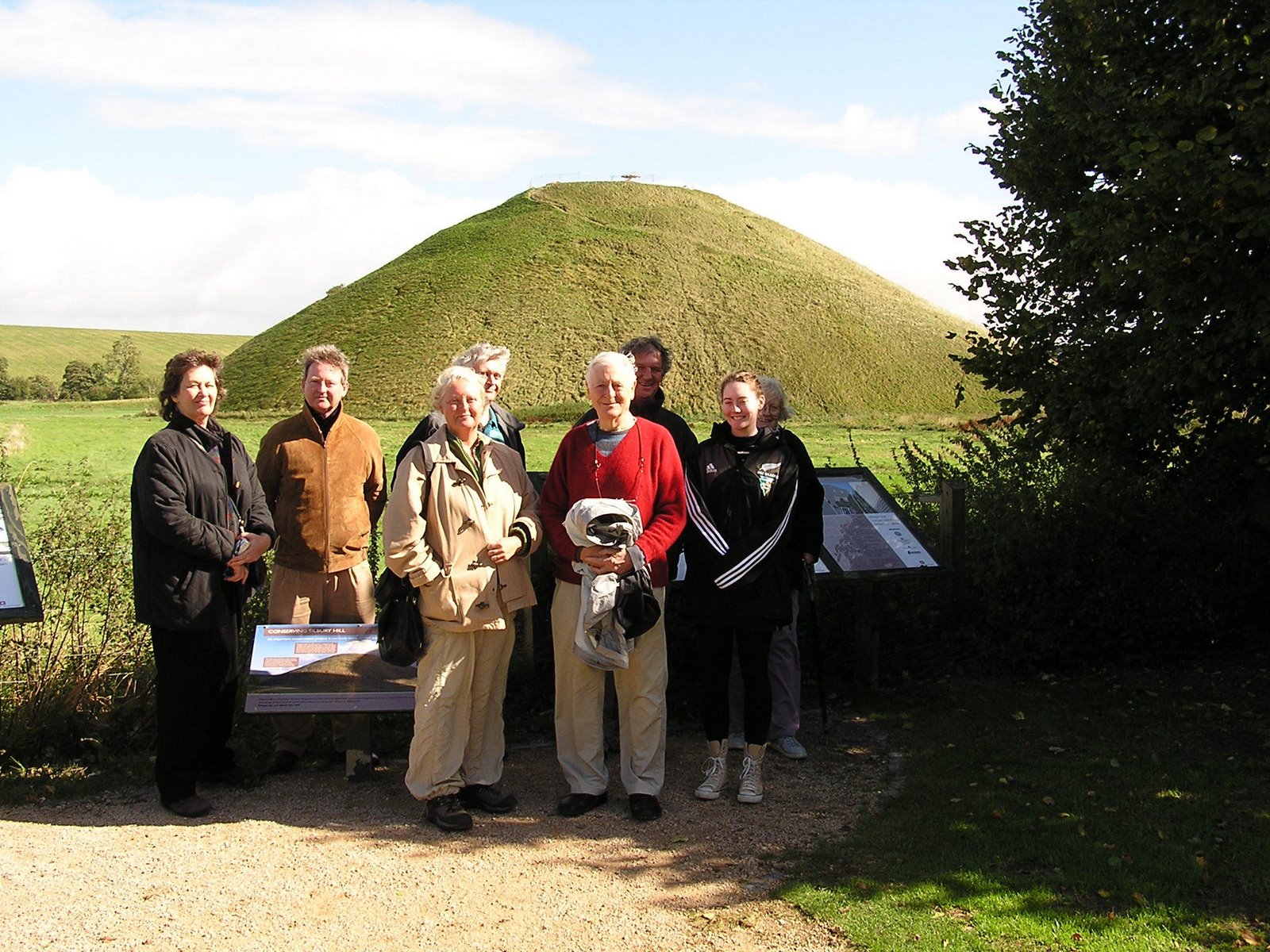
A remarkable film about Avebury with a commentary by John Betjeman:

Sunday, January 31, 2010

Al-Qa'eda in Bahrain

According to the Khaleej Times, a Gulf newspaper, A Bahraini court jailed two men last week for five years after convicting them of possessing arms, plotting to attack foreign interests and linking up with Al-Qaeda, their lawyers said Wednesday.

Their lawyer Farid Ghazi said the verdict was purely “based on the possession of weapons,” and rejected charges that the defendants “belong to a terrorist organisation,” using the local term for Al-Qaeda.

“It is impossible that an organisation like Al-Qaeda could execute an attack using people that have no experience with arms, like our clients.”

Ghazi said the prosecution had also accused the two Bahraini men of “plotting to attack installations belonging to a foreign state,” referring to the US Fifth Fleet base and the US embassy in Manama.

“This is impossible because such attack would need more than two AK-47 rifles and pistols,” he added.

The second lawyer, Abdullah Hashem, said the two defendants “did not meet any members of Al-Qaeda, and never belonged to this organisation.”

He said the two were only “involved in intellectual and political debates and exchanged ideas on the Internet, as far as the accusation of belonging to Al-Qaeda is concerned.”

The men were arrested in April. The interior ministry said at the time that they were suspected of plotting attacks inside Bahrain and neighbouring Gulf countries.

In February, a Bahraini court sentenced three men to up to five years in prison for belonging to and funding a “terrorist” group abroad.

What the newspaper didn't report is that the two persons convicted were foreigners, granted Bahraini citizenship as part of the government's programme to alter the demography of the country by giving jobs and citizenship to Sunnis from neighbouring countries. All-Qa'eda terrorists would not miss the open door to get at such a tempting target as the US Fifth Fleet.

Saturday, January 30, 2010

From my window this morning. When I talked to Maurice on Skype yeserday evening he was complaining that it was too hot in Auckland.

Wednesday, January 27, 2010

Lead poisoning of Rom families in Kosovo

Rachel, of the UK Association of Gypsy Women, reminds me that some 650 Roma families, including 400 children, were settled on a lead-contaminated site in Kosovo by the UNHCR in 1999, and that so far 84 children have died on the site through lead poisoning. Now, the WHO has demanded that the camps be shut down and the inhabitants moved. I’m tabling the following question today:

What steps they will take to assist the World Health Organisation campaign to shut down the lead-contaminated camps at Osterode and Cesmin Lug in Kosovo, and to resettle the Roma inhabitants on uncontaminated land.

There's a petition on the Downing Street website asking the Government to act on this scandalous treatment of the Roma in Kosovo (/petitions.number10.gov.uk/Romachildren. The Roma are an oppressed minority throughout eastern Europe, but deliberately locating these families in a place where they are slowly poisoned is quite intolerable, so please sign it.

Tuesday, January 26, 2010

Abdul Rahman Ghassemlou

I received in the post today a copy of The Passion and Death of Rahman the Kurd, by the Venezuelan writer Carol Prunhuber, for which I had written a pre-review:

This is a thorough and very readable account of the inspiring leadership of the Iranian Kurds by Abdullah Rahman Ghassemlou; of his treacherous assassination by the Iranian regime in Vienna 30 years ago, and the failure of the Austrian police to bring the killers to justice.

Ms
Prunhuber shows clearly that Iran had a deliberate policy of murdering the regime's opponents, and Ghassemlou was a prime target. We know how and why Ghassemlou was killed and who did it, but what remains a mystery is why the international community's response was so half-hearted and ineffectual.

Abdul Rahman Ghassemlou, the great and inspiring leader of the Iranian Kurds, was assassinated in Vienna by known Iranian agents in July 1989. For years the mullahs' regime had a programme of murdering their opponents at home and abroad, as I related in Iran: State of Terror (1996) and Iran: Fatal Writ, an account of murders and cover-ups in 2000. Ghassemlou was a prime target, and although it might have been courting a risk to Iran's relations with other states to murder him in a western capital, the mullahs rightly judged that in spite of all the evidence, they wouldn't be pilloried or sanctioned, and no formal accusations would be made against them at the UN for this atrocious crime.

Nowadays the regime judicially murders opponents, gays and even children, to the tune of some 350 a year. At the end of 2009 a representative of Iran's Supreme Leader Ayatollah Ali Khamenei said that opposition leaders were "enemies of God" who should be executed under the country's sharia law. And on February 8, seven leaders of the peaceful Baha'i religion, detained incommunicado for over two years, go on trial for their lives - see my Parliamentary Question last week www.publications.parliament.uk/pa/ld200910/ldhansrd/text/100121-0001.htm#10012120000801

Monday, January 25, 2010

British National (Overseas) citizenship

In the Borders, Citizenship and Immigration Bill last year we finally prevailed on the Government to grant full citizenship to British National (Overseas) citizens, who were members of non-Chinese ethnic minorities in Hong Kong. The BN(O) status entitled them to reside in Hong Kong only.


But now that the Act at last came into force on January 13, we find that the Government has created an impossible hurdle for BN(O) applicants to surmount. They have to apply for a Hong Kong Chinese passport, mking a false declaration that they are Chinese citizens. I'm tabling the following written questions, which should appear on the Order Paper tomorrow:


Whether they will instruct the British Consulate-General in Hong Kong to desist from asking a British National (Overseas) who wishes to register as British citizen to falsely certify to Hong Kong authorities that he/she is a Chinese citizen and apply for a Hong Kong Chinese passport, whether they are aware that that it is an offence under Hong Kong law to make a false statement on a passport application, and whether they will be responsible for the fines, legal expenses or prison sentence of any British national who suffers consequences under Hong Kong law because of misrepresentations made to the Hong Kong Government at the request of the British Consulate-General in Hong Kong.


Whether the British Consulate-General in Hong Kong has had any discussions with the Hong Kong Immigration Department since 13 January 2010; what matters were discussed and what was the outcome.


What is their estimate of the number of British Nationals (Overseas) who may now qualify for British citizenship under section 4B of the British Nationality Act 1981.

Internet vulnerability

I just tabled a written question, to ask the Government:


Whether, in the light of the recent acknowledgement by Microsoft that its Internet Explorer web browser was used to carry out the cyber attacks which have prompted Google to say it will leave China, they will review the policy of using Internet Explorer throughout the public sector.

As far as I can ascertain, all Government Departments and public bodies use Internet Explorer. The Parliamentary IT authorities actively discourage Members from using Chrome.

The German and French governments, on the other hand, are encouraging users to switch to another browser. I happen to be a member of the EU Select Committee which is considering EU policy on protecting Europe from large-scale cyber attacks, and is due to report in a few weeks time.

Sunday, January 24, 2010

Delivering LibDem leaflets this morning at Bathgate House
Posted by Picasa

Thursday, January 21, 2010

The Ahmadiyya Muslim community's new website -which does me the honour of displaying a video of my remarks at the inauguration of their great mosque, the Baitul Futuh in Morden, Surrey: www.loveforallhatredfornone.org/about-us/

Tuesday I joined in Tim Clement-Jones' Question about the UK's failure to provide facilities at our embassy in Baghdad for Iraqi business visitors to the UK. This is putting us at a huge competitive disadvantage with the French, the Germans and others who do issue these visas in Baghdad, at a time when the Iraqi oil and gas resources are being redeveloped and billions of $ of business is at stake.

Thursday, my own question, about the 7 Baha'is who have been detained incommunicado for two years and are now charged with a variety of serious offences carrying the death penalty. The trial continues on February 7, and I wanted the Government to raise the issue at the UN Human Rights Council's 'Universal Periodic Review' of Iran on February 15. This process is not effective but it could be at least a mechanism for getting some of the most flagrant abuses of human rights on the public record.


Monday, January 18, 2010

Monday

Kina had her knee replacement operation this morning, and came through it with flying colours. She rang up this evening in good spirits, to ask me to send her the Christian Morgenstern poem Das Knie, which I have done:

Ein Knie geht einsam durch die Welt.
Es ist ein Knie, sonst nichts!
Es ist kein Baum! Es ist kein Zelt!
Es ist ein Knie, sonst nichts.

Im Kriege ward einmal ein Mann
erschossen um und um.
Das Knie allein blieb unverletzt -
als wär's ein Heiligtum.

Seitdem geht's einsam durch die Welt.
Es ist ein Knie, sonst nichts.
Es ist kein Baum, es ist kein Zelt.
Es ist ein Knie, sonst nichts.


This afternoon I joined in Anthony Lester's Question about the Foreign Office's representations to Libya about opposition leaders in Libya such as Jabella Matar who have been kept in secret prisons for many years without access to lawyers or family. I asked whether the Government would publish a list of the individuals about whom they had made representations, together with the text of the answers received. I also suggested that we should consult with other EU states to produce a consolidated account of all the approaches to the Libyan authorities and their replies, for presentation to the Human Rights Council's Universal Periodic Review of Libya next year. The Minister said they would take those suggestions on board.

One more from Christmas when I was using a stick

Posted by Picasa

Friday, January 15, 2010

Back to school

Since the New Year my leg is more or less functional and I'm only using a stick when I go out on the snow and ice. The physiotherapist saw me today and was quite satisfied.

This week we had the last evidence session - from the Minister, Lord West - in the Select Committee's current inquiry into EU policy on protecting Europe from large-scale cyber attacks, and the report will be ready by about the end of February. (The session with Lord West is to be broadcast on
BBC Parliament on Monday 18 January at 10.50).


Monday I fielded a question about visas for athletes attending the Olympic Games, and moved two amendments to the Equality Bill. The first was to include caste among the protected characteristics, and in the debate, every speech was in favour except that of the Minister, whose argument was that no evidence had been produced that caste discrimination occurs in the UK. There will be opportunities of pursuing this further, both at Report stage and in the meanwhile, behind the scenes.

My other amendment covered Scottish Gypsy Travellers who, unlike their English, Welsh and Irish cousins, haven't been protected in the past. As a result of an Employment Tribunal case, they are now designated as an ethnic group, and contrary to what we had been told previously, this case is not being appealed.

Tuesday I spoke in a debate on the European Union Committee's recommendation that the UK opt into the EU's
Directives on Asylum Qualifications and Asylum Procedures. In the past, the EU's reports had been debated on a Take Note motion and there was no vote on them. But this was the first outing of a new procedure, in which the motion asked the House to approve the Committee's recommendation. The Conservatives abstained when we pressed the approval motion to a division, although the Conservative Members of the Committee including the Chairman, Lord Jopling, had unanimously approved the report.

Victoria very kindly came over today to help with office work. She tells me she has recorded a piece about the 1962 by-election for the BBC Radio 4 programme Broadcasting House at 09.00.

Thursday, January 14, 2010

Mr D A W, a 90-year old pensioner who lives in Chittagong, Bangladesh. His UK pension always arrives late, and the Department of Work and Pensions put the blame on the postal system. But it now appears that a questionnaire sent to him by the DWP has gone astray, something not mentioned by the Minister in her reply.


Posted by Picasa

Saturday, January 09, 2010

First time I can remember when I've had a photo of the four of them together: Lyulph, JW, Victoria and Maurice

Monday, January 04, 2010

All alone

JW and Maite left yesterday evening; our three Catalan visitors the day before, and Maurice and Olivia on the evening of January 1. Their flight from London was cancelled after several delays on Friday night and Singapore Airlines finally decided to put them in an hotel at the airport at 02.00. The replacement flight left at 14.00, 16 hours late.and when they got Singapore, there was another 7 hour wait for the connection to Auckland, during which again they were transferred to an hotel, so at least they got some sleep. Ah, the joys of air travel.

Today I'm preparing for the debate on Sudan and the DRC, which is on Wednesday, and amendments on the Equality Bill for next Monday.

Also, had a routine scan of the aorta at King's this morning, which showed the diameter had increased from 4.75 cm last time (a year ago? to 5.0 cm today. The arithmetic seems to indicate that with aneurysms that are less than 5.5 cm, the risks of surgery are greater than the risks of rupture, though if the increase of 0.25 cm a year continues, the odds would be reversed in two years' time. While there, I took part in a test of a handheld scanner, which is a much cheaper but no less reliable way of measuring the aorta, designed for routine use in GPs' surgeries. The idea is to scan everybody over the age of 65, and refer to hospital patients with enlarged aortas. It would be interesting to see the arithmetic on this process, which could well unearth more candidates for surgery.

Wednesday, December 30, 2009