Friday, December 16, 2011
Brutal arrest of Zainab al-Khawaja
Bahraini security forces used tear gas and stun grenades to disperse hundreds of opposition supporters attempting to protest alongside a highway leading to the island kingdom’s capital (more details: http://www.bahrainrights.org/en/node/4905) . Zainab Alkhawaja, 27, participated in this peaceful protest, staging a sit-in on a roundabout with several other women. The riot police responded with firing tear gas canisters at the women, forcing all except Zainab to abandon their protest. The police then fired a tear gas canister directly at Zainab, see video - http://t.co/m8Mph6Gw
Next, the police handcuffed Zainab, slapping her and striking her on the face, see video http://t.co/SD8DnUgD and the attached photos. They dragged her from the handcuff itself along the ground to the pavement and then to the street, removing her Muslim head scarf from her head. This treatment of a woman is totally alien to the cultural traditions of Bahrain and indeed the Gulf as a whole.
Zainab and another woman, Masooma alSayed were then taken to the police station and referred to the general prosecutor "for taking part & calling for an illegal gathering & for attacking a public security female employee near Busaiba" https://twitter.com/#!/moi_bahrain/status/147361704743936000. No physical assaults by Zainab is seen on the videos of these events.
At the general prosecutor's office, Zainab told the lawyer that the female officer " took my scarf off and tied it around my mouth to stop me from speaking". Lawyer Zahra Masood who was with Zainab at the general prosecution, said that Zainab looked tired & hardly opened her eyes.
Zainab is mother of a 1-year old child. Her husband, father and uncle are all in jail. He father is the prominent Human Rights activist AbdulHadi AlKhawaja, a former Regional Protection coordinator for the Middle East with Front Line and former President of the Bahrain Center for Human Rights (BCHR). He has been sentenced to life imprisonment by a military court for taking part in the February 14 protest and there has been no indication of his release in spite of the King's undertaking to free all political prisoners at the press conference launching the Bassiouni commission's report on the egregious human rights violations in Bahrain. Zainab's husband Wafi, who was arrested along with her father, was sentenced to 4 years in jail, also by a military court.
Zainab was arrested previously, from the Bahrain UN house in June 2011 http://www.bahrainrights.org/en/node/4246, and before that had been interrogated at the police station.
On this video Zainab talks about her activism, family, human rights, her father, and the difficulties of campaigning for human rights in Bahrain: http://www.youtube.com/watch?v=XOQgvw7TGjk&sns=fb. More information about her below.
More about Zainab AlKhawaja
http://yfrog.com/hsqjywej
Zainab was very active on twitter during the Feb-March protests under the name of @angryarabiya, posting news and reports directly from the ground to her twitter page.
She was a witness to the brutal arrest of her family members, and reported to the international media how her father was aggressively beaten: DemocracyNow http://www.youtube.com/watch?v=naUBnvmDju8
BBC http://www.bbc.co.uk/news/world-middle-east-13023428
CNN http://articles.cnn.com/2011-04-09/world/bahrain.activist.missing_1_human-rights-detention-center-torture-and-ill-treatment?_s=PM:WORLD
She wrote an open letter to President Obama, and launched a ten-day hunger strike that gained international awareness and triggered a series of hunger strikes in support of the Bahraini people.
50th Anniversary of UN Convention on the Reduction of Statelessness
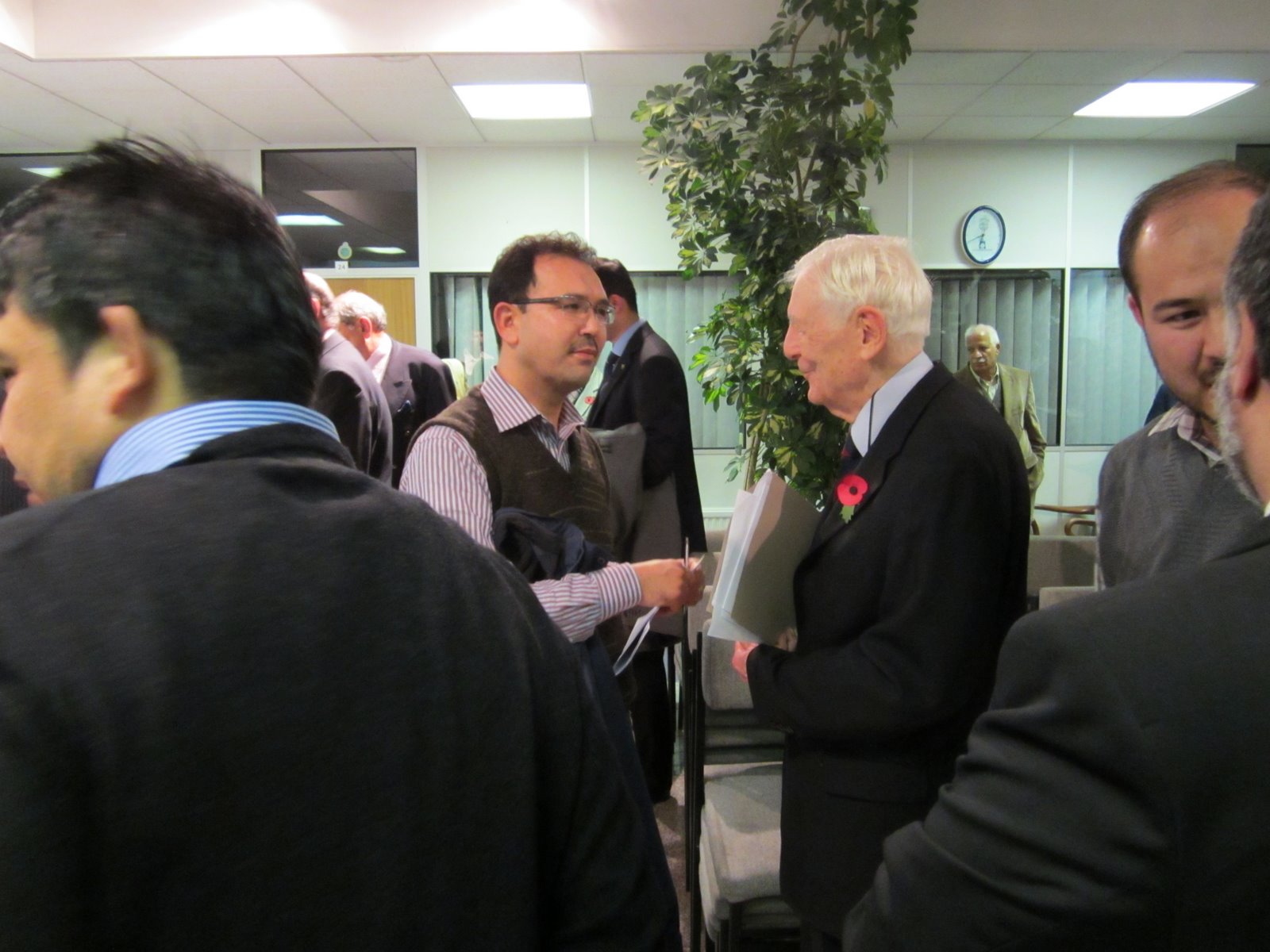
After the UNHCR/PHRG meeting on statelessness on December 14, with two Kuwaiti Bidoon colleagues at the Peers' Entrance. The meeting was to mark the 50th Anniversary of the UN Convention on the Reduction of Statelessness and the publication of a joint study by the UNHCR and Asylum Aid of statelessness and the UK. The Representative of the UNHCR to the UK, Rudolf Schilling, attended and spoke, and among the other speakers was Vaderius Tang, a stateless Malaysian BOC stranded here in Britain with no support and no right to work. Also Mirna Adjami, Senior Legal Consultant, Statelessness Unit, UNHCR Geneva; Bronwen Manby, an old friend who used to be Deputy Director of the Africa Division of Human Rights Watch, and Greg Constantine, the award-winning photographer who has worked extensively with UNHCR, MSF and the World Food Programme.
Wednesday, December 14, 2011
Saudi Arabia
Mehdi Foundation International
Sunday, December 11, 2011
Blood test December 5
Avebury, Eric Haematology OPD 83y M de Lavallade, Hugues
PRE 29-Sep-1928 D442931 / V6825848
05-Dec-11 08:33 Renal/Liver/Bone/Urea
Sodium 143 [135-145 mmol/L]
Potassium 5.0 [3.5-5.0 mmol/L]
Urea 7.0 H [3.3-6.7 mmol/L]
Creatinine 104 [45-120 umol/L]
Estimated GFR 59 [mL/min]
Calcium 2.26 [mmol/L]
Corrected Calcium 2.18 [2.15-2.6 mmol/L]
Phosphate 1.18 [0.80-1.40 mmol/L]
Total Protein 75 [60-80 g/L]
Albumin 44 [35-50 g/L]
Globulin 31 [25-35 g/L]
Bilirubin (Total) 8 [3-20 umol/L]
Alkaline Phosphatase 72 [30-130 IU/L]
Aspartate Transaminase 24 [10-50 IU/L]
Gamma-glutamyl 17 [1-55 IU/L]
Transferase
05-Dec-11 08:33 Full Blood Count
WBC 3.57 L [4.00-11.00 10^9/L]
RBC 3.10 L [4.5-5.8 10^12/L]
Hb 9.9 L [13.0-16.5 g/dL]
PCV 0.306 L [0.400-0.540 L/L]
MCV 98.8 H [77.0-95.0 fL]
MCH 32.0 [20.0-36.0 pg]
MCHC 32.4 [32.0-37.0 g/dL]
RDW 16.8 H [11.0-15.0 %]
PLT 592 H [150-450 10^9/L]
MPV 10.9 H [7.4-10.4 fL]
Neutrophils 1.36 L [2.2-6.3 10^9/L]
Lymphocytes 1.61 [1.3-4.0 10^9/L]
Monocytes 0.46 [0.2-1.0 10^9/L]
Eosinophils 0.14 [0-0.4 10^9/L]
Basophils 0.01 [0-0.1 10^9/L]
NRBC 7.1 H [< 1.0 /100 Wbc]
% Hypo 4.4
Red Cell Morphology Slight anisocytosis.
Platelet Morphology Count increased. Platelet anisocytosis.
White Cell Morphology Neutropenia. Few lymphocytes display flowery and cleft nucleus.
Saturday, December 10, 2011
Monday, December 05, 2011
Haematology
Thursday, December 01, 2011
This week
Wednesday, November 30, 2011
Rotavirus
Effective use of development aid: rotavirus vaccines save children’s lives
By Eric Avebury
Rotavirus is the most common cause of severe diarrhoea among infants and young children and remains a major killer of children under five years of age worldwide, taking the lives of nearly half a million children each year and hospitalising millions more. More than 1,200 young children will die from rotavirus diarrhoea each day and 95% of all rotavirus deaths occur in developing countries in Africa and Asia, where access to treatment for severe rotavirus diarrhoea is limited or unavailable. In these countries, vaccination offers the best hope for preventing severe rotavirus disease and the deadly dehydrating diarrhoea that it causes. Rotavirus vaccines are saving lives today in countries where children have access to them.
Investment in rotavirus vaccines through the GAVI Alliance is a cost-effective investment, delivering enormous value for money, generating concrete results and saving children’s lives from deadly diarrhoea, one of the top two killers of young children worldwide.
As Co-Chair of the UK All Party parliamentary Group for Global Action against Childhood Pneumonia (APPG) I have worked for many years to encourage greater roll out of vaccines globally. While the key focus of our APPG is on pneumonia, tackling diarrhoea is a crucial priority to meet MDG4. Successive British governments have invested in the work of the GAVI Alliance with the aim of reducing child deaths and the UK’s pledge in June 2011 of up to £814 million to GAVI reaffirms this commitment to life saving interventions. In the recent multilaterial aid review by the Department for International Development (DFID), GAVI’s work was ranked first for evidence-based outcomes showing that the contribution by the British Government was not only money well spent but will make an enormous contribution to saving lives across the world. GAVI’s support for the affordable and financially sustainable introduction of rotavirus vaccines in national immunisation programmes will have a dramatic impact on global rotavirus diarrhoea mortality.
By 2015, GAVI plans to support the introduction of rotavirus vaccines in 40 countries, immunising more than 50 million children and saving millions of lives. GAVI is an excellent example of aid being used effectively and responsibly.
I am very proud of the leading role the UK has played in calling for new donors to invest in successful and cost-effective aid interventions to prevent child health, such as vaccines and immunisation. Our APPG will continue to encourage global development leaders to keep their promises and to ensure that pneumococcal and rotavirus vaccines reach the children who need them most.
Eric Avebury is Co-chair of the All Party Parliamentary Group (APPG) for Global Action against Childhood Pneumonia